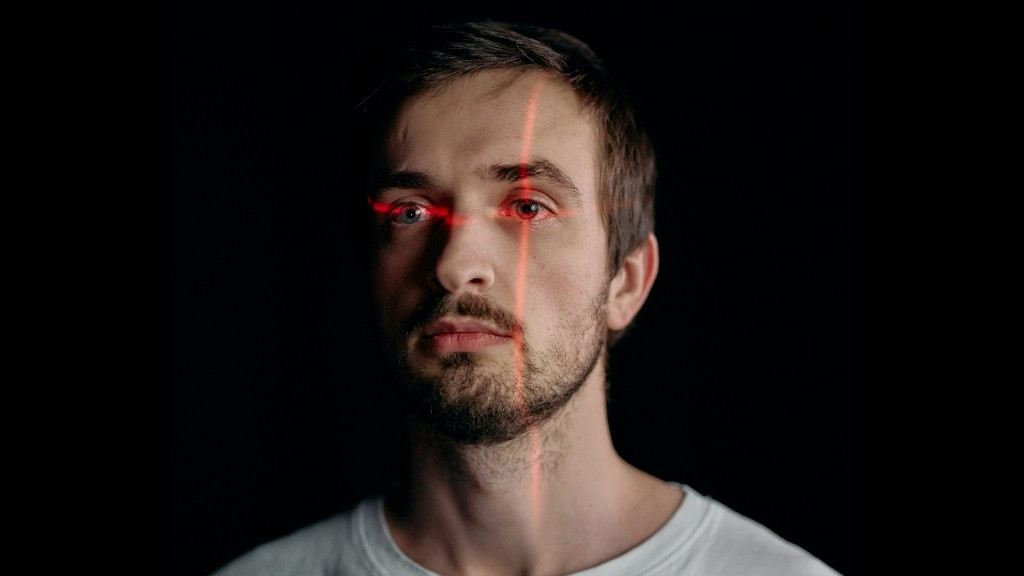
Project develops 3D scanning technology to create virtual faces and enhance AI facial recognition
The UOC and start-up Metascan are working on a new tech model that aims to deliver fairer and more ethical representations of human emotionsThe work is part of a thesis project within an industrial doctoral programme

The Universitat Oberta de Catalunya (UOC) and the Barcelona-based start-up Metascan are conducting an applied research project focused on developing an advanced 3D head-scanning system and a cutting-edge parametric model for representing identities and facial expressions.
The project is led by Lisa Hornung, who is undertaking the research in collaboration with Metascan as part of an industrial doctoral programme with the UOC. Hornung's thesis is supervised by Ismael Benito Altamirano, a researcher at the UOC's Artificial Intelligence for Human Well-being (AIWELL) group (part of the research unit on digital health, health and well-being) and a member of the Faculty of Computer Science, Multimedia and Telecommunications.
Towards more realistic human movement
One of the project's main goals is to develop a high-fidelity 3D head-scanning system, using advanced techniques such as photogrammetry, which reconstructs three-dimensional shapes from multiple photographs taken at different angles, and Gaussian displacement, a method that enhances surface detail by smoothing irregularities and more accurately capturing facial volumes and expressions.
“This project will also highlight our mission to build a more inclusive AI and reduce inequalities through technology”
The initiative also involves compiling high-resolution 3D scan datasets that reflect the diversity of human faces and expressions. In addition, the research will create a parametric facial model inspired by the Skinned Multi-Person Linear (SMPL) model, a technology used in animation and computer vision to realistically and flexibly represent human body shape and movement. When adapted to the face, this approach enables fine-grained control over both identity and facial expressions.
Leveraging these data, the thesis project will train AI models for use in facial recognition, avatar generation and emotional analysis, with a strong emphasis on ensuring fair and representative outcomes for people of all backgrounds.
Towards fairer AI
"This project promotes the development of fairer and more reliable AI models, with the aim of making advanced technologies safer and more accessible," said Lisa Hornung. "It's a fantastic opportunity to contribute to this technical and scientific challenge from within the UOC. The doctoral programme allows me to work closely with research and innovation teams in a dynamic environment where knowledge is at the core," she added.
Ismael Benito said: "Metascan's value proposition, which focuses on making 3D scanning technology more accessible, fits well with our goals, offering applications in avatars, digital twins and assistive interfaces." He also highlighted one of the project's major scientific challenges: "capturing human concepts such as emotion and facial expression through the creation of datasets that will not only drive our own research forward, but also benefit other institutions." In addition, Benito pointed out the way the infrastructures work together: "While Metascan is setting up its own lab in Barcelona, the UOC can contribute its cloud computing capabilities, allowing the doctoral student to train deep learning models supported by university resources."
Metascan CEO Dirk Hornung said: "This project will not only boost our research and development capacity in the field of human foundational models, but also underscores our mission to build more inclusive AI and reduce inequality through technology."
About Metascan
Founded in 2024, Metascan is a start-up specializing in the research and development of human-centric synthetic data for AI training. The company is a pioneer in creating human foundational models (HFMs) and has built a high-precision 3D scanning infrastructure for digitizing human subjects and producing high-quality datasets. Metascan is committed to reducing bias in AI, advancing fairer technologies and democratizing access to HFMs. The company has taken part in Barcelona Activa's acceleration programme.
This industrial doctoral programme falls within the UOC's research mission on ethical and human-centred technology and supports United Nations' Sustainable Development Goal 9: Build resilient infrastructure, promote inclusive and sustainable industrialization and foster innovation.
The Industrial Doctorates Plan is a public initiative launched by the Government of Catalonia in late 2012, in collaboration with the Catalan university and research system. It is closely tied to doctoral training, knowledge transfer, and the development of RDI projects in partnership with socioeconomic stakeholders, namely businesses and institutions.

Research at the UOC
Specializing in the digital realm, the UOC's research contributes to the construction of future society and the transformations required to tackle global challenges.
Over 500 researchers and more than 50 research groups make up five research units, each with a mission: Culture for a critical society, Lifelong education, Digital health and planetary well-being, Ethical and human-centred technology and Digital transition and sustainability.
The university's Hubbik platform fosters the development of UOC community knowledge transfer and entrepreneurship initiatives.
The goals of the United Nations 2030 Agenda for Sustainable Development and open knowledge are strategic pillars that underpin the UOC's teaching, research and knowledge transfer activities. For more information, visit research.uoc.edu.
Experts UOC
Press contact
-
Anna Sánchez-Juárez