
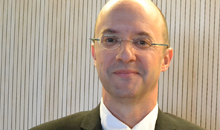
Pere Joan Cardona
What is the current global map of tuberculosis?
One of the features of tuberculosis is that you do not necessarily develop the disease once you become infected; you may have what it known as a latent infection. It is a very discreet and asymptomatic disease, and this is its greatest triumph. In fact, one third of humanity is currently infected and I would say that almost 99% of these people are unaware of their condition. Of this third, 10% will eventually develop the disease, which means that every year there are ten million new cases of TB and approximately 1.8 million deaths worldwide.
Is the situation getting worse?
Yes. To make matters worse, we are faced with a problem that didn't exist when antibiotic treatment began, which is that multi-resistant strains have emerged. There are some 400,000 cases of this every year that cannot be treated and, because the multi-resistant forms typically progress at a slower pace, these people will be chronically ill and in turn infect more people. As you can see, the situation is quite complex.
Which countries have a higher incidence of TB?
India has a high incidence of tuberculosis and mortality, but perhaps the country with the worst scenario is South Africa, where 80% of the population is infected and there is an HIV prevalence of 30%. A person who has AIDS is almost twice as likely to develop active tuberculosis once they become infected.
According to the government of Catalonia, the situation is under control, with 18 cases per 100,000 population.
Yes. Here, the advantage is that we have a good, and very expensive, health system that targets Catalonia's tuberculosis hotspots, mostly in areas like the Raval neighbourhood in Barcelona, which has an incidence of 150 cases per 100,000, almost ten times higher than the average. High-risk areas should always be identified. It can't be said that we have an overall incidence of 18 cases per 100,000 because although the numbers are acceptable when compared to the overall incidence worldwide, there are hotspots. We have our own hotspot ? the Raval ? where a team has been consistently and actively devoted over the past 25 years to identifying these cases. Imagine what would have occurred if there had not been such active action. Given its discretion, tuberculosis requires very active policies for it to be identified, diagnosed and treated.
Are these active policies implemented in Catalonia?
Fortunately they are and I hope these programmes do not suffer budget cuts because that may lead to a much bigger problem. Not treating undocumented immigrants, for instance, is like pouring petrol on a fire; there is a high chance that within five years it will lead to a huge problem of tuberculosis for the entire population.
Do socioeconomic conditions play a part?
The thing is, you may take a highly multidisciplinary approach when it comes to diagnosing, treating and preventing the disease, but you also need to help those who have the disease by ensuring they have good socioeconomic conditions. You need a good health care system that is alert to prevent the disease from spreading.
Are the infection levels in Catalonia acceptable?
Everything is relative. The incidence in South Africa is 900 per 100,000 population, whereas the global rate in Europe is about 20 per 100,000 population, and 6 per 100,000 in the U.S. These are relative terms, but I insist that there are hotspots that we need to identify and combat.
Socially, the general idea seems to be that tuberculosis has disappeared, that it is a disease of the past.
That's right, people believe it no longer exists and this is a major problem because we need a higher degree of social involvement. There was a large social movement with HIV because it affected active sectors of society, whereas tuberculosis is a disease that affects less affluent and economically weaker sectors, so it does not receive as much attention. However, at our Experimental Tuberculosis Unit we have realised that it would be misled to strictly link tuberculosis and poverty.
Why is that?
You do not need a risk factor to become infected. Firstly, anyone can become infected; it is spread through the air, so you never know who infected you. By no means do you need to be immunosuppressed to become infected. Until recently, in 10 percent of cases patients developed the disease and this was linked to a certain type of immunodepression, but we now see that AIDS can be linked to certain conditions of stress, among other factors, and there is a genetic predisposition to the disease that we are as yet unfamiliar with. We are trying to identify these factors and it appears that they are related to a hyperreactivity against the bacillus.
It seems that no new drugs have emerged in recent years.
This has been a major problem as there seems to be a depletion in the antibiotic model against the disease. There are no new drugs. We may have identified the targets, but many problems have come up related to the biodistribution of drugs. This is why we are working in nanotechnology to try a more subtle approach to administering drugs so that they can target the necessary areas while avoiding toxicities.
What other problems have you detected?
There is a lack of predictive laboratory models that will reveal whether drugs will work on humans. This raises the risk levels because infectious diseases have a greater development risk. The industry is reluctant to invest in tuberculosis treatments because it is likely to lose money; the social demands are addressed at economically depressed geographic areas and the industry is unlikely to see a return on its investment.
So what can be done?
There should be a public effort to encourage more investment. Without social involvement, politicians are unlikely to take action. If people do not get involved, then the politicians who represent them will not perceive it as a problem or be willing to do anything about it.
Are you trying to make patients more visible through the new UOC project?
We are. A new website, Planeta Salut, has been created to make the disease more visible and to act as a link between professionals and patients.
What do you have planned in this regard for the new academic year?
We have organised a course aimed at professionals from around the world. It is quite unique, and what we really want is to provide tools to ensure a more effective diagnosis and offer professionals information on the latest developments in the field of tuberculosis. There is a divide between the clinical field, which is very traditional and where everyone appears to know what tuberculosis is but fails to diagnose it, and the world of research, which is very active. We would like to become the link between the two worlds: to digest the science of tuberculosis so that it can easily be applied to the professional field.
Press contact
-
Editorial department