
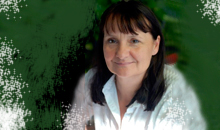
Louise Ackers
As you have shown in your research, the international mobility of most scientists is precarious: it is something they need to do to keep their job.
Yes, although it is not generally viewed that way, but rather as an attractive work situation. In reality, though, scientists choose international mobility because they have no other choice if they want to get a job. That is why we need to change current theories about migration: they do not fit the dynamics of the mobility of highly skilled professionals.
You've shown that this mobility poses special challenges for women.
The pressure to work abroad, and to do so via long-term stays, discriminates against people with families and other groups, such as people with disabilities. I know many academics and scientists who can't afford the luxury of spending more than one or two weeks away from home.
You have questioned the international mobility model in science.
We need to ask ourselves what we are hoping to get out of the internationalization. What is the relationship between mobility and excellence? Is it necessary to engage in long-term stays to reap the benefits of internationalization? Today, it is not. Scientists from different countries can conduct joint research with videoconferences, stay in touch by e-mail, meet regularly - without the need to live abroad - participate in international conferences and seminars, etc. New technologies enable all of this. We have to make knowledge mobile.
"Partial migration" is another feature of the precariousness of academic jobs.
Yes, it is an increasingly common phenomenon that refers to researchers who work and live in two different countries at the same time so as not to miss out on job opportunities. I've studied the case of a couple of English investigators who kept homes in Liverpool and Berlin and worked at universities in both cities. Things became complicated when they had a son.
What did they do?
The mother quit her job in Germany in order to settle permanently in England, where her family could lend a hand with the boy.
Many of your projects have been funded by the European Commission. Do they listen to you, when you recommend other models of international mobility in academia?
That's a good question. Sometimes. They've recently included short-term research grants in the Marie Curie programme for researchers. But all the institutions need to do much more.
You are a high-level academic and mother of four. How have you managed?
I should note that in my field, the field of social sciences, the pressure to spend time abroad is not as strong as in the natural sciences. It's still been hard, though, especially at those times when your little girl asks, "Mommy, why can't you work in a shop like Mary's mom instead of travelling so much?"On the whole, though, I'm happy. And I think I've done a pretty good job. My two older children are university researchers. I want to transmit a positive message: "you can be mobile and a good mother at the same time."
Press contact
-
Editorial department