
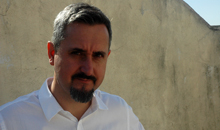
Martin Dougiamas, creator of Moodle
You've acknowledged that you began working on what became Moodle because existing software at the time didn't do what you wanted it to. Does that mean that Moodle came about as a result of frustration?
Yes, you could say that. I was looking for an educational tool that would let citizens participate rather than just be passive consumers. I couldn't find one though, so I decided to create one. I spent three years working on the project. My wife didn't understand what I was doing. "All that work and you're just going to give it away to everyone?", she used to ask.
Moodle is the first free software community whose members include teachers and educators, and not only IT specialists. Does that make it unique?
Yes, because its driven by users, who come from all over the world and have different levels of education. Our community, where lots of things happen, is responsible for Moodle's development. We don't worry about what's going on with other products because we've already got enough on our plate with developing everything our users ask us for.
How many users does Moodle have worldwide at present? I ask that because user registration isn't compulsory, which makes figures very relative.
There are currently around 87,000 registered Moodle sites. We do have unofficial figures though, such as the data we obtain at talks, where I ask how many users have actually registered and only 10% of the people there raise their hands. Additionally, some Moodle Partners have thousands of clients. So, bearing all that in mind, I calculate that the real number of users is roughly ten times higher than the number of registered users.
How many developers are working on the project?
Of the 29 people in my company, 25 are developers. There are also around 200 people who regularly contribute to the project, and about 10,000 users who help us out in some way, be it with documentation, through suggestions or ideas, etc.
In how many languages is Moodle available?
Around a hundred, at the moment.
One of them is Catalan.
Catalonia has taken a great interest in Moodle ever since the project began, when Jordi Adell, a lecturer at Universitat Jaume I in Castelló, mentioned it in a blog. He was one of the first to do so here, and that was how many people found out about Moodle. He organized Spain's first MoodleMoot.
On your website you say that you hope to completely rebuild Moodle one day. When will that be?
I'll do it one day, but not yet, because there's a lot we can do with both Moodle 2.5 and the new version, 2.6, which is geared to continuity. Sudden changes aren't popular in the education arena. People prefer gradual, minor changes that provide greater security, stability, etc. I must say though, if I had to start afresh with Moodle, the first thing I'd do is make it compatible with mobile phones.
Moodle is a successful educational product. Is using language that students understand perfectly the key to that success?
Yes. Moodle was initially intended for schools and universities, although we've been surprised to find that some of the world's leading oil companies use it. They could afford any alternative product out there, but have nonetheless chosen Moodle. That's very interesting.
You say that it's the internet rather than Moodle that has changed education. What role does Moodle play in the new paradigm that the Web entails?
The greatest paradigm that the internet has given us is that it's possible to do many things from any location instead of having to be physically present in a class. Back when I was one of the first internet users and I built one of the world's first 3,000 websites, I remember telling people that in the future they would be able to work on the train, on the beach or wherever they may be. For years, they didn't understand. All that's normal now, but it was a huge change at the time. I knew it would be possible. At the same time though, I didn't want to lose out in terms of dialogue, cooperation, being able to share ideas, to have a conversation... and that's the essence of Web 2.0, which was only an idea when Moodle was starting out.
You came to Barcelona to participate in the tenth meeting of Spain's Moodle users. What were you expecting from the meeting and what happened there?
I'm here for two reasons. Firstly, I'm trying to learn what goes on in places where people use Moodle. Secondly, I'm promoting research based on Moodle. That's something that can be done in universities and schools, where teaching staff are carrying out different research projects, because they've got students and the right environment. I need the information users provide. If I can get it, we can make Moodle better for everybody. We held a talk about that at the meeting in Barcelona, but we've spent all year thinking about how Moodle should be in the future.
People often consider you an 'internet guy', like other entrepreneurs who've been successful online. Isn't that oversimplifying your profile?
People think of me in that way because I've been involved with the internet from a very early stage and because I believed that the internet ought to develop thanks to its users, who should be more than just passive consumers. I've tried to make that happen through education, because it's the most important aspect of life, one that conditions all the rest. Of course, to people who aren't particularly familiar with my career, I'm an internet guy, which is a simplistic way of defining what I do.
You once said that Moodle has enabled you to work from home and that it's a good reason to jump out of bed every morning. Does that still apply, 11 years after creating it?
Yes, absolutely!
Because you're still enthusiastic or because you've got too much work to stay in bed?
(Laughs) I like to stay in bed for as long as my body will let me, because that's when you feel good and you've got the energy to go to work. It's true that I have lots of work, but also that I'm really enjoying it. I'm very lucky. It's thanks to Moodle that, for example, I've been able to come to a city as beautiful as Barcelona.
Press contact
-
Editorial department