
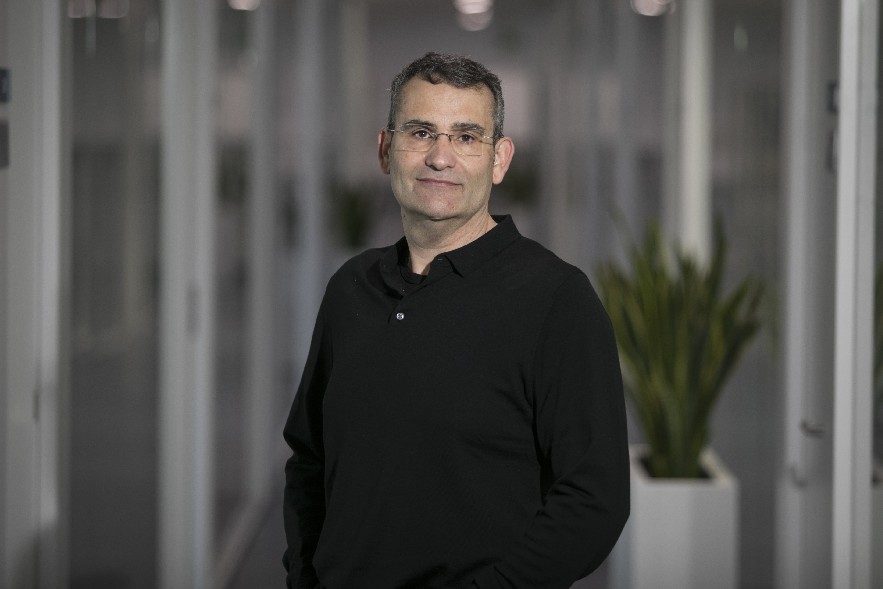
More and more healthcare organizations are incorporating behavioural design techniques to positively influence their users, and improve their well-being and quality of life. The Behavioural Design Lab (BDLab) at the eHealth Center, led by Manuel Armayones, PhD in Psychology and a member of the UOC's Faculty of Psychology and Education Sciences, works with institutions in the public and private sector on a wide range of interesting initiatives. He tells us more about them in this interview.
First of all, what are the milestones that have recently been reached, and what are the goals for this year?
One of the major milestones has been receiving recognition as a Consolidated Research Group from the Catalan University and Research Grant Management Agency (AGAUR). This first recognition for a group working on behavioural design applied to health and digital interventions in particular is important.
Our objectives for 2023 are to consolidate our projects on digital literacy in health, adherence, the de-implementation of low-value health practices, and behavioural design applied to adaptation to climate change. These projects are led by various researchers in the group, but they all place psychology at the service of public health.
How can behavioural design be applied to the climate change crisis?
We've started this project with the Public Health Agency of Catalonia. The central idea is that when addressing situations arising from climate change, such as periods of extreme heat, we will need measures that are not only adaptive, but also transformative. In other words, profound changes will be necessary in terms of how we organize ourselves. People will have to make those changes both individually and within organizations. This is where behavioural design comes in, as there will be barriers and enabling factors that will determine whether or not those changes are successful. At the Behavioural Design Lab, we will contribute to describing these barriers and enabling factors in order to create changes that are sustainable over time.
The Catalan Healthcare Quality and Assessment Agency (AQuAS) uses your research to influence patients' behaviour, and improve their health and quality of life. What projects are you working on?
We are working with AQuAS to help reduce benzodiazepine prescriptions for specific groups. This is very important, because the scientific evidence shows that prescribing these medications isn't always the best solution, and may even worsen the patients' condition if the treatment is administered for longer than the time stipulated in the guidelines drawn up by AQUAS as part of its Essencial project. This project is a European benchmark for intervention in the de-implementation of low-value clinical practices.
Another interesting project in the field of public health, and specifically in mental health among children and young people, is the one led by Dr Eulàlia Hernández, involving researchers from the group and from the Faculty of Information and Communication Sciences at the UOC. eHealthLit4Teen, which is funded by the Spanish Ministry of Science and Innovation, studies how to effectively deliver educational programmes on mental health for adolescents, and how to make the information go viral in order to engage with and educate this population group which is in such great need of mental health support.
How are your research projects with the Hospital Clínic going?
We're working to discover the barriers and enabling factors that make it possible for patients in a hospital like the Clínic to sleep properly. Proper rest is crucial for a good physical and mental recovery. In this project, CLiNIT, we've applied behavioural design techniques, and the results will be published in an article in the near future.
What can behavioural design contribute to the doctor-patient relationship and to digital interventions in health?
Behavioural design can make important contributions to the relationship between healthcare professionals and patients. It's vital that professionals understand the barriers patients may have that prevent them from adhering to treatment. Understanding the motivations behind the patient's behaviour gives some idea of the "behavioural active ingredients" that need to be included in online interventions. They are, for example, the specific techniques to change behaviour that a mobile app has to take into account (and which will vary depending on the type of app and the target group). Failure to include these criteria will mean that the app won't be used, and time and money will have been wasted.
Last year you worked on interventions to combat loneliness, one of the great evils of our time. You published a scientific article and took part in a congress organized by Barcelona City Council. What conclusions did you reach in this study?
The results show that it's essential to foster people's active participation, provide means for ensuring social participation and provide resources to help people who are having difficulties. Other than that, the best learning involved working based on real demands from the Municipal Institute for People with Disabilities (IMPD). As part of Barcelona City Council's Municipal Loneliness Strategy 2020-2030, we were able to contribute to providing answers to research questions that the specialists were asking, and we passed them on to the IMPD. We found this collaborative research model to be a great experience, which we'll apply to other projects.
In the private sector you have worked with the insurance company DKV's Innolab to help patients lose weight using digital tools. What contributions have you made in this area?
We've designed a guide to promote adherence to the recommendations included in the DKV Quiero Cuidarme Más application. We've also produced videos that are suitable for the whole population, which adapt the method explained in the book Tiny Habits by Stanford professor B.J. Fogg. The videos can be seen on the DKV Twitter feed. Let's finish by talking about the future.
How do you think Artificial Intelligence (AI) could influence your field of study, behavioural design?
We're experiencing a shift in how the impact we believe AI will have on our lives is represented. Before we "knew" there would be changes, but now, with ChatGPT, we "feel it". I think many people are experiencing a great deal of uncertainty, which is a source of negative emotions that must be countered with knowledge and evidence.
Combining behavioural design and AI tools will enable "precision technological persuasion". If before the ability to influence our behaviour with social media was considerable, now tools that can have a "personalized influence" open up a huge potential. The influence on people's health and care may be very positive, but there's also a great potential for misinformation and creating negative emotions.