
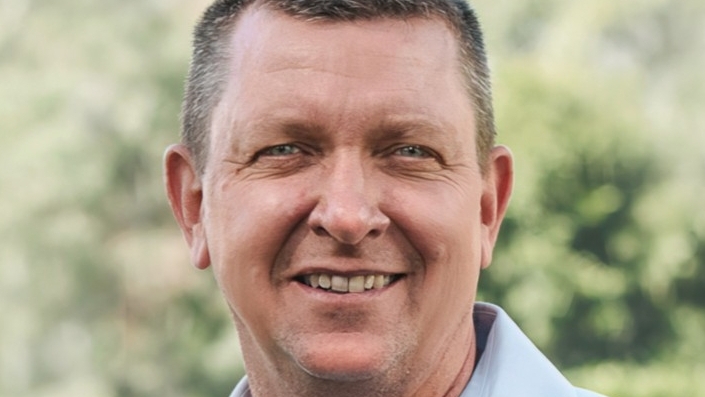
Liam Caffery is Associate Professor in Telehealth and Director of Telehealth Technology for the University of Queensland's Centre for Online Health. He recently visited the UOC's Poblenou centre in Barcelona as a guest of the university's eHealth Center, to talk about the current state of telehealth in Australia. His research efforts focus on pragmatic trials of telehealth services. Caffery also has a special interest in the use of telehealth for Indigenous health and rural health care delivery. Additionally, he evaluates the effectiveness of telehealth from multidisciplinary perspectives including clinical effectiveness, patient perspectives, economic aspects, organizational aspects, and sociocultural, ethical and legal aspects.
He is also Chair of the dermatology working group for the DICOM standards development organization, as well as of the technology standards working group for the International Skin Imaging Collaboration: Melanoma Project. This project is an academia and industry partnership designed to facilitate the application of digital skin imaging to help reduce melanoma mortality. Liam is Vice-President of the Australian Telehealth Society and an executive member of the International Teledermatology Society.
Could you give me some broad-stroke figures on the implementation of telemedicine in Australia? What's the current status, in terms of the main challenges and opportunities?
Given that COVID-19-related telehealth represents around 20% of the provision of medical care, there are variations depending upon the discipline: for medical consultations, with both GPs and specialists, it's much greater than for the rest of healthcare professionals: dieticians, physiotherapists, occupational therapists, etc. Telephone and video consultations are the predominant form of this kind of remote care we have today; 87% of these consultations are by phone, whilst video only represents 13%.
You have more than 20 years' experience at the Centre for Online Health. What does your work there mainly involve?
The Centre for Online Health is an academic institute with three main fields of work: research, education and the provision of clinical services. We give university courses, both undergraduate and postgraduate. These courses tend to be optional telehealth subjects in any of the health sciences courses: medicine, dentistry, nursing, etc. We also provide continuous professional education for the existing workforce, generally in the form of workshops, and offer online training with around 50 lessons hosted on a learning management system. The Centre's academics also oversee research higher degree (RHD) students, of which there are currently some twelve.
Our research is organized into a number of areas: COVID-19 and telehealth, service evaluation, teledermatology, telepalliative care, rural and remote health, chronic disease, healthy literature, First Nations health and mental health. We have nine academic staff members; each research area is the responsibility of one member of research staff, and academic staff members contribute to one or more of them.
We currently also offer a range of clinical telehealth services, including school programmes for speech-language pathology and occupational therapy. The Centre is also an accredited central provider for the ECHO Project, and we provide telementoring services in palliative care, dementia and mental health. We have also been heading Queensland's telepediatrics services centre for more than 15 years, and have carried out more than 20,000 teleconsultations.
You were the world's first professional in terms of publications on telehealthcare. How did you manage this? What's the secret of your experience?
The number of publications is simply a question of longevity. In other words, the Centre has been publishing on telehealth for the last 20 years. We partner with a large number of medical care organizations, and we always try to publish an assessment of their service.
You're an expert in the implementation of telemedicine tools to ensure that the technology that's being developed is effective and sustainable. Tell me a little more about this.
Well, that's probably not exactly right, as we view telehealth as a further service, not as a technology. Managing implementation is essential for a service's success, as it's really difficult to recover from a bad experience. The key is to design or redesign a service adapted to the peculiarities of face-to-face care. The second aspect to bear in mind is to ensure that doctors are fully trained. Training is not limited only to the remote care team, but must also include the optimization of video consultations, tips and tricks for online communication, an understanding of which patients and which interactions are a good fit for telehealth, and which are not… and, what's most important, faithfully simulating teleconsultations in a clinical environment before working with real patients. The third point is to assess the service: this can be a formal evaluation analysing clinical return, or a less formal approach, such as reflective learning, in which we help doctors to think how to improve the service. This has often led to spectacular improvements and an increase in the complexity of the cases that can be managed through telehealth.
From your expert standpoint, what strategies can we adopt to convince political decision-makers and users of the need for telemedicine?
There is a need to associate with as many clinical services as possible and to evaluate telehealth services, to build a great evidence base to support policy change. The key is clinical associations. We also need consumer groups to increase awareness around this and promote its use amongst political groups. Nevertheless, policy change is a long-term issue, unless there is an extraordinary event like COVID-19.
How can we ensure that advances can be implemented to guarantee the transfer?
To guarantee the sustainability of a transfer, we always need to think of something from day one, rather than when it's late. One starting point is assessment, providing evidence of the cost or clinical effectiveness of a pilot service. Investing in the education of the workforce also helps guarantee that knowledge of telehealth is broad-based and not the purview of just a few supporters. Additionally, it needs to be backed by a medical care organization, including it as part of its strategic plan and developing user support policies and guidelines.
What is your experience of telemedicine-based evaluation and interventions with children with language disorders? What challenges and opportunities does it entail?
As a health services researcher, I'm not in a position to give an opinion on the disciplinary knowledge of language disorders, but I can say that the opportunities are greater access to speech language pathologists (SLPs) and subspecialist services, and greater convenience in accessing services (less time out of school and other activities, less travel time and a reduction in the associated costs). Telehealth could help tackle the scarcity of SLPs in some places, such as rural areas. It is easier to involve a range of parties: professionals, families, teachers, etc., when they meet online rather than face-to-face. The greatest challenge is that telemedicine could be disruptive and often entails a change in the way in which things have been done for years. Someone has to take the initiative in the design and implementation of a new service model. There is always somebody who feels challenged by change, but this needs to be managed. "