
"Some people prefer not to remember events from the past, and historians must respect that"
Carles Brasó, researcher and member of the UOC's Faculty of Arts and Humanities
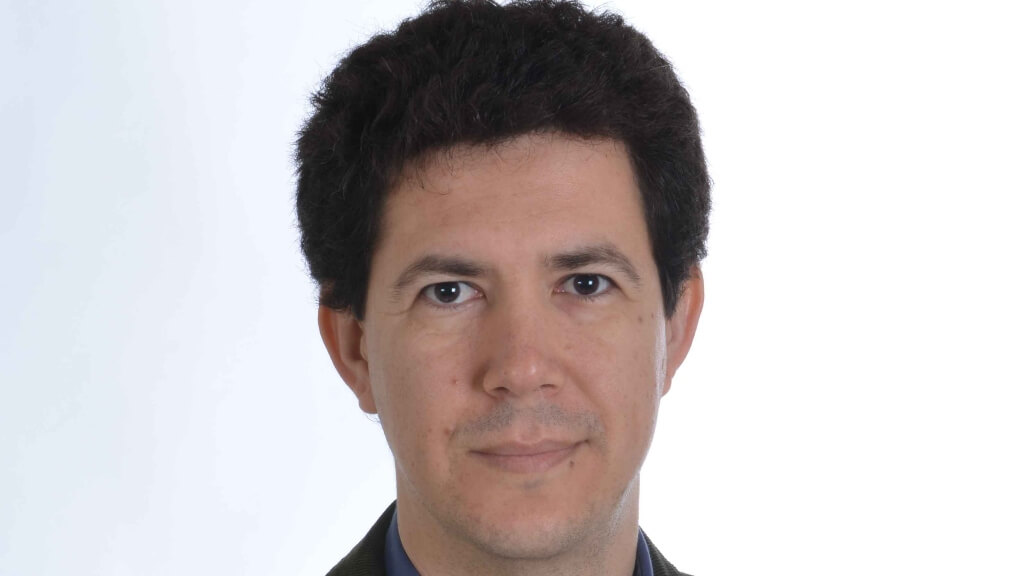
Carles Brasó, researcher and member of the UOC's Faculty of Arts and Humanities
The International Convention of Asia Scholars (ICAS) has awarded its 2023 International Book Prize Spanish Language Edition to Carles Brasó Broggi, professor of the Faculty of Arts and Humanities and researcher with Crisis, Otherness and Representation (ALTER) group at the Universitat Oberta de Catalunya (UOC), for his latest work, Los médicos errantes: De las Brigadas Internacionales y la revolución china a la guerra fría. Brasó, an expert in Chinese Economic History, explains where his passion for this country came from, the research and writing process for this work, and the influence of his grandfather, the doctor and writer Moisès Broggi.
The International Convention of Asia Scholars (ICAS) has awarded its 2023 International Book Prize Spanish Language Edition to Carles Brasó Broggi, professor of the Faculty of Arts and Humanities and researcher with Crisis, Otherness and Representation (ALTER) group at the Universitat Oberta de Catalunya (UOC), for his latest work, Los médicos errantes: De las Brigadas Internacionales y la revolución china a la guerra fría. Brasó, an expert in Chinese Economic History, explains where his passion for this country came from, the research and writing process for this work, and the influence of his grandfather, the doctor and writer Moisès Broggi.
Congratulations on the award, Carles. Were you expecting it?
I really wasn't, because the previous edition was won by my research group colleague, Carles Prado, and it seemed unlikely that they'd give the prize to someone from the same group. But the members of the jury appreciated that the book deserved the award, and of course I was very pleased. Now I'm trying to arrange to attend the ICAS conference to be held in July in Surabaya, Indonesia.
Where does your interest in China and its economic history come from?
My interest in China started as a teenager, from my love of Japanese manga. I studied the basics of the language so I could read the latest issues that were sold on Sundays at Sant Antoni market. I later gave it up but, while studying Sociology at the Universitat Autònoma de Barcelona, I had the opportunity to take optional courses on Asia and China. I was attracted to Chinese because I could use the few Japanese characters I'd learned as a teenager. In 2003, I was awarded a scholarship to study Chinese in Beijing, and there I consolidated my knowledge of the language. When I returned to Barcelona, I started a doctoral degree in History at the Pompeu Fabra University, where I had the privilege of attending lectures by faculty members Josep Fontana and Jaume Torras. Their influence led me to delve into the field of China's economic history.
Where did you get the idea for the book?
I got the idea around 10 years ago, when I discovered a book about the Chinese Brigade volunteers. I met the authors, a Taiwanese couple, when they presented the book in Barcelona. I told them how my grandfather, Moisès Broggi, had been in contact with doctors from the International Brigades, such as Norman Bethune, who'd gone to China after the Spanish Civil War. Then I moved to China myself for a research project, and we kept in touch. At a conference in Beijing I met the son of the Polish doctor Stanisław Flato, and that's when I knew that I wanted to research the subject more thoroughly. As there's already a lot of research on Bethune, I focused on Flato and the group of Central European doctors that form the main focus of the book.
Why do you think it is important to recover the memory of these doctors and fighters?
Firstly, because much has been written about the International Brigades and the Spanish Civil War, as well as about the Sino-Japanese War. The story of these doctors puts these two conflicts that preceded World War II on the same plane. The links between the two historical events are clear when looking at the press of the time but, for various reasons, they've been forgotten in later historiography.
Secondly because, as you'd expect, the literature on the International Brigades tends to focus on the Spanish Civil War. In my opinion, the International Brigades as a subject of study goes far beyond 1936-39, as they became a very cohesive and international group of men and women – in the latter case as members of the medical services – that played a prominent role in the second half of the 20th century. The book attempts to explore this lesser-known dimension of the International Brigades. And finally, I think that the memories of these doctors and nurses have an intrinsic value because they're part of 20th-century world history.
How did you find the information? Where did the archives you used to write the book come from?
Doing the research for this book was a slow process. I approached it as a long-term project from the beginning, and I did my research whenever I could, mainly taking advantage of trips. When I was finally able to fully dedicate myself to this research, the pandemic came along, and I had to work from home with my twins, who'd just turned one year old. I'd accumulated a lot of documentation, most importantly the files given to me by the doctors' families, but these documents had their problems: a significant amount of the material was written in languages I don't speak, mainly Czech and Polish. Since I had funding to travel but it wasn't possible at the time, I decided to invest in translation. This decision broadened the scope of the book, which was originally limited to the Spanish and Chinese episodes. In order to include the chapters on these countries, I studied the history of Czechoslovakia and Poland, which are quite far from my field of expertise. But this effort was worth it, because the book took on a global and biographical dimension that otherwise would have been impossible.
What is the profile of the doctors who went to fight with the International Brigades in the Spanish Civil War and in China? Did they have any traits in common?
The volunteer doctors of the International Brigades' medical services came from very varied backgrounds. Just look at the range of nationalities: a statistic from early 1938 records around 250 doctors (mostly men), 491 male nurses and 261 female nurses of more than 30 nationalities. Although they came from very varied places – including countries such as New Zealand, China and Brazil – they shared a commitment to fighting for the internationalist cause. They all considered the Spanish Civil War to be the first chapter in a global conflict that indeed followed shortly afterwards. They thus shared an internationalist and anti-fascist stance but, apart from that, they had very different profiles. Although the International Brigades as an organization was led by communists, most doctors and nurses weren't affiliated with any political party.
What were their motivations to fight another war after the harshness of the previous one?
According to the writings of the time, their motivation came from this internationalist aspect: if the first chapter of this struggle was fought in Spain, despite the distance, China was an obvious next step. It should be noted that the doctors and nurses had a military rank, but they didn't fight in the offensives, although they worked near the front. As stated in a leaflet from the time, theirs was a fight against death, to save lives. Finally, their decision to travel to China was also partly a matter of necessity: when they left Spain in the winter of 1938-39, many of these doctors and nurses couldn't return to their countries of origin and were held in refugee camps in the south of France. Volunteering to go to China was their way of regaining their freedom.
Have you been able to talk to any of these doctors' descendants? What do they think of what their ancestors did?
Yes, one of the most interesting parts of this research was meeting the sons and daughters of these doctors and nurses. It's interesting to note that, while some did all they could to facilitate my research, placing family archives at my disposal, others chose not to do so. This second generation mostly admires their parents but, at the same time, the family legacy of the International Brigades has also caused them suffering. I'm talking about all the descendants of these doctors who grew up in Eastern European countries during the toughest decades of the Cold War. Some people want to remember or look back on those episodes of the past, but some prefer not to do so, and historians must respect that.
Now let's talk about the research carried out with the Crisis, Otherness and Representation (ALTER) group. What are its aims, and what can it contribute to society?
ALTER focuses on exploring aspects of representation and otherness – becoming aware of other people's point of view – in comparative perspectives in the fields of history, literature and translation. Although most of our work has related to Europe's interactions with East Asia, especially China and Japan, we also have researchers working in other fields (Africa and Latin America) always trying to incorporate non-Western perspectives and question established paradigms. This way, we seek to provide perspectives of these regions to discover new links and relationships that bring them closer and make them easier to understand. In relation to this, we believe that the research carried out by ALTER has the social function of questioning stereotypes and biases related to these areas of knowledge.
How do you see present-day China? How do you think the Chinese regime and society will evolve?
I first travelled to China in 2003, when the first health crisis caused by SARS arose. Luckily, that virus had no consequences, and I enjoyed a whole year of learning Chinese in Beijing. It was an unforgettable experience. I then continued to travel to China in 2005, 2007, 2009, etc., sometimes for one or three months at a time, until I moved there in 2012. I worked in several companies until I was awarded a two-year postdoctoral fellowship, which allowed me to go back to the world of research and live in Shanghai until 2014, when I decided to come back to Barcelona. I continued travelling to China, more or less every year, until 2018. Then the pandemic came along, and I still haven't been back. I plan to do so early next year.
I think the China I'll see will be quite different from the one I remember. In all these years, I've seen the country's very quick transformation in terms of economic growth, but also less positive trends that have gradually become established. For example, it used to be thought that the relationship between China and European countries would improve as China converged with developed countries from an economic point of view, but this optimistic view has proven wrong. This has effects in multiple areas: the economy (supply chain disruptions), the political sphere (a Cold War-like climate) and academia (university and research relations with China are more difficult than they used to be).
What projects are you working on, and which ones do you have in mind for the near future?
Right now, I'm working on several projects that can be summarized in two main areas: the first one continues with the topic of the book, recovering the careers of doctors who practised their profession in the Spanish Civil War and produced medical innovations – such as the case of Frederic Duran Jordà's blood transfusions – and discussing how this knowledge was transferred to other countries through the network of International Brigades doctors. Secondly, I have a line of research that focuses on the economic history of China. Specifically, I'm trying to find personal testimonies – something along the lines of the doctors' biographies – to help us understand the socio-economic transformations undergone by China in recent decades, not so much from a broad perspective – as is often the case when talking about contemporary China – but from a small, micro-historical and/or biographical perspective.
UOC R&I
The UOC's research and innovation (R&I) is helping overcome pressing challenges faced by global societies in the 21st century by studying interactions between technology and human & social sciences with a specific focus on the network society, e-learning and e-health.
Over 500 researchers and more than 50 research groups work in the UOC's seven faculties, its eLearning Research programme and its two research centres: the Internet Interdisciplinary Institute (IN3) and the eHealth Center (eHC).
The university also develops online learning innovations at its eLearning Innovation Center (eLinC), as well as UOC community entrepreneurship and knowledge transfer via the Hubbik platform.
Open knowledge and the goals of the United Nations 2030 Agenda for Sustainable Development serve as strategic pillars for the UOC's teaching, research and innovation. More information: research.uoc.edu.
Press contact
-
Editorial department