
UOC promotes the uoc.Ωmega mission to collectively imagine an AI-native university
Rector Àngels Fitó has presented the initiative within the framework of the 5th edition of the teaching innovation event UOC2TheFuture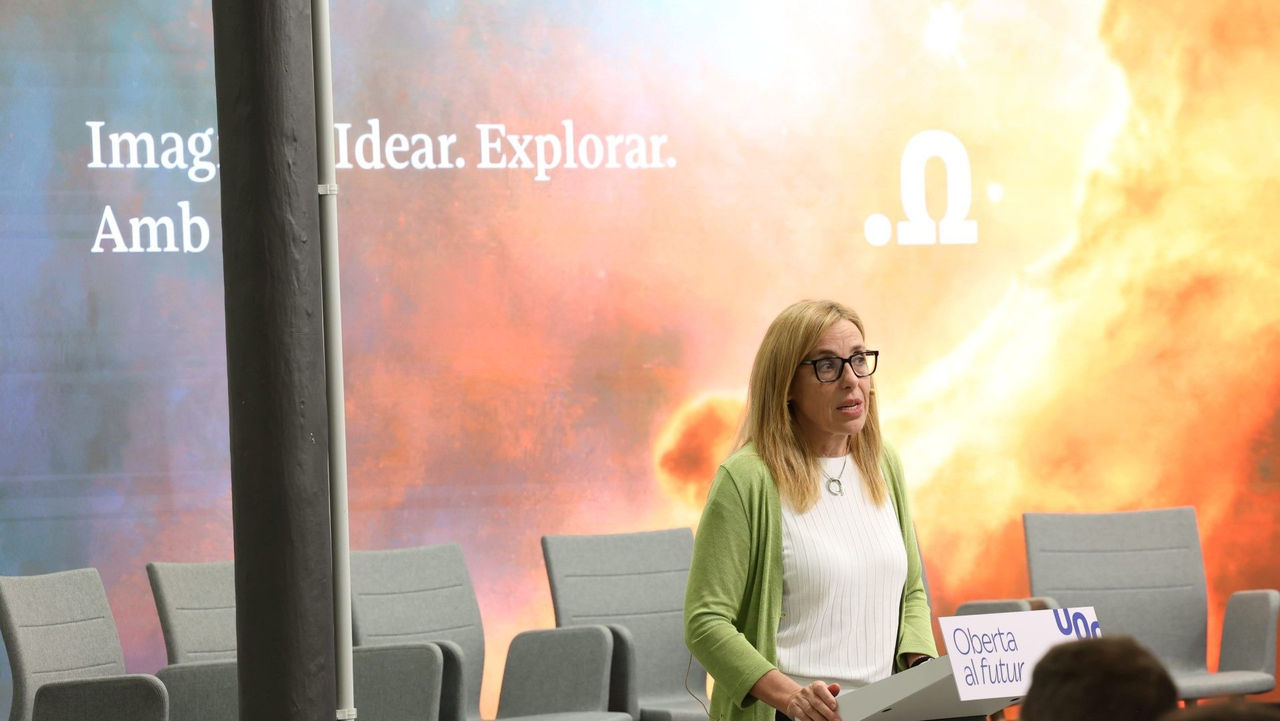
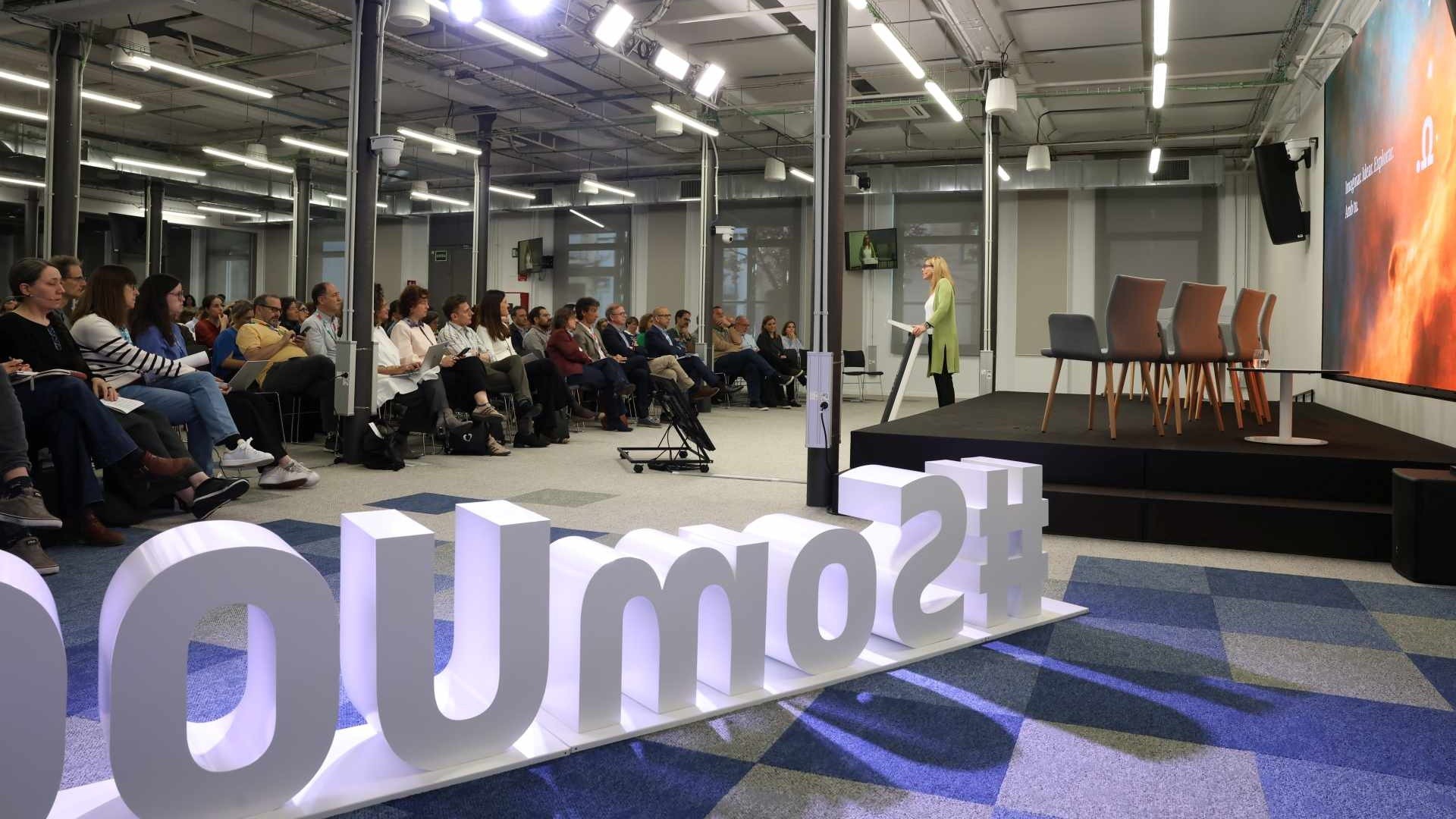
In her speech opening the fifth UOC2TheFuture, the rector of the UOC invited the university community to join the uoc.Ωmega mission, which aims to collectively imagine a new AI-native UOC. While it always focuses on strategic issues for the university, at this year's event the rector called for reflection on how artificial intelligence is transforming the way we learn, produce knowledge, make decisions and build trust.
The rector reminded those present that the UOC "was created based on a bold intuition: the understanding that the internet was not just a technology, but an opportunity to rethink the university from the ground up". Today, against a backdrop of profound transformation being driven by artificial intelligence, she argued that AI "is no longer potential for the future, but instead a change in the environment" that means universities must think ahead and reconsider the model that society needs.
She explained that this requires "a transition from shared inquiry to collective action" and an institutional response that is able to meet the challenges arising from this change. She stressed that initiatives like AI Week, #UOC2TheFuture and the different academic and research symposiums and forums for the creation of shared knowledge are part of "the same momentum," a momentum aligned with the 2026-2030 Strategic Plan.
This is the backdrop for the launch of uoc.Ωmega, a strategic and collective initiative which according to the rector, is "a call to foster internal talent to collectively imagine the UOC's evolution towards an AI-native university". The scheme seeks to create a space for pooling ideas in order to reflect on the learning experiences of the future, the role of teaching teams and how to preserve "human agency, criteria and critical thinking" in an environment that is increasingly determined by technology.
The rector pointed out that the challenge is not only to incorporate new tools and improve existing processes, but also to ensure that "technology increases – and does not replace – the educational value" of universities. She also called for the entire university community (students, teaching collaborators, and other groups participate by invitation) to engage with the project, saying that "the most significant transformations do not come about just because the context changes, but because there are communities which are able to read the situation, which seek to anticipate it, and which have the courage to build their own responses".
“The most meaningful transformations do not happen only because the context changes, but because there are communities capable of understanding it and building their own responses.”
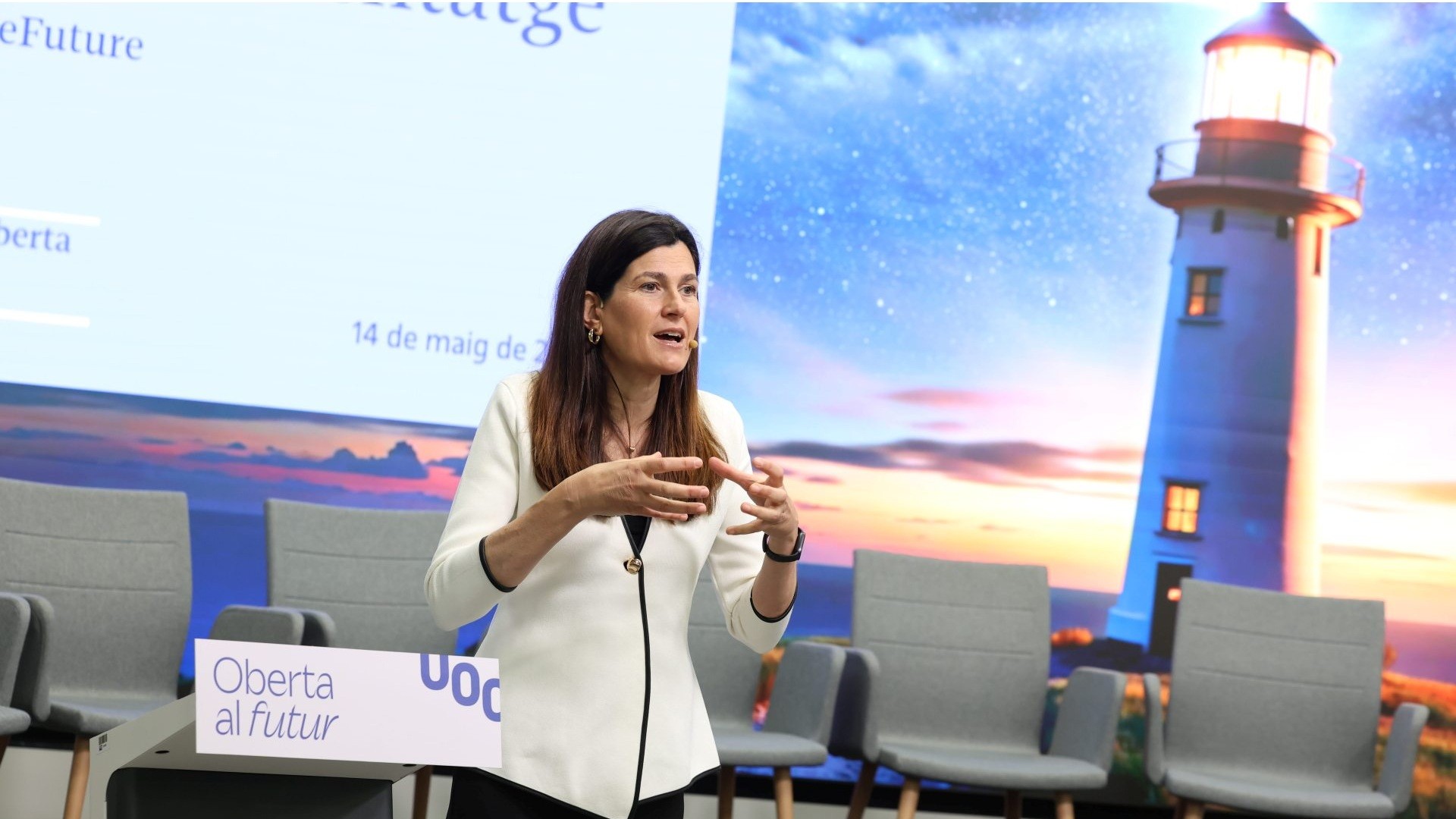
After the rector's speech, the Vice Rector for Teaching and Learning, Teresa Guasch, highlighted how we are now facing an important, but thrilling challenge, and focused on the need for an ongoing evolution of the educational model in order to adapt it to social and technological changes. Guasch argued that educational innovation should go beyond just incorporating technology, and requires a way of rethinking learning and the role of the university in an environment that is being radically transformed by digitalization and artificial intelligence.
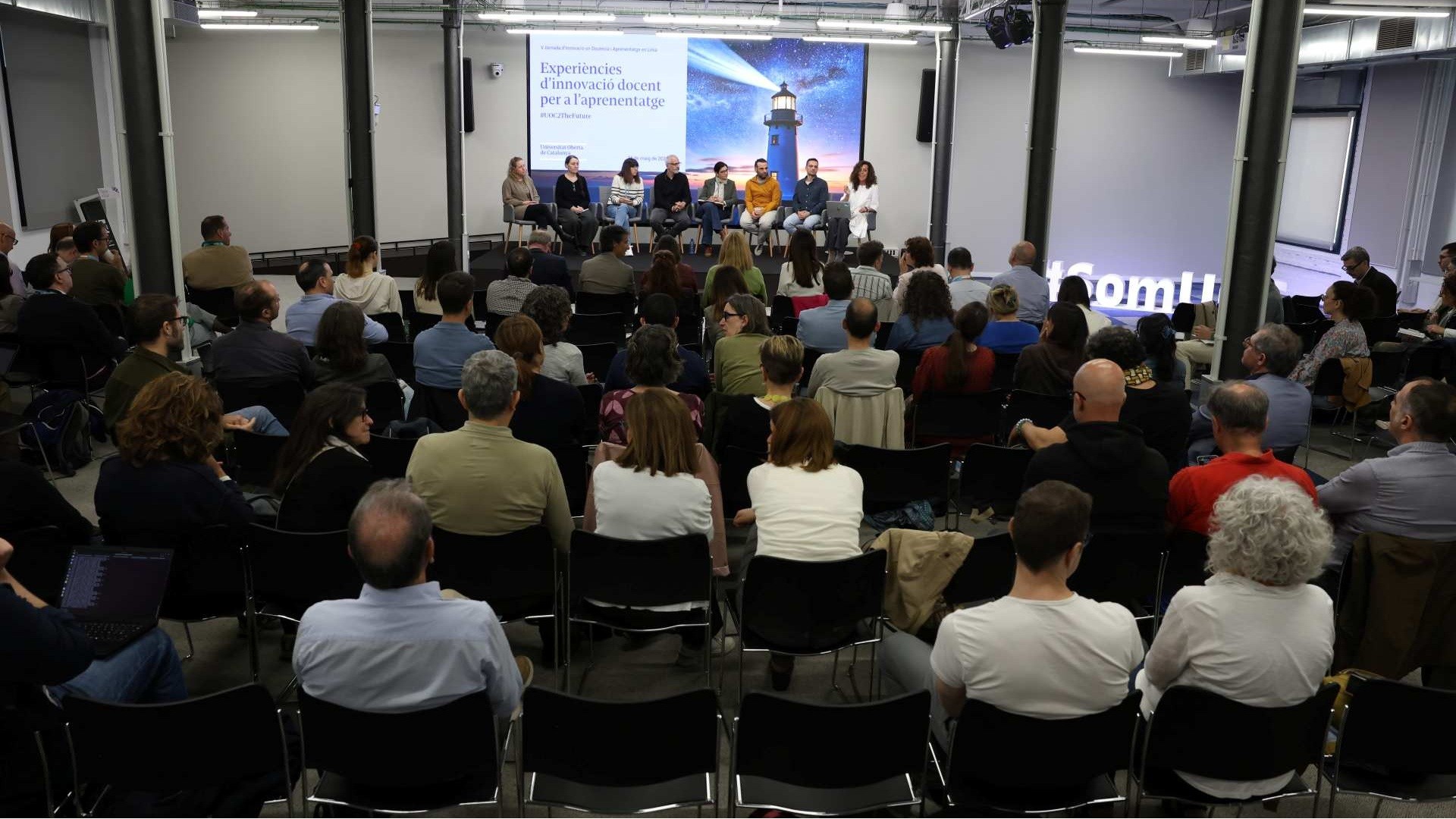
She thanked the teaching staff for their efforts and continued commitment to improvement every semester, and pointed out that more than 300 people were attending the event, which was organized by the eLearning Innovation Center (eLinC) with support from the Office of the Vice Rector for Teaching and Learning. It has become the major focal point for the community. The vice rector underlined the value of these opportunities "which help us to share, learn and improve collectively". She also said that this fifth event would focus on sharing each faculty's experiences to spark debate and connect ideas, with subsequent workshops to continue learning based on practice and collaboration between the faculties.
The vice rector also highlighted the presence of students – "the people we work for" – and course instructors. She emphasized UOC2TheFuture's high profile outside the institution and the fact that it is an ongoing project throughout the year. The website has been visited by more than 40,000 unique users since 2022, and today it has more than 170 resources and 67 innovation practices which have been shared at events like the one held this year. The portal will be updated to include this year's initiatives, and is open to further contributions.
Guasch also said that within the framework of the SUMA training plan, the eLinC has organized 4 knowledge transfer cafés, 2 bootcamps, 18 workshops and a webinar, which were attended by more than 300 members of teaching and research staff. She also said that progress is being made in transferring the results of the AFIA (Assessment, Feedback, AI) pilots to the plan to develop programmes and courses. The plan is currently being applied to three programmes in order to produce a scalable model.
Real innovations applied by teaching staff
The first part of the event focused on presentations and debates about seven teaching innovation developments implemented by teaching staff in different knowledge areas. The projects show how educational innovation can be applied to highly diverse disciplines while sharing a common goal: creating more active, contextualized, immersive learning experiences that are connected to real professional conditions.
One of the projects presented focused on collaborative working in online environments and how these dynamics evolve in the new Canvas ecosystem. The initiative, presented by Mònica Vilasau, a member of the Faculty of Law and Political Science and the DITD research group, examined how to transform collaborative online learning into more participatory and meaningful experiences for students, while reinforcing peer interaction and the collective construction of knowledge.
Another of the projects, presented by Ricard Espelt and Quelic Berga, members of the Faculty of Economics and Business and the Faculty of Computer Science, Multimedia and Telecommunications, respectively, looked at learning based on case studies and the digital portfolio (Folio) in the field of the social economy. This innovative practice was developed to connect students at the UOC with socio-economic organizations in different locations, with teaching as the foundation and students taking the leading role. This approach makes the student an active agent who works on real organizations in their local area, and builds a professional pathway using the Folio platform.
In the artistic sphere, Aida Sánchez, who teaches on the Bachelor's Degree in Art, presented an experience linked to the Collaborative Art course, aimed at providing students with an understanding of real environments of professional practice without adopting a merely utilitarian profession-focused perspective.
The approach combines an analysis of real collaborative projects, the study of calls for cultural funding and debates with professionals currently working to help students create their own critical position.
A changing context
Artificial intelligence played a prominent role in many of the experiences presented. Sílvia Martínez, from the Faculty of Information and Communication Sciences, developed an innovative initiative in the Journalism and Social Media course, which incorporates a Gemini-based generative AI assistant to simulate professional journalistic writing.
The activity places students in an immersive scenario in a multilingual classroom where they must negotiate and justify editorial decisions before a “virtual editor-in-chief”, designed as a journalist who is not familiar with the dynamics and communicative strategies of social media. According to the results presented during the event, the experience has been well received for its pedagogical value, as it has fostered a better understanding of the professional role, improved argumentative skills, and critical reflection on practice and on what has been learned during the process.
In another initiative related to personalized learning, María Jesús Marco Galindo, a member of the Faculty of Computer Science, Multimedia and Telecommunications, presented a project aimed at repeat students, which focused on analysing their performance, behaviour and opinions. The project looks at how to identify factors that improve academic support, and the design of teaching strategies that are more suitable for the real needs of students in online environments.
Adrián Montesano, from the Faculty of Psychology and Education Sciences, presented another project linked to artificial intelligence: a simulation with virtual patients that uses generative AI for training in therapeutic skills. The project recreates complex clinical scenarios in safe and controlled environments, where the student can practise professional and communication skills without any real risk.
Another of the experiences that was the focus of most interest was presented by Luis Franco Serrano, a member of the Faculty of Health Sciences, which looked at virtual simulators and asynchronous practices in the health sciences. The project, which has been applied to the Microbiology and Toxicology course in the Bachelor's Degree in Human Nutrition and Dietetics, combines theory, immersive Labster simulators and practical activities that students carry out at home. The idea comes in response to a range of common challenges that arise in remote training in the health sciences: ensuring students have the same level of skills, providing more hours for experimentation, allowing error-based learning, and making abstract concepts understandable using interactive visual simulations.
"This time round, rather than a round table with teaching staff presenting innovative practices, we wanted to have a forum involving all those attending. As a result, faculty members, course instructors and students debated four major topics of interest: personalizing learning, working collaboratively, fostering critical thinking and using AI", explained Silvia Sivera, Director of the eLearning Innovation Center (eLinC) at the UOC.
The event included an exhibition space for sharing knowledge with posters on other experiences of teaching innovation applied in the UOC's classrooms, including the critical use of generative artificial intelligence in the university Master's Degree in Taxation, developed by Ana María Delgado, Benja Anglès, Paloma García and Rafael Oliver, and the promotion of active learning in the Bachelor's Degree in Law by means of debates and quizzes, by Marta Balcells and Maria Julià.
The other projects presented included those by Gemma Jordà (eLinC), which looked at diversity and Universal Design for Learning (UDL), and Alfonso Igualada, which looked at strategies for optimizing feedback with AI.
Alongside these projects, there were also other initiatives that have reached beyond the UOC, like those presented at the UOC International Staff Week 2026. These included Emiliano Labrador and Paloma González's Kilometre Zero Strategy for integrating users' research into local businesses and the Toolkit for Anti-Racism in Education developed by Adriana Ornellas, Amalia Creus and Ines Martins.
The uoc2thefuture website also acts as a dynamic repository where users can consult more innovation practices linked to the topics covered at the event. These include the collaborative design of STEAM projects as a mathematical learning engine, led by Andrea Corres, and the use of peer assessment to improve academic performance in online mathematics courses, developed by Marc Guinjoan and Teresa Sancho. The site also has methodologies for support and authorship in master's degree final projects in online environments, by Miguel Ángel Elizalde and Maximiliano Astorga, and the application of the FEED2LEARN model for improving interactive feedback for students in the legal field, explained by Anna María Ruiz. These digital resources let members of the education community find out more about the technical and pedagogical details of each project whenever they need to.
Co-creation spaces
The event also included workshops and co-creation spaces which focused on transferring the university's major strategic challenges to everyday teaching practice.
In smaller groups, teaching staff discussed the personalization of learning in the classroom with a pilot feature for adapting content and activities to different student profiles, examined the potential of Gemini Gems as role simulators for learning, and looked at how to incorporate institutional strategic priorities in course design while maintaining pedagogical consistency. One of the workshops in this second part of the event brought together students, teaching staff and course instructors to examine barriers to learning, and co-create solutions from an inclusive perspective.
Experts UOC
Press contact
-
Leyre Artiz