
A new platform shows brands whether an influencer is effective before they hire them
Indatika is a project by a UOC bachelor's degree holder based on her experience in digital marketingThe database gives brands more information and better safeguards when choosing partners
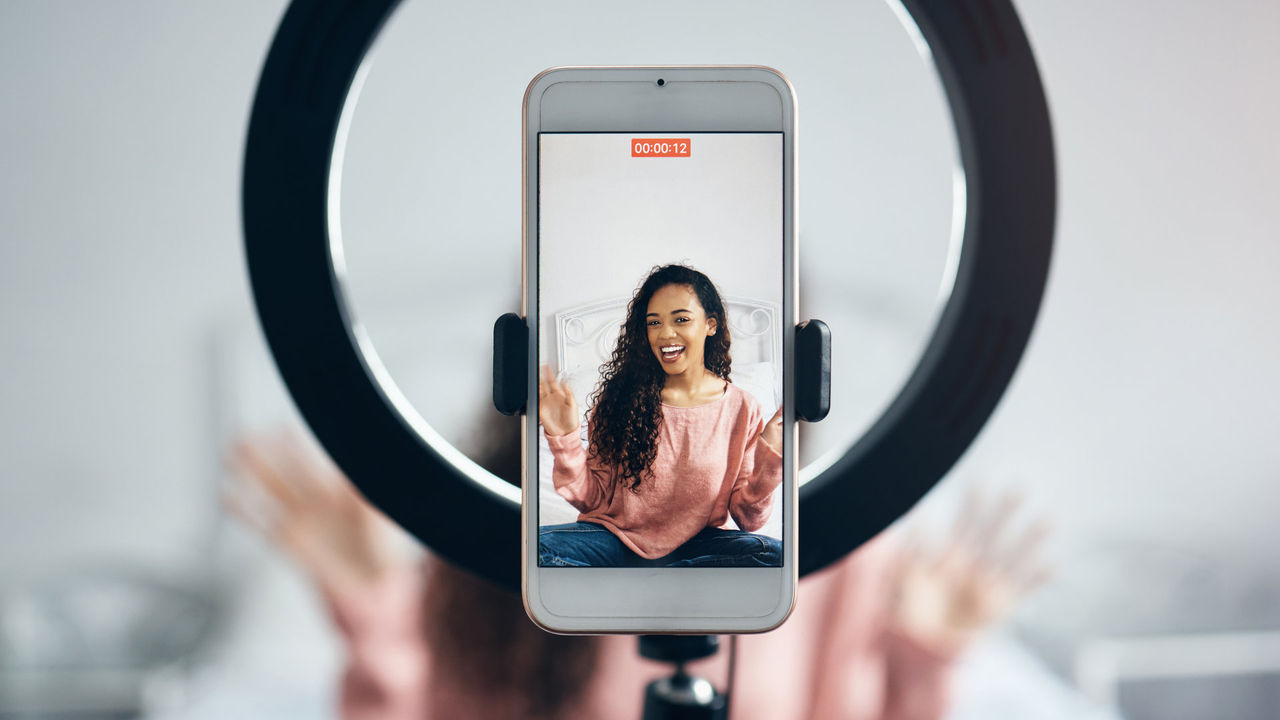
"Like TripAdvisor, but for influencers." That is how Paola Chaler, an entrepreneur and a finalist in the SpinUOC 2025 programme, describes the Indatika platform which she has helped to create. The project gives brands a tool they can use to assess and select partners based on real opinions from other companies, in order to improve their results and reduce risks in their marketing campaigns involving influencers.
When Paola Chaler was working for a small brand with limited resources, a successful partnership with an influencer changed everything. "It took off straight away. And it was obvious to me that choosing the right partner could have a major impact, but that finding the right profile is very difficult," she explained.
Paola Chaler presenting Indatika at the SpinUOC final on 26 June
This experience, which she had while she was a student on the Bachelor's Degree in Communication programme at the Universitat Oberta de Catalunya (UOC), inspired her to develop Indatika as her degree final project. What started as an academic idea has now become a real platform which helps brands make better decisions when hiring influencers.
“The aim is to rate influencers based on the real return they have generated”
The project combines practical knowledge of the sector with technology: while Chaler is in charge of the strategic and commercial side, the technical development was carried out by her partner, Pol Boguña, who is the backend and frontend programmer. As a result of this collaboration, they have created a comprehensive and functional product from the beginning, which is entirely focused on the market's real needs.
How Indatika works
Indatika is a web platform that compiles data and ratings related to influencers based on other brands' previous experiences with them. Users can add filters by country, number of followers, engagement, subject matter and content style, among other criteria. After entering those details, the brand can consult a profile containing metrics and a score based on five parameters: quality of the content created; manageability (response, flexibility and relationship); increase in followers after the collaboration; increase in visits to the website, and impact on sales.
Each profile can also include detailed comments, which are visible only to verified brands. The aim is to "rate influencers based on the real return they have generated," explained Chaler.
One of the platform's major differentiating values is that it offers qualitative information that goes far beyond the usual figures. In addition to how many followers an influencer has, it also provides information on whether the collaboration was fruitful, if their responses were prompt, whether they kept to their agreements, and whether they made the process easy. This human dimension, which is not often apparent in other tools, is crucial for ensuring effective collaboration.
A community based on trust
Indatika only offers access to verified brands in order to ensure the ratings are reliable. "We want it to be a community based on trust. Brands have a lot of respect for influencers, because public criticism can have consequences. That's why we work with restricted access and anonymity options," she explained.
Users can be anonymous or leave their name when posting ratings, and this always takes place in a secure environment. This allows brands to share their real experiences – both positive and negative – freely and without any pressure. This approach has led to active participation by brands of various sizes, who see the platform as a useful and discreet tool for optimizing their strategy.
Although only verified brands can access the platform, it is designed for growth and will gradually open up to influencers, and those working on a medium and small scale in particular, who are seeking to raise their profile and connect with brands with high standards. "We don't want only brands to look for influencers. We want to give them access to real opportunities for collaboration too," said Chaler. For this reason, they are now working on a feature that will enable both parties to interact directly through the platform.
From the database to the Tinder of influencer marketing
In the short term, the team aims to continue its growth of data volume in order to make the platform increasingly useful and reliable. In the medium term, Indatika wants to add features enabling direct contact between brands and influencers, "in a kind of Tinder where both parties can contact each other directly, based on ratings."
The business model will be based on a freemium subscription model: "We want the basic features such as ratings to be available to everyone, and especially SMEs, because they're the ones in most need of them. We'll be offering advanced paid functions later," said Chaler. "Marketing with influencers can be very expensive. We want to make it more efficient and accessible, especially for small and medium-sized companies, which are often overlooked by the existing platforms," she added.
The biggest challenge so far has been the technological side, as it involves developing and maintaining a platform with data that is constantly updated. But convincing the first brands to engage with a project that lacked volume was also a challenge at the beginning. "We had to convince them of what it could become. Today, with more than 600 ratings and 400 active influencers, we have a robust product that speaks for itself," she concluded.
Indatika supports United Nations Sustainable Development Goal 8, Decent Work and Economic Growth.
Research at the UOC
Specializing in the digital realm, the UOC's research contributes to the construction of future society and the transformations required to tackle global challenges.
Over 500 researchers and more than 50 research groups make up five research units, each with a mission: Culture for a critical society, Lifelong education, Digital health and planetary well-being, Ethical and human-centred technology and Digital transition and sustainability.
The university's Hubbik platform fosters the development of UOC community knowledge transfer and entrepreneurship initiatives.
The goals of the United Nations 2030 Agenda for Sustainable Development and open knowledge are strategic pillars that underpin the UOC's teaching, research and knowledge transfer activities. For more information, visit research.uoc.edu.
Experts UOC
Press contact
-
Núria Bigas Formatjé