
An entrepreneurial project brings the fight against climate change into the classroom through experimentation
POWAR STEAM enables teachers and students to simulate weather conditions, experiment with real-world data, and work on digital and environmental skills in the classroomThe project was short-listed in the SpinUOC 2025 entrepreneurship programme
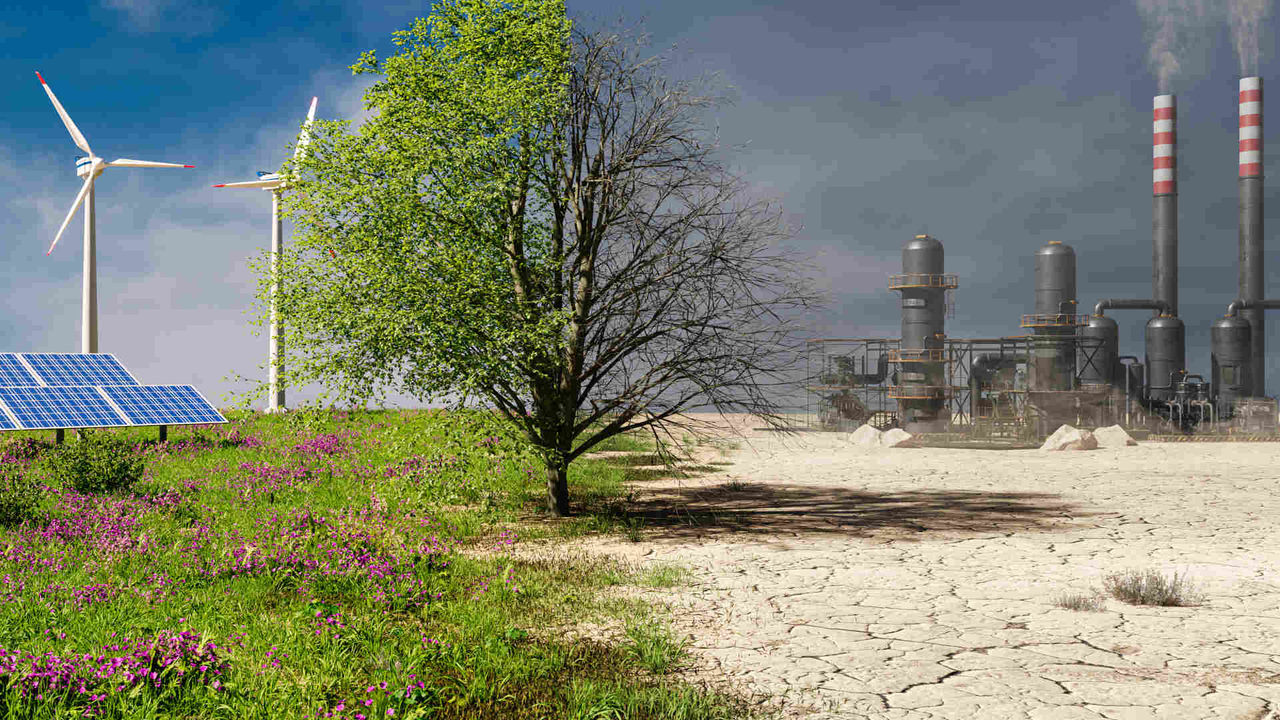
Science has been warning for decades of the risks of climate change caused by global warming. But only high-level scientific bodies have the models needed to fully understand the magnitude of these phenomena. They're also currently having to battle fake news and misinformation surrounding policies and measures to curb global warming and protect the regions and people thought to be most at risk from climate change.
The POWAR STEAM start-up was set up in response to this. It has designed a climate simulator for use in teaching, so that students can better understand the vicissitudes of climate change. "The project is based on a climate simulator designed for farmers who would like to understand the climate of the future in different cities. As a study by ETH Zurich points out, by 2050 Barcelona and Madrid could have the climate of Marrakech. I thought, 'How can we help farmers test the plants of the future in a changing climate today?'" explained Pablo Zuloaga, a participant in EduTECH Emprèn and founder of POWAR STEAM, a project whose focus shifted from "bringing tools to farmers to bringing them to schools, so they can experiment and compile data that could also be useful for the agricultural sector in the future," he added.
Learning by experimenting
The project is based on a STEAM (science, technology, engineering, arts, and mathematics) approach, so that "students not only understand and memorize problems, but also look to solve them. They can propose real solutions through data and emerging technologies," he said.
“That students not only understand and memorize problems, but also look to solve them”
For this purpose, POWAR STEAM consists of a climate simulator and an environmental minicomputer called P-Bit. The first is a box in which plants can be grown. It is connected to the internet and equipped with sensors and actuators that generate rain, heat or cold. The climate conditions can be configured through a digital platform that "compares the climate selected with the conditions in the box" to reproduce it and see how this would affect the plants grown in it, Zuloaga explained. Teachers and students can select the region whose climate they want to simulate in the box on an interactive map that will be available in the classroom. "In some tests we have done, students have fun with the map, so understanding latitudes, tropical zones or the fact that there are places in the world with few hours daylight or night each day, are things they can also learn in relation to climate resilience," explained the project designer. It allows educational centres to generate, compile and share data with other schools using the platform anywhere in the world.
Although the climate simulator was the starting point for the project, POWAR STEAM's current focus is the development and implementation of the P-Bit environmental minicomputer designed for the classroom. This easy-to-use, self-contained device equipped with built-in sensors allows students to measure variables such as temperature, soil moisture, air quality and light in real time. It is already being used in pilot schools as a cross-cutting tool for studying sustainability across different disciplines, and it meets the demand from teachers for accessible, practical resources aligned with the curriculum.
Versatile and adaptable
So far, the P-Bit has been tested in eight schools: five in Catalonia and three in Croatia, with more than 350 students and 50 teachers participating. The aim is to reach 1,500 schools and 90,000 students in the next five years. "We are developing a platform where teachers, students, and families can cooperate, share experiments, generate open data, and build an educational community around sustainability," said Pablo Zuloaga.
To achieve this capillarity, POWAR STEAM includes a series of sensors and devices designed to generate the events and situations to be simulated, but it is also compatible with third-party sensors, so that any school, course or teacher can exploit its capabilities to the full. Zuloaga also explained that currently they are training an artificial intelligence model that will enable teachers and students to present the specific situation they wish to simulate with an algorithm that will advise them on the climate computer configuration they should use to achieve this.
POWAR STEAM, which was short-listed for SpinUOC 2025, the UOC's programme for promoting entrepreneurship projects, is, according to its creator, an innovative resource for teachers of any subject who want to involve their students in processes that have to do with the future of society.
"The children really enjoy it, they feel like scientists. It isn't a toy, but it looks like one," Zuloaga emphasized, describing a project that "sparks curiosity" in students and allows them to become "agents of change in the future". "It's no use telling children that climate change is here if we don't let them look for answers and see that they can do something to change the world," he concluded.
This entrepreneurial project is aligned with the following UN Sustainable Development Goals (SDGs): 2. Zero Hunger; 3. Good Health and Well-Being; 4. Quality Education; 6. Clean Water and Sanitation; 7. Affordable and Clean Energy; 11. Sustainable Cities and Communities; 12. Responsible Consumption and Production; 13. Climate Action, 14. Life Below Water; and 15. Life on Land.

Research at the UOC
Specializing in the digital realm, the UOC's research contributes to the construction of future society and the transformations required to tackle global challenges.
Over 500 researchers and more than 50 research groups make up five research units, each with a mission: Culture for a critical society, Lifelong education, Digital health and planetary well-being, Ethical and human-centred technology and Digital transition and sustainability.
The university's Hubbik platform fosters the development of UOC community knowledge transfer and entrepreneurship initiatives.
The goals of the United Nations 2030 Agenda for Sustainable Development and open knowledge are strategic pillars that underpin the UOC's teaching, research and knowledge transfer activities. For more information, visit research.uoc.edu.
Experts UOC
Press contact
-
Leyre Artiz
