
A research study has shown that editing Wikipedia articles enhances learning
According to the researchers behind the study, working on the online encyclopaedia helps develop both digital and transferable skills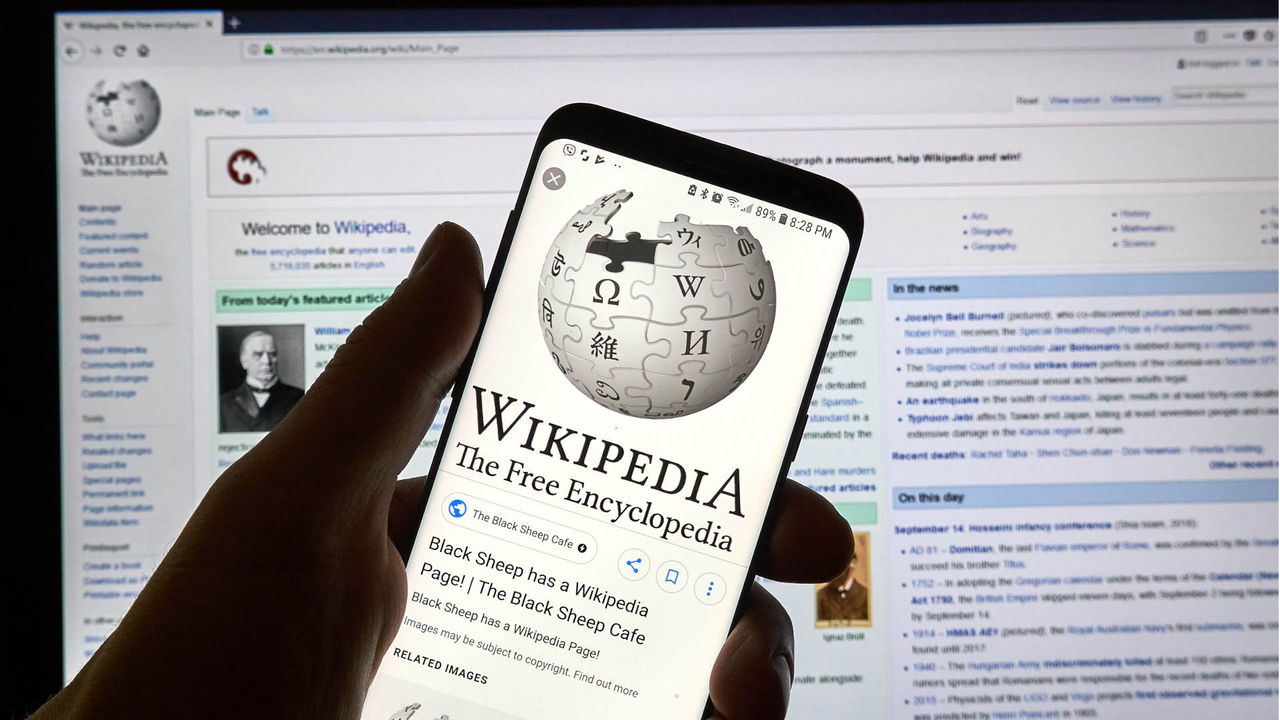
A study published in open access in the journal Educación a Distancia on the educational value of student contributions to Wikipedia has examined how working with others to edit articles in this online encyclopaedia can effectively support learning at university level.
The project, carried out by Marcelo Maina from the Universitat Oberta de Catalunya (UOC) and Ángel Obregón from Universidad Isabel I, looked at over 1,700 students of an online master's degree who made more than 57,000 edits to Wikipedia over eight academic semesters. Their contributions were assessed using ORES, an artificial intelligence system developed by the Wikimedia Foundation that can tell the difference between helpful edits and those that could harm an article.
The study, published under the title Student contributions to Wikipedia as evidence of learning and development of competencies in distance education, found clear evidence of learning progression and continuous improvement in the quality of contributions in the edits. The researchers noted that "the (high) good faith and (low) damage observed demonstrated the development of digital skills and compliance with Wikipedia's publication standards."
“Editing Wikipedia not only fosters the development of specific skills but also promotes collaboration, digital literacy, and critical thinking”
Enhancing transferable skills
The study confirms that, beyond learning within a given discipline, this methodology fosters key transferable skills. According to Maina – a member of the Education and ICT research group (Edul@b) of the UOC-FuturEd centre and a member of the Faculty of Psychology and Education Sciences – and Obregón, "this collaborative writing approach has not only enabled students to learn more about topics relevant to their course but has also fostered the development of critical thinking, reflection, teamwork and digital skills."
The project was structured in phases, starting with document-based research and collaborative writing at a Wikipedia workshop and culminating in the publication of an article on the platform itself. The supervision provided by teaching staff was key. "No group managed to publish without guidance on their first attempt, which suggests that editing to the necessary standards requires prior training," said the experts.
Although most participants did not go on to edit more Wikipedia content after the study, the articles they published remained largely unchanged, with only a few subsequent corrections, which speaks to the high quality of their contributions.
In conclusion, the findings provide sound evidence that, far from merely offering information, Wikipedia can play a valuable training role in distance higher education. By way of summary the professors said that "editing Wikipedia as a learning exercise helps students develop not only specific competencies but also transferable skills such as collaboration, digital literacy and critical thinking."
This research project is aligned with the UOC's Lifelong learning research mission and supports UN Sustainable Development Goal (SDG) 4, Quality Education.
Related paper
Obregon Sierra, Ángel, & Fabián Maina, M. (2025). Las contribuciones de los estudiantes a Wikipedia como evidencia de aprendizaje y de desarrollo de competencias en educación a distancia (Student contributions to Wikipedia as evidence of learning and development of competencies in distance education). Revista de Educación a Distancia (RED), 25(82). https://doi.org/10.6018/red.640511
Transformative, impactful research
At the UOC, we see research as a strategic tool to advance towards a future society that is more critical, responsible and nonconformist. With this vision, we conduct applied research that's interdisciplinary and linked to the most important social, technological and educational challenges.
The UOC’s over 500 researchers and more than 50 research groups are working in five research units focusing on five missions: lifelong learning; ethical and human-centred technology; digital transition and sustainability; culture for a critical society, and digital health and planetary well-being.
The university's Hubbik platform fosters knowledge transfer and entrepreneurship in the UOC community.
More information: www.uoc.edu/en/research
Experts UOC
Press contact
-
Leyre Artiz