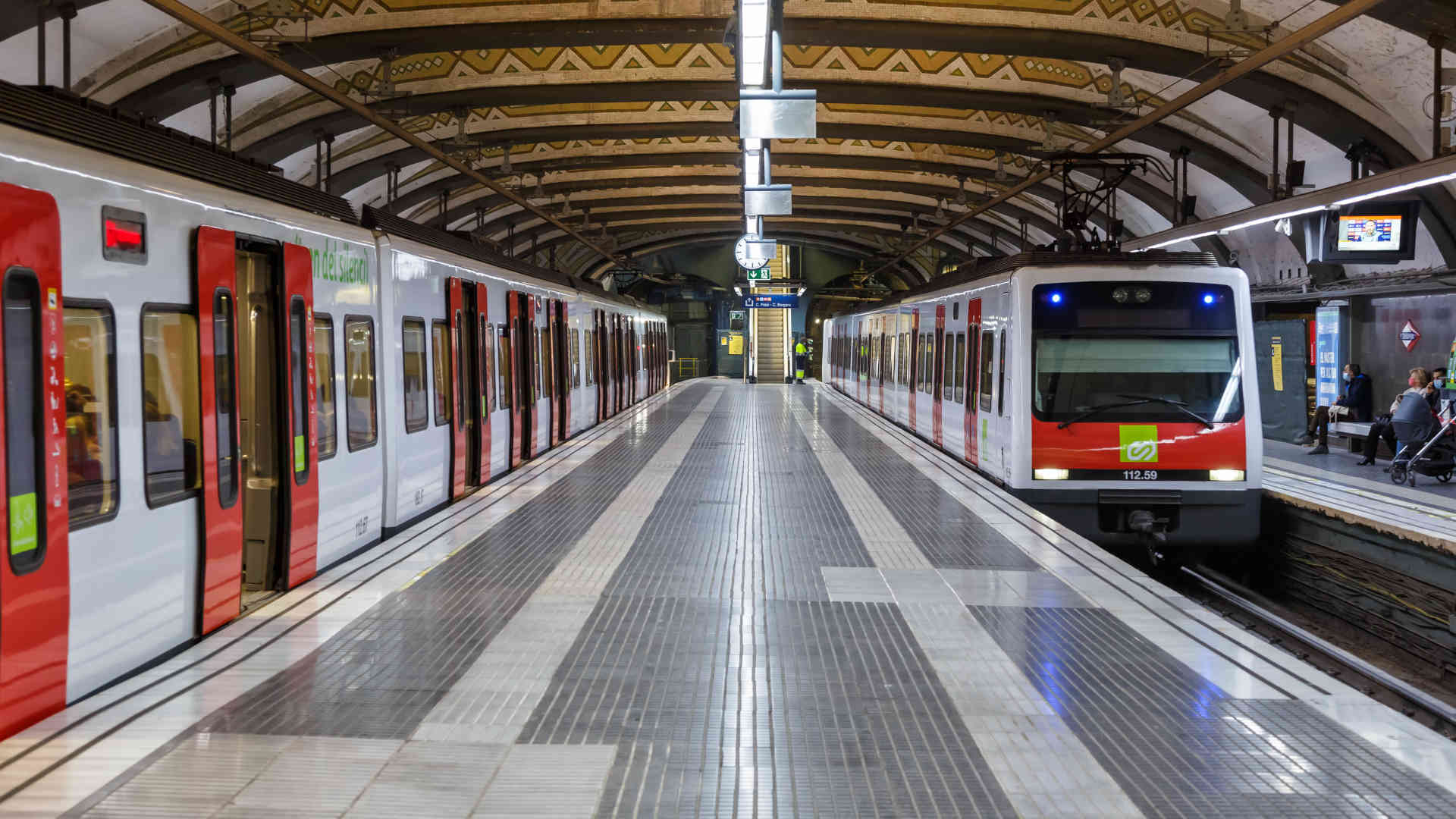
UOC researchers contribute to a new loading and unloading system for Barcelona
The goal is to prevent delivery trucks from double-parking and parking on pavements
In collaboration with Barcelona City Council, researchers from the Universitat Oberta de Catalunya (UOC) are trialling a loading and unloading system to be used exclusively for deliveries to the HORECA sector (hotels, restaurants, and cafeterias). The aim is to bring order and discipline to public roads, where the sight of delivery trucks double-parked or on the pavements is common.
The City Council will begin trialling the system in Plaça Reial, an area of the city with many restaurants. The trial will take place next year, will last 18 months and has a budget of 125,000 euros.
“Brings order to an activity that currently operates sub-optimally, with people double parking or parking on the pavement”
Small distribution hubs
The idea is that the new exclusive loading and unloading spaces will become a kind of small distribution hub from which the delivery driver can complete their work on foot or with light means of transport.
Cristian Castillo, researcher in the URBANLOG (Urbanization, Trade and Sustainable Logistics) group, member of the UOC's Faculty of Economics and Business and leader of this initiative, explained "Imagine a designated zone, painted on the ground, in which only HORECA sector drivers can park; if you're delivering a package to a home, you can't park there."
Castillo, who belongs to the UOC-DIGIT research centre, added that this "brings order to an activity that currently operates sub-optimally, with people double parking or parking on the pavement". Catering transporters often service 25 to 30 clients, for which the standard 30-minute parking limit is insufficient.
Digital technology
In addition, the project includes a technological system for monitoring parking spaces in real time so that delivery drivers know whether they are occupied.
The project was jointly conceived by the UOC and ADISCAT (association of food and drinks distributors in Catalonia) as part of the Barcelona Innova Lab Mobility, an initiative promoted by Barcelona City Council, Fira de Barcelona and Mobile World Capital Barcelona. The project, called DUMH-BCN, was the winner among 30 proposals.
This project aligns with the UOC's Digital transition and sustainability research mission and contributes to the following UN Sustainable Development Goals (SDGs): 9, Build resilient infrastructure, promote sustainable industrialization and foster innovation; and 11, Sustainable cities and communities.
Transformative, impactful research
At the UOC, we see research as a strategic tool to advance towards a future society that is more critical, responsible and nonconformist. With this vision, we conduct applied research that's interdisciplinary and linked to the most important social, technological and educational challenges.
The UOC’s over 500 researchers and more than 50 research groups are working in five research units focusing on five missions: lifelong learning; ethical and human-centred technology; digital transition and sustainability; culture for a critical society, and digital health and planetary well-being.
The university's Hubbik platform fosters knowledge transfer and entrepreneurship in the UOC community.
More information: www.uoc.edu/en/research
Experts UOC
Press contact
-
Núria Bigas Formatjé