
Farmers’ mistrust challenges the digital revolution in irrigation
A UOC study has analysed why many farmers are hesitant to adopt digital irrigation technologies and what policies could be used to encourage their useThe study has concluded that, far from being rooted in ignorance, their scepticism is based on informed criticism based on their own experience of agricultural work
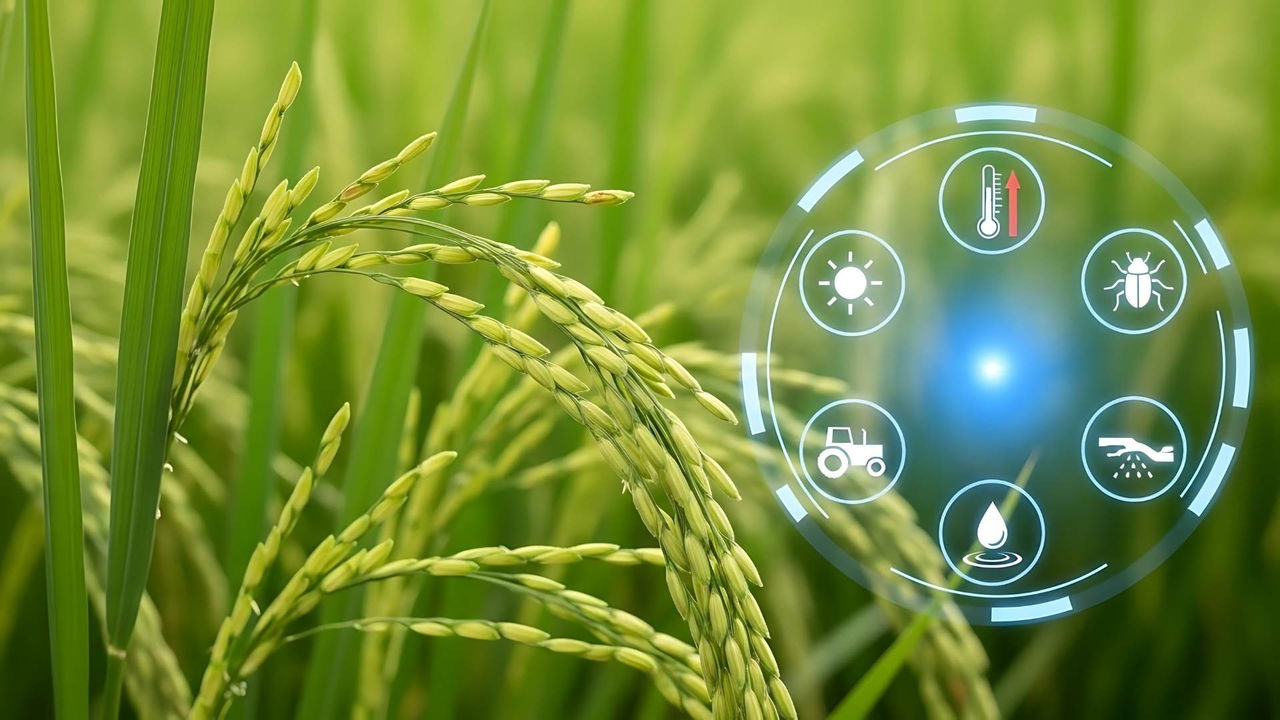
Discussions about digitalization in agriculture often start from the premise that farmers must adapt to new technologies. But what if we turned this approach on its head? What if it were technology itself that had to adapt to the knowledge, experience and needs of the people who work in the fields rather than the other way round?
A study by the Universitat Oberta de Catalonia (UOC) takes the opposite approach, arguing that farmers' lack of trust in digital irrigation technology does not necessarily stem from a lack of knowledge or willingness but is due to the fact that these solutions are often not suited to the actual conditions of the land or to the ecological and social complexity of agriculture.
The UOC-led study analyses why many farmers are sceptical of digital irrigation technologies such as those based on sensors, artificial intelligence (AI) or automated systems in Spain's Mediterranean regions, more specifically in areas of irrigated land in Andalusia and Catalonia. Addressing this issue is particularly important amid droughts and increasing pressure on irrigation systems.
"These tools are presented as key solutions for managing an increasingly scarce resource, but their success relies on farmers trusting that they are appropriate and reliable. The study shows that, in Mediterranean regions with water shortages, decisions about water have direct consequences on yields, food security and the economic stability of farms," said the researcher Paloma Yáñez.
Where does the lack of trust in digital irrigation systems come from?
Although public policies and institutions encourage digitalization in agriculture as a solution to water shortages and climate change, farmers can be slow to embrace these technologies. The study concludes that their scepticism is often founded on legitimate concerns, such as the tendency to ignore their experience, a lack of transparency by institutions or technical limitations.
All this has been considered in the study "Taking farmers' trust issues seriously": Mistrust and the digital tech revolution in water management, published in open access in the Journal of Rural Studies. Its authors are Paloma Yáñez Serrano (lead author) and Lucía Argüelles Ramos, both of them researchers at the UOC's Urban Transformation and Global Change Laboratory (TURBA Lab) group, and Louisa Prause, a researcher at the Environmental Policy department of the Helmholtz Centre for Environmental Research in Germany.
The study concludes that one of the challenges of agricultural innovation lies not in persuading farmers to adopt these technologies but in designing tools that are actually suited to their agricultural needs. It also notes that farmers' lack of trust can be used to encourage more appropriate innovation in accordance with their needs.
Five types of mistrust
Based on their findings, the authors propose a conceptual framework based on five types of mistrust to gain a better understanding of the relationship between farmers and technology: epistemic, ecological, institutional, practical and relational mistrust.
"Epistemic mistrust arises when digital systems ignore farmers' practical, sensory and context-based knowledge, instead using algorithmic models that fail to reflect the true complexity of the land. Ecological mistrust, for its part, arises when technology fails to take full account of climate variability or natural processes, relying instead on historical data or control cases that are unreliable in a changing climate," said Yáñez.
"The third type, institutional mistrust, refers to concerns about the economic and political structures behind the technology in question, especially when farmers feel that it benefits large corporations over family-run farms. Practical mistrust stems from specific experiences such as technical failures, inaccurate data or systems that are of little use in the real world. Finally, relational mistrust is linked to the failure to involve farmers in the design and development of the technology, rendering them passive users instead of active partners," said the researcher at TURBA Lab, a group attached to the Interdisciplinary Research Centre on Social and Cultural Transformations (UOC-TRÀNSIC).
A qualitative study to change the narrative
Methodologically, the study has taken a qualitative approach focused on analysing farmers' attitudes to digital irrigation technologies. A total of 23 interviews were conducted with various parties working in this sector (farmers, agricultural company representatives, technology developers and researchers) and supplemented with direct observation at technology fairs and an analysis of applications, reports and public policies on the digitalization of agriculture.
According to the UOC researcher, the findings suggest that a change of perspective may be in order. "The study implicitly suggests that the dominant narrative must change from the portrayal of farmers as luddites to the recognition that it is often the technologies themselves that are failing to meet the true needs of agricultural work," she said. This means that modernization must also include designing technologies that take into account the diversity of farming systems, particularly agroecological systems and those that foster biodiversity and local knowledge.
The authors of the study further argue that, instead of viewing it as a hindrance, farmers' informed mistrust should be used to improve productivity and the quality of technology in agriculture. Yáñez explained that "by acting as a form of scrutiny, it forces developers and policymakers to address farmers' actual concerns, improve transparency and design solutions that are better tailored to the needs of the land."
“Farmers’ mistrust is not due to a lack of knowledge, but to an informed critique based on field experience”
Recommendations for change
The article sets out recommendations to guide future agricultural digitalization strategies, such as co-creating technologies with the farmers themselves or designing transparency mechanisms (such as access to data and algorithms), as well as systems that recognize the diversity of agricultural practices instead of trying to impose a one-size-fits-all model. "These suggestions involve redirecting the funding of irrigation digitalization projects towards more participatory initiatives that are fully based on farmers' knowledge and needs in order to counteract their loss of agency in the development of technologies and the management of irrigation," said Yáñez.
The next steps in their research involve broadening the real-world scope of their work and testing whether their proposed approach to mistrust can also be applied to other agricultural settings. "Our proposal is merely a starting point for longitudinal and comparative studies analysing the relationship between farmers and digital technologies in a variety of socio-ecological settings. Our upcoming projects will focus on the role of digitalization in the scalability of regenerative, agroecological and syntropic farming systems," concluded the UOC researcher.
This project contributes to UN Sustainable Development Goals (SDGs) 8, Decent Work and Economic Growth; 12, Responsible Consumption and Production; and 13, Climate Action; and aligns with the UOC's Digital transition and sustainability research mission.
Reference article:
Serrano, P. Y., Ramos, L. A. & Prause, L. (2026). "Taking farmers' trust issues seriously": Mistrust and the digital tech revolution in water management. Journal of Rural Studies, 123, 104053. https://doi.org/10.1016/j.jrurstud.2026.104053
Transformative, impactful research
At the UOC, we see research as a strategic tool to advance towards a future society that is more critical, responsible and nonconformist. With this vision, we conduct applied research that's interdisciplinary and linked to the most important social, technological and educational challenges.
The UOC’s over 500 researchers and more than 50 research groups are working in five research centres focusing on five missions: lifelong learning; ethical and human-centred technology; digital transition and sustainability; culture for a critical society, and digital health and planetary well-being.
The university's Hubbik platform fosters knowledge transfer and entrepreneurship in the UOC community.
More information: www.uoc.edu/en/research



Experts UOC
Press contact
-
Núria Bigas Formatjé