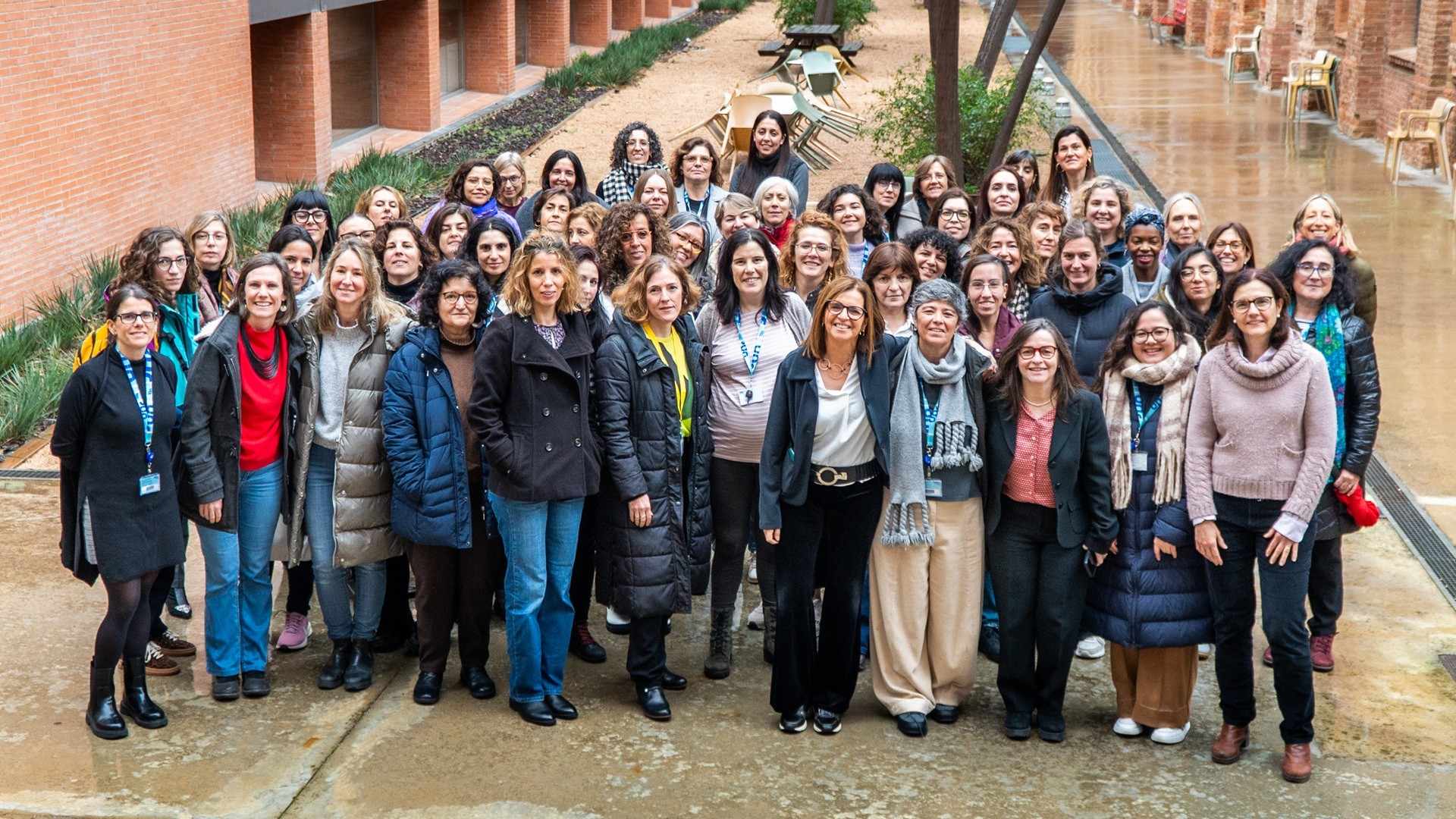
"Practices that discourage indigenous women from studying STEM degrees still persist"
Erika García Silva, award-winning researcher at the UOC
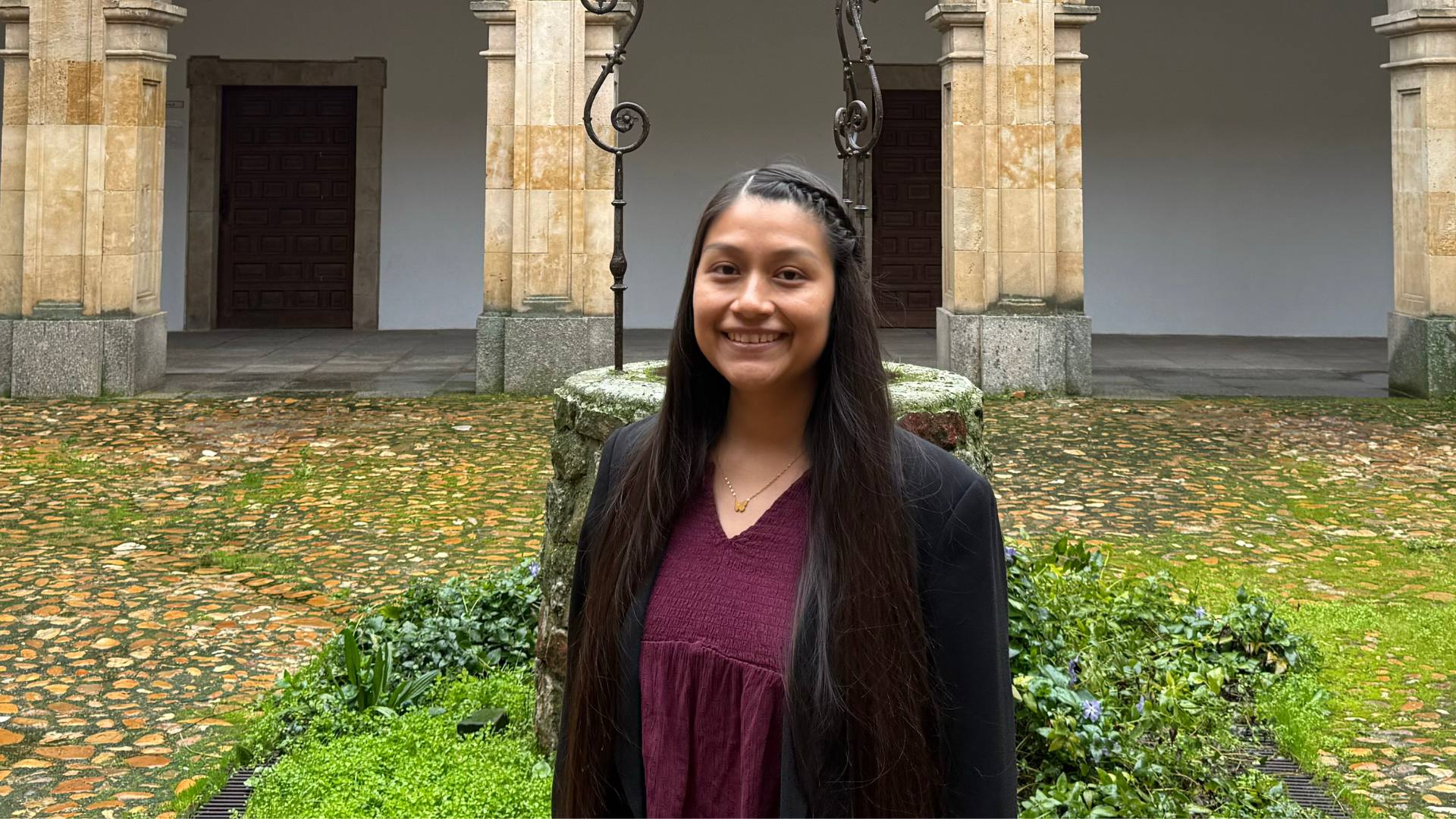
While many women face major challenges in terms of gaining access to scientific and technological degrees, the barriers are even more difficult to overcome for indigenous women. The researcher Erika García Silva, who is a member of the GRIAL Research Group in the University Institute of Education Sciences (IUCE) at the University of Salamanca, has received the Cecilia Castaño Award from the Universitat Oberta de Catalunya (UOC) in recognition of her studies on gender inequalities in science and technology. She was presented with the award, which is coordinated by the GenTIC research group affiliated to the UOC-TRÀNSIC research centre, for her thesis on how to mentor indigenous women and enable them to gain access to STEM studies. In this interview, García Silva explains why including indigenous role models and undertaking educational projects with an intersectional and cultural approach can encourage more young women to choose scientific degrees, which they have historically found difficult to access due to the influences of tradition and gender discrimination.
“Indigenous women need role models that allow them to envision themselves in STEM fields.”
Congratulations on your award, Erika. Can you tell us about your reasons for writing this thesis?
The reasons are both academic and personal. I am an indigenous woman, and my roots go back to two regions in the state of Oaxaca, Mexico: Cañada and Mixteca. I have experienced and seen at first hand how the educational lives of those of us who come from these regions are affected by various factors that create additional barriers in all stages of education: entry, continuation and graduation.
My personal experience is also reflected in the statistics, which show that indigenous people only account for between 1 and 3% of university enrolments in Mexico, and this gap is even more pronounced among indigenous women, and especially in areas like the STEM subjects. The thesis arose from the need to draw attention to this absence, and to propose educational strategies with an approach based on rights, social justice and intersectionality with a view to overcoming these inequalities.
What institutional practices reinforce structural racism and gender stereotypes in terms of access to the STEM field for indigenous women?
One of the most common practices is the lack of recognition of cultural diversity in the education system. Programmes of study often present science and technology as neutral knowledge that is unrelated to indigenous peoples' territories and knowledge, and this creates distance and a sense of alienation.
Careers guidance systems also play a role, by perpetuating gender and origin stereotypes, as well as the assumption that everyone starts under the same conditions, which ignores the inequalities that exist.
What have you found to be the main barriers that prevent indigenous girls from considering STEM studies and jobs?
They experience various barriers throughout their lives in education. One of the most significant is the lack of indigenous and female role models in STEM, which makes it difficult for girls to imagine themselves working in these areas.
Gender and ethnic stereotypes also play a role, as from an early age they convey the idea that these areas are not suitable for girls. This is in addition to the structural conditions on the ground, including limited access to educational resources and poor information about scientific career paths, and pressure from their family and community to follow traditional gender roles.
Many young women also have the feeling that they do not belong in educational environments, which is associated with experiences of discrimination or a lack of support, and this ends up discouraging them from continuing with STEM.
Progress through training mentors and the inclusion of indigenous female role models
What are the main features of this mentoring system?
The defining feature of the mentoring system I propose is its intersectional, culturally appropriate and social action-oriented approach.
Its key elements include training for mentors, context-sensitive matching based on affinities, peer and group mentoring, the inclusion of indigenous role models in STEM, and contextualized activities such as STEAM challenges and initiatives linked to the Sustainable Development Goals that are related to communities' real problems. The system also emphasizes sustainability and building support networks, and promotes medium and long-term support processes.
You conducted two systematic reviews: one on programmes for indigenous female students in STEM, and another on gender and ethnicity gaps. What were the most significant findings?
The first systematic review shows that programmes aimed at indigenous female students in STEM take place in both formal and informal contexts, and that the combination of both types, including flexible activities such as workshops, field trips and extracurricular experiences that include indigenous knowledge, create closer links with science and inspire interest in those areas from the early stages of education. Other core strategies identified were mentoring and the importance of including ancestral knowledge in order to strengthen identity, the sense of belonging, and the link with science.
The main findings of the second systematic review show that the gender gap in STEM cannot be addressed with a single approach, as it is influenced by ethnic, social, cultural and family factors.
Both reviews highlight the need for intersectional and culturally appropriate educational interventions that combine support, cultural relevance and continuity throughout the subjects' careers in education.
Gender and ethnicity gaps are evident not only in access, but also in continuation, careers guidance, the lack of cultural role models and institutional racism. Can you give some examples of these barriers within the system?
Yes. For example, in terms of access, many young indigenous women begin higher education without any clear information about STEM degrees and without having received sufficient scientific training in their original educational environments. While they are there, they often have to deal with heavily male-dominated classrooms, experiences of isolation, discrimination, and an absence of academic and emotional support, which makes them more likely to drop out.
Practices that reproduce gender and ethnic stereotypes persist in careers guidance, such as explicitly or implicitly discouraging indigenous women from studying scientific or technological degrees. The absence of cultural role models is evident in the limited presence of indigenous women among teachers, in the programmes of study, and in scientific outreach activities. Finally, institutional racism manifests itself in programmes of study that do not acknowledge the knowledge of indigenous peoples, ignore basic inequalities, and assume that everyone starts under the same conditions.
Beyond Mexico: a model to export
What does receiving the Cecilia Castaño Award mean to you?
For me, it is a great honour to have received this award, as it is recognition of the value of research that addresses the very important problem of gender and ethnic inequalities in terms of access to and continuation in higher education in STEM fields, as well as the voices and stories of indigenous women who have historically been invisible in the education and scientific system.
This recognition makes me even more motivated to continue working in this area, creating approaches to education that contribute to increasing opportunities for access to science and technology, without gender or ethnic origin acting as barriers.
Do you think this work can only be applied to indigenous communities in Mexico, or can it be rolled out to other communities in other territories?
This work is not designed to be limited to Mexico. Although the system was designed and validated based on experiences in Mexico, its principles of intersectionality, cultural relevance and social action mean that it can be adapted to other contexts and communities.
However, if it is to be applied elsewhere, this would require a process of adaptation that acknowledges each community's cultural, linguistic and territorial characteristics.
What are your next steps as regards this project? Are you planning to implement it in institutions?
My next steps are focused on consolidating and transferring the mentoring system to other educational contexts. First, I will continue with the academic dissemination of the results of my thesis, and to refine the model based on new evidence. My goal is to continue implementing it and placing it within institutions, especially in collaboration with schools, universities, and organizations that work with indigenous and rural populations.
The aim is for the system to be adaptable to different contexts, while maintaining its intersectional and culturally appropriate principles, and to make a sustainable contribution to improving indigenous women's access, continuation and participation in the STEM fields.
Do you think it will have a positive reception, or are there too many institutional prejudices for any changes to take place in the future?
I believe that there are conditions for the model to be received positively, although there is still some resistance at the institutional level. In my experience during the projects carried out in the thesis, I have seen more sensitivity towards gender equality and inclusion, which creates opportunities for this type of approach.
However, prejudices and traditional institutional dynamics are still an obstacle that remains to be overcome. As a result, the challenge is not only to implement the system, but also to maintain a dialogue with institutions, show that it is useful, and gradually foster change. Change is not immediate, but it is possible if it is built on evidence, collaboration, and a sustained long-term commitment.
References:
García Silva, E. (n.d.). Diseño y validación de un modelo de mentoría interseccional para mujeres indígenas en STEM.
Press contact
-
Anna Torres Garrote