
"Sustainable tourism has become all but a meaningless buzzword"
Raoul Bianchi, professor and researcher at Manchester Metropolitan University
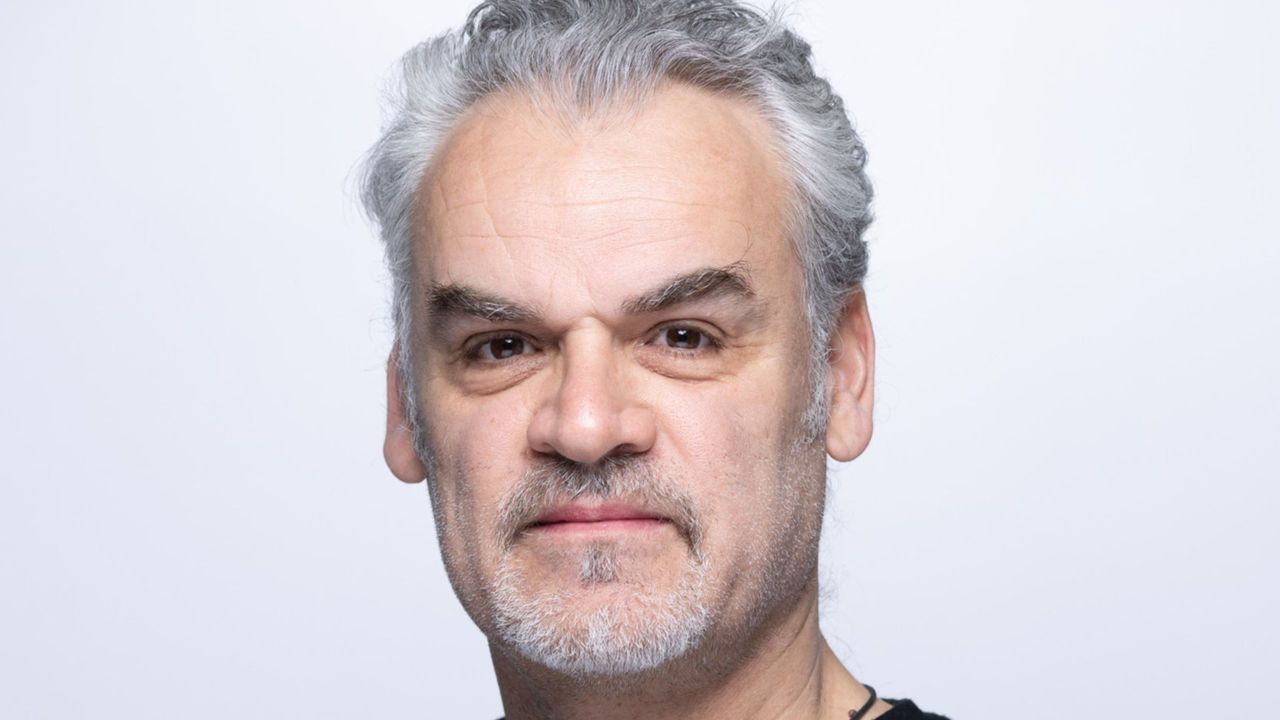
In this interview, Raoul Bianchi, a researcher at Manchester Metropolitan University, analyses the current model of mass tourism, which he describes as a system inherently linked to social inequality, the climate crisis, and the financialization of destinations, particularly in the Mediterranean. These were the core themes of his contribution to an international seminar organized by the New Perspectives in Tourism & Leisure (NOUTUR) research group, part of the UOC-DIGIT centre. Titled The twin transition (green+digital) in tourism in the era of the polycrisis, the event provided a platform where the researcher offered insights on how to reformulate the tourism sector.
Based on your research, how would you characterize the relationship between mass tourism, local communities and uneven regional development today?
In what are often referred to as the 'tourism industries', which comprise a multitude of firms spread across diverse economic sectors. My principal research focus has been on areas of high-intensity tourism growth and major concentrations of large-scale resort development integrated into transnational circuits of capital.
“Tourism has become increasingly entangled with multiple intersecting crises and injustices”
What social and environmental consequences have emerged from this model of high-intensity tourism growth?
The continual growth of mass tourism in such areas has produced intractable tensions between corporate profit making, structural poverty and inequality on the one hand, and between the resource-intensive dynamics of tourism growth and the ecological conditions sustaining the planet on the other. Recent data suggest that areas of high tourism specialization are characterized by high levels of poverty and inequality while tourism-linked emissions and levels of energy and resource use continue unabated. Whether in terms of the continued assault on nature or aggravation of social inequalities related to wage stagnation and the housing crisis, tourism has become increasingly entangled with multiple intersecting crises and injustices.
What do you consider the main structural challenges facing contemporary tourism governance, particularly in destinations under pressure from mass tourism?
I would say that the most pressing challenge of all is the climate crisis, in particular the threat posed by extreme weather events and ecosystem collapse to the economic viability of destinations and resident livelihoods. Further to this, I would add the capture of tourism rents by platform-based capital which in turn has aggravated the social crises associated with tourism growth. Ongoing tensions between tourists and residents linked to a lack of affordable housing poses a major challenge for tourism policy and governance. The strengthening of workers' rights and eliminating human rights abuses, whether in supply chains or in relation to dispossession and displacement of indigenous peoples and local communities to make way for tourism, are issues which remain rife and largely unresolved.
You have written about visitor economies and the ungovernability of tourism. Could you give an example of a destination where this tension is especially visible?
Historically, tourism has been regarded as a relatively technocratic area of governance, requiring little more than the application of the 'correct' management tools to ensure an appropriate 'balance' between tourism, local communities, and nature. This has reinforced a general sense, one that has been challenged by the recent upsurge in protests against tourism in many European cities and other destinations worldwide, of tourism as a depoliticized realm of policy. Meanwhile, tourism policy has rarely ventured beyond marketing and growth imperatives, albeit caveated with references to 'quality' and 'sustainability', with little to say about justice, fairness and rights, for fear of frightening away tourists and indeed, investors. These patterns are clearly visible in the Canary Islands, where I first began my research career in the early 1990s with ethnographic research on tourism and socioeconomic change in a small fishing village in Gran Canaria. At that time, vague largely rhetorical notions of 'sustainable' tourism began to circulate in public policy, no doubt influenced in part by early challenges to limitless resort development spearheaded by environmental movements such as El Guincho in Lanzarote, as well as the late Lanzarote artist César Manrique, whose efforts were instrumental to the first restrictions imposed on tourism development by Lanzarote's island council in 1991.
How has tourism governance traditionally been framed, and how has this shaped policy priorities?
While many of the tensions and challenges currently facing tourism have indeed been recognized by influential organizations, at least rhetorically, for the most part, governance institutions have been unable or unwilling to effectively govern tourism in the public interest nor the long-term safeguarding of eco-systems.
You have critically examined the contradictions of 'sustainable tourism'. What structural features of the tourism economy limit the feasibility of sustainability in practice?
Sustainable tourism has become all but a meaningless buzzword. If you read between the lines of national and UN tourism strategies, it is often hard to distinguish between sustaining tourism and a sustainable development model centred on principles of social and ecological justice, which might imply a sustained reduction in tourist volumes and redistribution of wealth and resources. If we clarify what we mean by sustainability, say for example, designing tourism business and development models around revised notions of prosperity which promote collective human well-being and support a thriving natural world within the biophysical limits of the planet, then perhaps we can begin to seriously think what it might take to achieve such an aim.
How do the structural characteristics of the tourism sector affect efforts to promote more equitable and ecologically balanced development models?
The proliferation of prefixes – 'niche', 'eco', 'cultural', 'heritage', etc. – has served to obfuscate rather than illuminate the pathways towards socialized, ecologically balanced and equitable tourism business models. It is important to consider that tourism is not a single or coherent industrial sector, as we might understand say the automotive industry. It comprises diverse, intersecting economic and non-economic components of different scale and capital intensity, at multiple scales. This makes supply chains very complex and tracing the precise structures of corporate ownership quite challenging, not least given the increasing presence of digital platforms as both producers and aggregators of tourist experiences. Moreover, the success of tourism often depends on the ability to 'free ride' on, or even the enclosure of, the commons and the public realm. This encourages unproductive rent-seeking and speculative financial behaviour which as we have seen across southern Europe, has been a major factor in what has been referred to as the 'overtourism' crisis.
Your work refers to the "metamorphosis of tourism capitalism". What are the implications of this transformation for mature Mediterranean destinations?
As tourism has increasingly replaced other profitable avenues of investment, tourism growth has become entrenched as a substitute for productive innovation. This of course exacerbates wage stagnation even at times when tourism growth is buoyant and employment may even be growing. Related to this has been the increased role of investment funds and other financiers as major investors in tourism destinations. This phenomenon has grown in significance since the pandemic and the disappearance of many small and micro tourism enterprises which have traditionally been the bedrock of many Mediterranean, especially island and peripheral area visitor economies.
How has the growing involvement of financial actors reshaped governance and long-term development strategies in Mediterranean destinations?
While tourism authorities have been focused upon improving destination competitiveness through innovation and the development of say, luxury niche tourism, as a means of building resilience, what this doesn't address is the changing processes and structures of accumulation, whereby off-shore financiers, private investment funds and indeed sovereign wealth funds have increasingly moved into this space to monopolize urban, resort and other strategic tourism assets. When you are dealing with such powerful corporate and financial interests motivated primarily by rent extraction rather than any desire to build long-term productive capacity and economic well-being, this makes the job of developing effective strategies to transition to equitable and ecologically balanced tourism business models even more challenging than it already was when dealing with 'traditional' hotel and tour operators.
Drawing on your research in Spain, the Mediterranean and the Middle East, how do you understand the connections between tourism, labour migration and precarious work?
As research on hotel chambermaids in Spain by Ernest Cañada (Alba Sud) has clearly demonstrated, the 2008 crisis led to a further deterioration of working conditions, an increase in precarity and an intensification of work across all areas of employment connected to tourism. Despite increases in overall tourism employment, this has only worsened as digital platforms have significantly reshaped labour relations and made workers' collective bargaining and resistance more challenging as management hierarchies become increasingly invisible behind digital platforms and the work itself becomes integrated and controlled by punitive algorithmic processes.
What role does migrant labour play within contemporary tourism economies, particularly in Southern Europe and the Mediterranean?
While perhaps more commonly found in agriculture, construction, domestic labour, informal trading and food delivery, migrant workers and immigrant labour have certainly played a significant role across many areas of the tourism and visitor economy labour markets in southern Europe and indeed worldwide; in the cruise industry, major resort conurbations and in the informal urban economy. Migrant labour may serve to ensure a pliant labour force as well, as short term 'fix' to compensate for labour shortages as we are now witnessing in southern European destinations. Tourism reflects and indeed sustains ethnic and gendered hierarchies and divisions of labour with immigrant workers occupying the most insecure and precarious roles.
What key recommendations would you offer policymakers and researchers seeking to design more equitable tourism strategies in Spain or Europe?
Further to eliminating wasteful advertising expenditure on unnecessary tourism marketing and promotion, imposing limits on, indeed reducing, the relentless construction of new tourism infrastructures (e.g. marinas, mega-resorts, highways and airports), speculative real estate investment and strengthening tourism workers' rights, the longer term challenge for destination authorities is to engineer a shift from away from prioritization of year-on-year tourism growth and the seemingly limitless reinvention of destination branding as a substitute for productive innovation, towards what we might term 'steady-state' or 'postgrowth' tourism economies, aligned with social and ecological justice.
How do you assess the current debates around tourism degrowth and their practical relevance for policymakers?
Tourism degrowth is an idea in its infancy and has not yet reached the status of a fully worked out alternative economic programme. While it involves more than simply reducing and/or localizing tourism consumption, rather, reducing material and energy throughput while ensuring tourism contributes to equitable economic and social well-being, it remains a challenge to envisage how to translate this into an effective policy framework at different scales. We should not however be fixated on narrow questions of growth//degrowth or simply devising alternative metrics of economic well-being, but rather, developing broader strategies for decoupling tourism from the dominant, capitalistically organized political and economic forces.
Is shifting towards higher-spending or 'quality' tourism a viable alternative to mass tourism growth?
In short, no. It is vital that destination policymakers avoid simplistic and elitist solutions, such as substituting up-market, high-spending tourism for mass tourism growth, in the expectation that this will both restrict the need to continually boost arrivals as well as provide revenues for regenerative environmental investment. Neither is true and, at the very least, they entail unacceptable sacrifices of democratic mobility rights and access to nature, while luxury tourism infrastructures are more energy-intensive (especially if you factor in the use of superyachts and private jets) and equally if not more ecologically degrading than mass tourism resorts.
What alternative governance mechanisms could help ensure that tourism revenues contribute more directly to local communities?
This might for example involve what I have referred to elsewhere as a 'destination dividend', a kind of revenue-pooling mechanism or universal basic income for tourism destinations, given the degree to which tourism revenues are dependent upon the commons. The challenge, however, is how to scale up measures to democratize visitor economies through more robust forms of civic engagement and participatory tourism governance which extend beyond the formal institutions of tourism planning and orthodox notions of community involvement.
How do you interpret the idea of a 'right to travel' in the context of growing global inequalities and increasingly restrictive mobility regimes?
Until the right to travel (there is no legal right to tourism as such) is commensurate with the rights to development, and tourism can be disentangled from the myriad forms of expropriation and exploitation in which it is imbricated, such rights will be incomplete/unrealized by the vast majority of the world's population. Just consider for a moment the increasingly hostile environment towards migrants and indeed tourists from the global South, coupled with increasingly draconian restrictions on cross-border travel and immigration imposed by the EU and US. The situation today is much worse than Marcus Stephenson and I could have imagined when we first published our book, Tourism and Citizenship, in 2014.
Press contact
-
Núria Bigas Formatjé