
Winterson: "Use our privilege as universities to make this world a world we can be proud of in the future"
The British writer received the highest academic award at an event on the UOC Campus in Barcelona that called for imagination and creativity to make a more human use of technologyThe author appealed to willpower and critical thinking as drivers of positive change to overcome the pessimistic visions
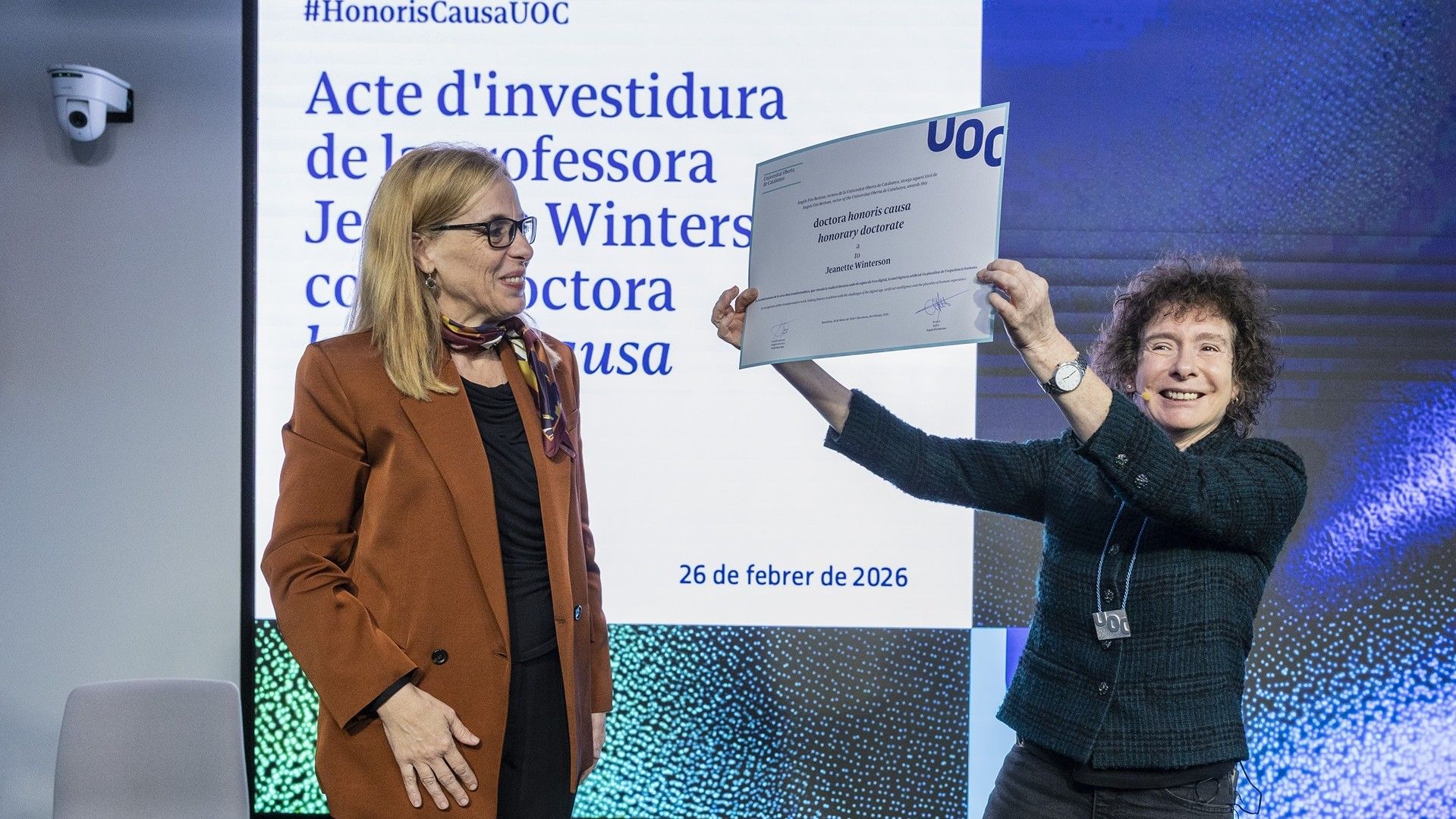
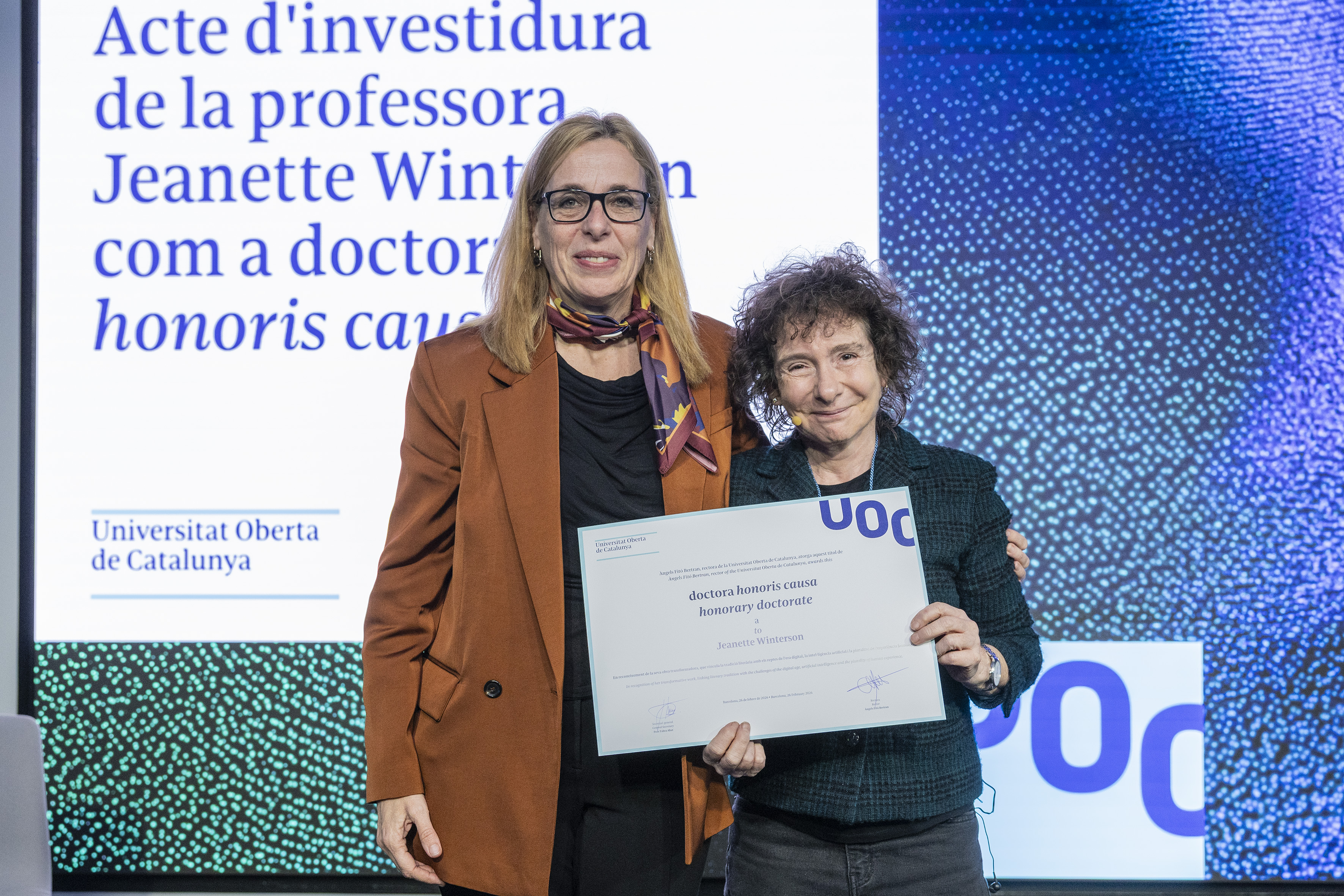
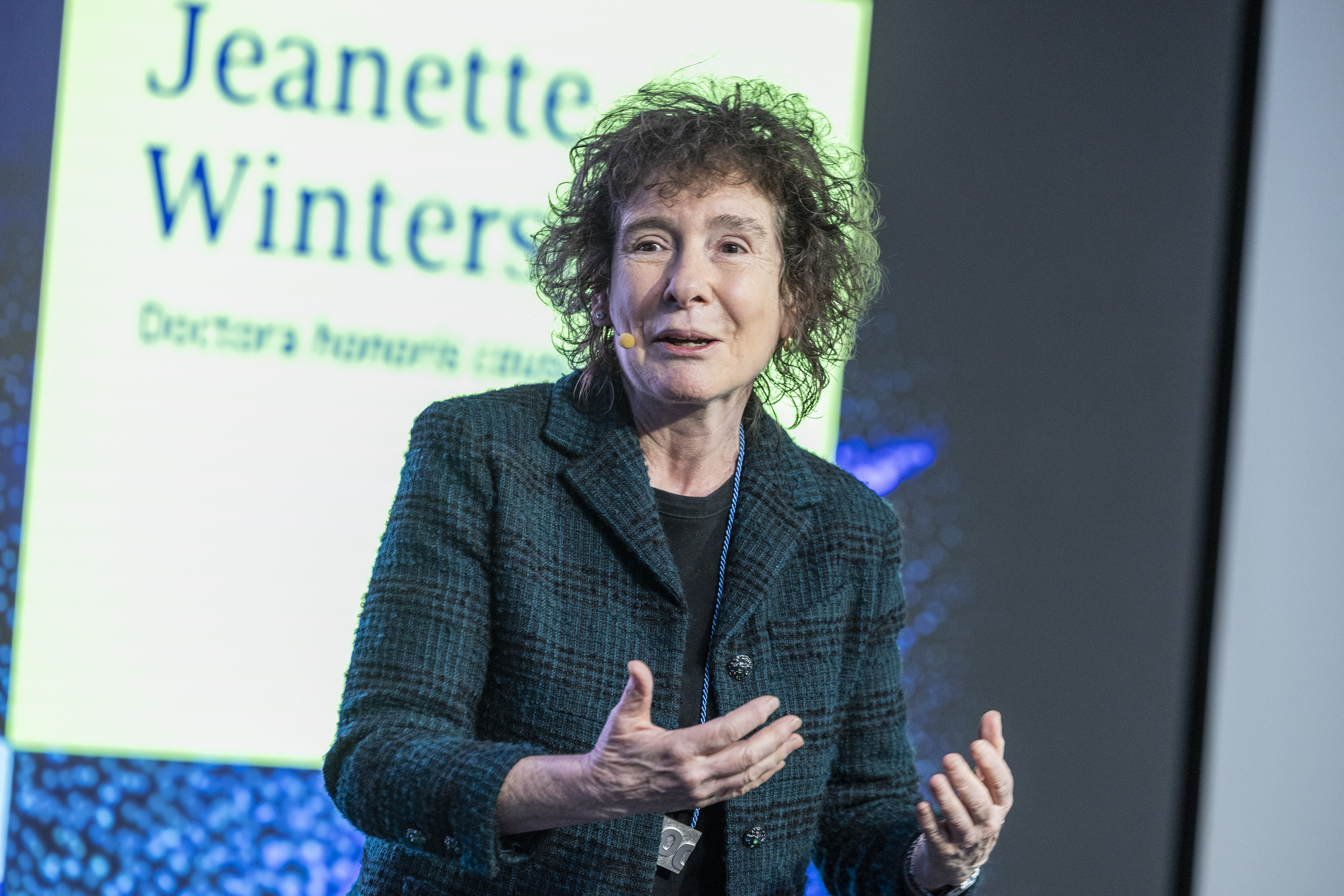
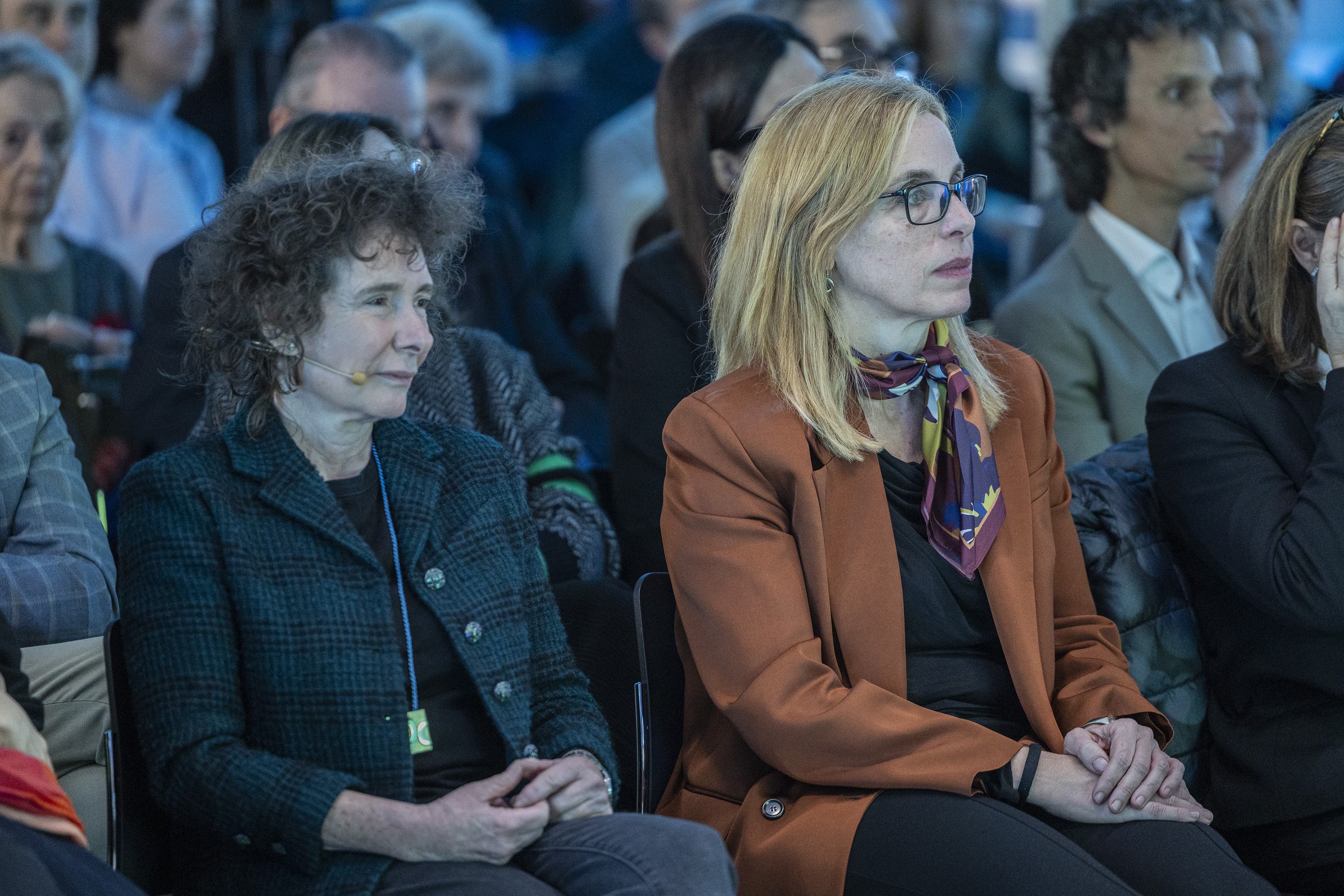
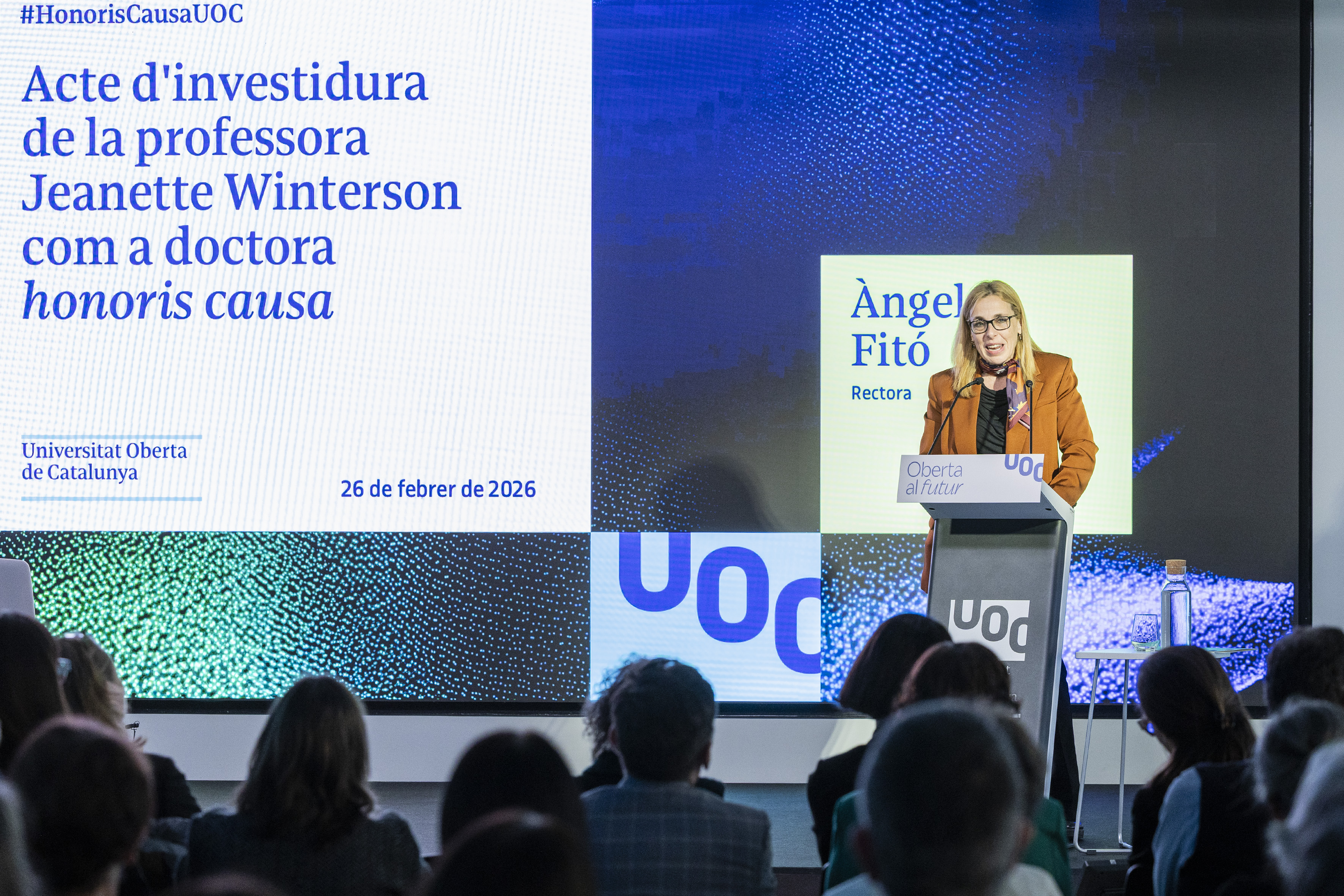
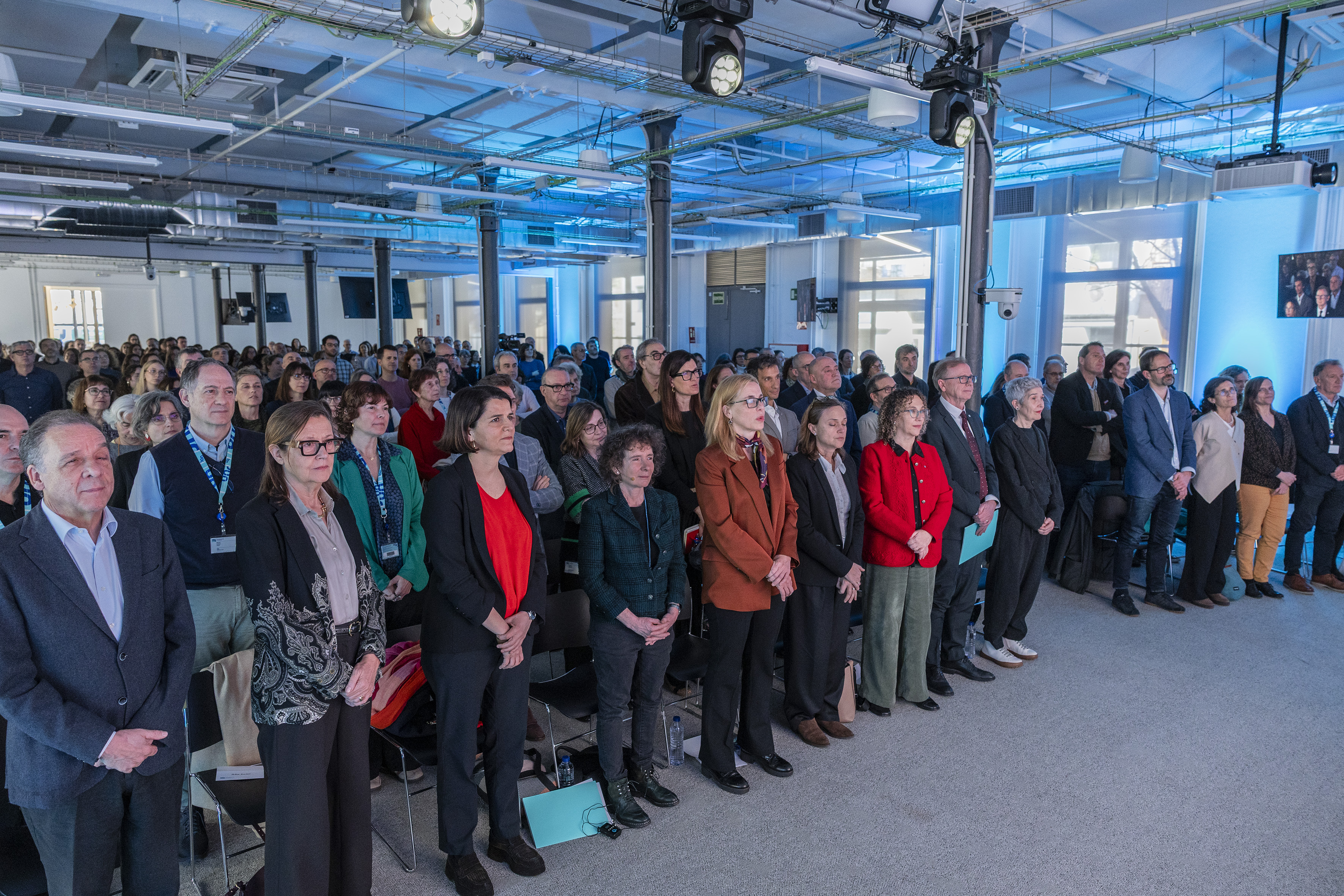
Jeanette Winterson (Manchester, 1959), one of the most influential British authors of the 21st century, was awarded an honorary doctorate by the Universitat Oberta de Catalunya (UOC) at a ceremony held on Thursday 26 February at the UOC Campus in Barcelona. The event paid tribute to the university's core values, including imagination and the transformative potential of technology at the service of the future and a better world, not spurious interests. Winterson told her audience that "everything begins as an act of human imagination, as a vision of some kind. We take what is, and we say, well, what if?". As an example, she talked about the UOC's campus in Barcelona's Poblenou district, "taking a place from the past, the industrialization of the past, and turning it into a building for the future, where students could learn, where they could meet online," demonstrating how technology can "move the world forward".
Winterson commented on the values she believes the university represents, stressing the need to safeguard them against the "wrong people" who seek to impose their own vision, driven by a desire to monetize everything. "We don't want everything to be monetized." She highlighted the need for the university to instil in students "the idea of learning, the idea of imagination, the idea of a community of like-minded spirits who are not afraid to agree and disagree", because "we can change everything except the time that we were born in".
She went on to say that people linked to universities have the privilege of "this free thinking, free learning environment, a pocket of air in an upturned boat, a place to breathe, a place where energy can be transmitted." Universities, she stressed, offer the possibility of building a better future. And she urged her listeners to "use everything that you have, everything that you've learned, everything that you are, every bit of your privilege, every ounce of your power to make this world into a world that we can be proud of, not just now, but in the future."
The UOC's Governing Council unanimously decided to distinguish the British novelist for her outstanding literary career and international standing. UOC General Secretary Pere Fabra stressed how she has addressed the "profound complexities" at the "intersection of literature, critical thinking and the impact of technologies, especially AI", when announcing the Council's decision to award Winterson an honorary doctorate. He also highlighted her commitment to the "defence of diversity and inclusion" and her "empathetic stance, which challenges established conventions and promotes an essential ethical reflection on identity and gender in contemporary society".

Winterson occupies a central place in the contemporary literary canon
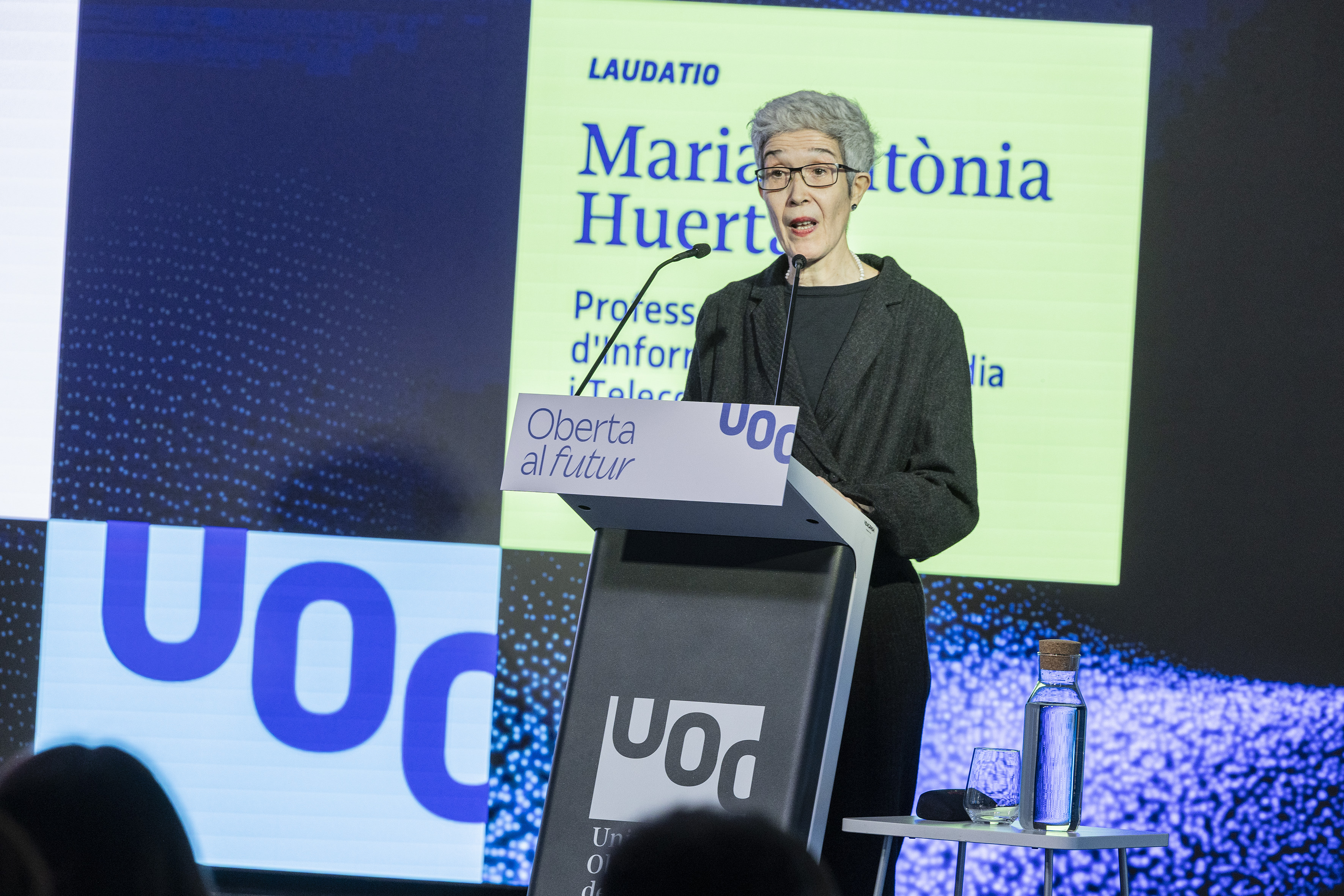
Winterson's work was also discussed by Dr Antònia Huertas, associate professor in the UOC's Faculty of Computer Science, Multimedia and Telecommunications and expert in logic, AI and the bridge between gender and technology. Huertas stressed that Winterson's is "a singular voice in contemporary literature in the English language" that has succeeded, over four decades, in establishing a multi-faceted "dialogue with art, philosophy, science, technology and the social sciences, challenging the boundaries between genres and disciplines with an extraordinary ability to translate major philosophical questions into poetic and accessible narratives". For Huertas, Winterson merits this accolade because her "original voice occupies a central place in the contemporary literary canon" and her "influence extends to fields as diverse as gender studies and technological ethics".
Dr Huertas went over some of her works and characters from them, highlighting how she explores identity through literature, demonstrating that language is "a space for creating possible realities". In her works, she combines science fiction and modern philosophy, opening debates on issues such as sustainability and climate change. Winterson's work aligns the UOC in terms of the "intersection of technology and the humanities" and it is "a clear reflection of its mission and values". In conclusion, Dr Huertas said that it is "a way of thinking that reminds us that knowledge advances only when it dares to cross boundaries, and that imagination is essential to thinking about the future of humanity".
UOC Rector Àngels Fitó gave the closing speech, stressing how Winterson's work chimes with the university's objectives. "We're a university born from disruption, like Winterson's work, which reflects the essence of the UOC in its ability to navigate and merge different disciplines," she stressed. In a reference to current events, the rector denounced "the rise of an authoritarian technological complex, where sovereignty runs the risk of being privatized and knowledge is threatened by spurious interests". In the face of narratives claiming that freedom and democracy are no longer compatible, "we call for a conscious form of technology and uphold the idea that the university is a place where sovereignty is fostered through a critical spirit", as the UOC's new honorary doctor does in her work. Fitó highlighted Winterson's "hive-mind" principle, conceived "not as a loss of individuality, but as an opportunity for humanity collectively: technology is not an inevitable destiny, it is a tool in your hands, which is why we have the power and the duty to put this 'hive mind' at the service of a more empathetic and inclusive world, because neither empathy nor compassion can be programmed."

Press contact
-
Anna Torres Garrote