
"Our goal is for open science to be the default way of doing science"
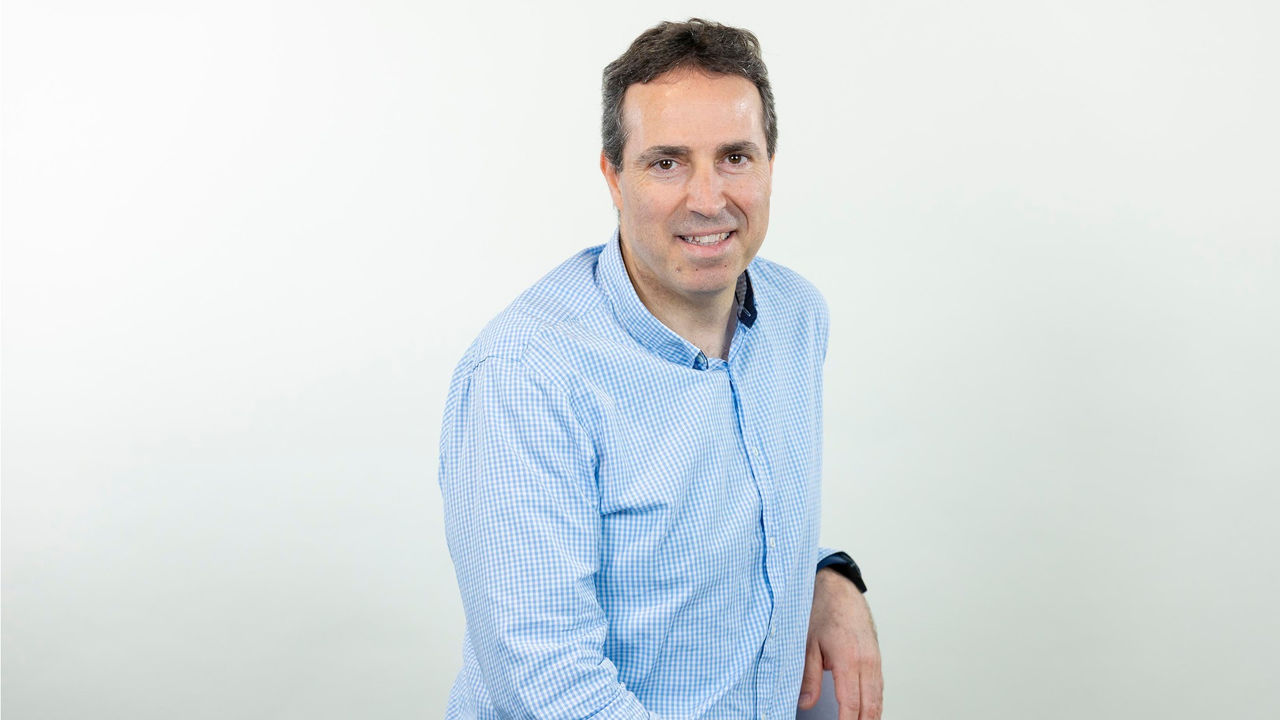
Jordi Pallarès, director of the UOC's Open Science Office
The Universitat Oberta de Catalunya (UOC) has been committed to open science throughout its history. Open science transforms the way scientific knowledge is produced and evaluated, as well as democratizing access to research results. Initiatives such as the Human Genome Project, where scientists from all over the world opened up their research in order to sequence the human genome, have been instrumental in advancing research in biomedicine.
For International Open Access Week, we interviewed Jordi Pallarès, the new director of the UOC's Open Science Office in the Knowledge Transfer, Entrepreneurship and Open Science department, who explained how the university is working to open science up to society.
How do you view this new stage as director of the UOC's Open Science Office?
As a professional challenge: joining an institution like the UOC, where we are leaders in open science, and being at the head of the office, carries the responsibility of continuing and expanding the legacy and the progress made so far. Also, with a lot of excitement and the desire to lead, together with the entire office team, the whole movement and transformation that open science can bring to an institution with this level of commitment.
What is the philosophy of open science and why is it important and necessary?
The most widely accepted definition of open science is that in the UNESCO Recommendation on Open Science: "open science is defined as an inclusive construct that combines various movements and practices aiming to make multilingual scientific knowledge openly available, accessible and reusable for everyone, to increase scientific collaborations and sharing of information for the benefits of science and society, and to open the processes of scientific knowledge creation, evaluation and communication to societal actors beyond the traditional scientific community."
If I were to sum that up, it means better, more integrated, more inclusive science, accessible to everyone and carried out by a range of agents. This change must be accompanied by another way of valuing science, with a broader view than previously, one that values different ways of doing science and enables them to thrive.
Open science must make available and share scientific knowledge that allows us to advance faster, it must make science more integral and maintain its credibility at a time like the present, when there is so much misinformation. It must also promote more useful research, with the active participation of society.
“Open science increases the visibility, impact and reuse of research results, as well as fostering cooperation”
How can it benefit both researchers and society?
Starting from the fact that open science is better science, it surely benefits both researchers and society. Open science increases the visibility, impact and reuse of research results (publications, data and methodologies), as well as fostering cooperation. It also encourages researchers to be transparent and honest, as the results obtained in their research can be verified. This should restore the confidence of society as a whole in research and enable it to tackle misinformation. It is also beneficial in that people's ability to access scientific knowledge does not depend on their financial position.
Open science's approach towards reforming how we assess research staff is also beneficial. For example, it highlights the value of cooperative and interdisciplinary research, and allows us to assess different ways of doing science. This new perspective should provide new opportunities, especially for researchers in disciplines that are not pure sciences, and also allow us to explain how this science has been developed.
Researchers often have to pay large sums of money to publish their research in prestigious publications. What are the main challenges for making open science universal?
This is a complex issue and there is no single solution; it will have to be approached from different angles. The issue of paying to be published cannot be solved by requiring a publication to be open. Researchers must be willing to publish in open access and the journal must continue to have the relevance and impact it deserves, while still recognizing the authors. To achieve this, we need to evolve towards impact-oriented evaluation and make high-quality, prestigious infrastructures available to researchers.
A lot of progress has been made, but major changes are needed to achieve this very ambitious goal. We still have a long way to go.
Why is the UOC committed to open science and what role can the university play outside the institution?
The UOC has been committed to open science for many years. It confirmed this commitment when it approved the Open Knowledge Action Plan, when it joined DORA – a global initiative to improve the assessment of scientific research – and when it signed the Coalition for Advancing Research Assessment (CoARA) Plan, within the framework of which we have developed the UOC's CoARA Action Plan.
The UOC can be a benchmark and a source of inspiration for other institutions and universities, as well as an example of good practice. We want to help the institutions responsible for developing legislation, to advance together.
How does the UOC connect with other universities and international networks in this field?
The UOC participates actively in different networks in Catalonia; for example, it currently chairs the CSUC Open Science Committee. In Spain, it participates in different REBIUN and CRUE working groups and, at the European level, in associations such as the European University Association (EUA), the CoARA coalition, and OpenEU, the alliance of European open universities, which is also coordinated by the UOC.
How are the principles of open science put into practice within the university?
The Open Knowledge Action Plan aligns different initiatives within the university. Throughout the year we offer training and skills development sessions to generate this active knowledge base, with extra sessions at certain times, such as International Open Access Week and the Open Science Summer Camp. A data management course created by our office has been made available to all administrative staff and teaching and research staff, and the training offered through the Doctoral School has also been remodelled to bring it up to date. To promote open science, we also organize the UOC Award for the Best Doctoral Contribution to Open Science, which has been held for three years now.
Progressively, through the CoARA Action Plan, the UOC is adapting to the new guidelines for internal calls. We also support research staff to help them adapt to these new ways of explaining research work.
Recently, we have also opened a training programme in citizen science, which should help us promote and support university projects to generate more activities in this field.
International Open Access Week takes place in October: why is this event important?
It's a time for awareness raising and training, but we also focus on bringing people together to generate discussion and reflection on the principles of open science. This year, it's taking place from 20 to 26 October. Many institutions around the world get involved, allowing us to build a community and showcase work done by other universities and providing us with an opportunity for networking within OpenEU.
There will be online activities, as well as some face-to-face sessions, with the aim of demonstrating and explaining the services offered by the Open Science Office to the university's research units and disseminating the latest developments in open access.
What are the short- and long-term objectives of the Open Science Office?
We're working in various fields in order to bring open science to all areas as part of a natural, ongoing process. One of the main tasks, in the short term, is to launch internal discussions to update the Open Knowledge Action Plan to meet the challenges of 2030.
We still have work to do to continue improving the UOC's O2 Institutional Repository service, ensuring it is as accessible as ever, but making it more interoperable with other tools at the university or with the Catalan and European university ecosystem.
We are carrying out a review of the catalogue of services we offer to the UOC's research community in order to look for areas for improvement, and to extend and update the training we offer internally and through the Doctoral School. We're improving the office's working procedures to optimize efficiency. Other points include enhancing the UOC's Research Portal, and working to ensure events run by the office, such as the Open Science Summer Camp, are a point of reference for the open science sector.
In the long term, we must continue to lead open science, and take advantage of the opportunities artificial intelligence is opening up to optimize processes, support our researchers and improve the positioning of the UOC's research.
The office is currently assessing the results of the UOC's Open Knowledge Action Plan: what practical changes have already been made and what challenges do you face?
A lot of progress has been made in many areas of the Open Knowledge Action Plan, but we also think it needs to be reviewed and updated to validate the actions taken so far and to add any necessary improvements.
Very good work has been done in raising awareness about open science. This is reflected in the increase in open publications and in the improvements seen in the O2 repository. The effects can also be seen in terms of the publication of research data and the CORA Research Data Repository or the various knowledge transfer initiatives developed.
However, we still have challenges ahead. The goal is for open science to be the default way for our researchers to do science; we need to improve the way we assess our researchers, and improve open access through the repository and the diamond open access model. Finally, we will have to study in depth the opportunities that artificial intelligence offers in this area.
Transformative, impactful research
At the UOC, we see research as a strategic tool to advance towards a future society that is more critical, responsible and nonconformist. With this vision, we conduct applied research that's interdisciplinary and linked to the most important social, technological and educational challenges.
The UOC’s over 500 researchers and more than 50 research groups are working in five research units focusing on five missions: lifelong learning; ethical and human-centred technology; digital transition and sustainability; culture for a critical society, and digital health and planetary well-being.
The university's Hubbik platform fosters knowledge transfer and entrepreneurship in the UOC community.
More information: www.uoc.edu/en/research
Press contact
-
Anna Torres Garrote