
How can rural schools transform and enable innovation in their teaching projects?
Rural schools can have innovative teaching projects despite a lack of infrastructure and resourcesA guide for the educational community and the government produced by a research team at the UOC addresses this transformation from a pedagogical, digital and environmental perspective
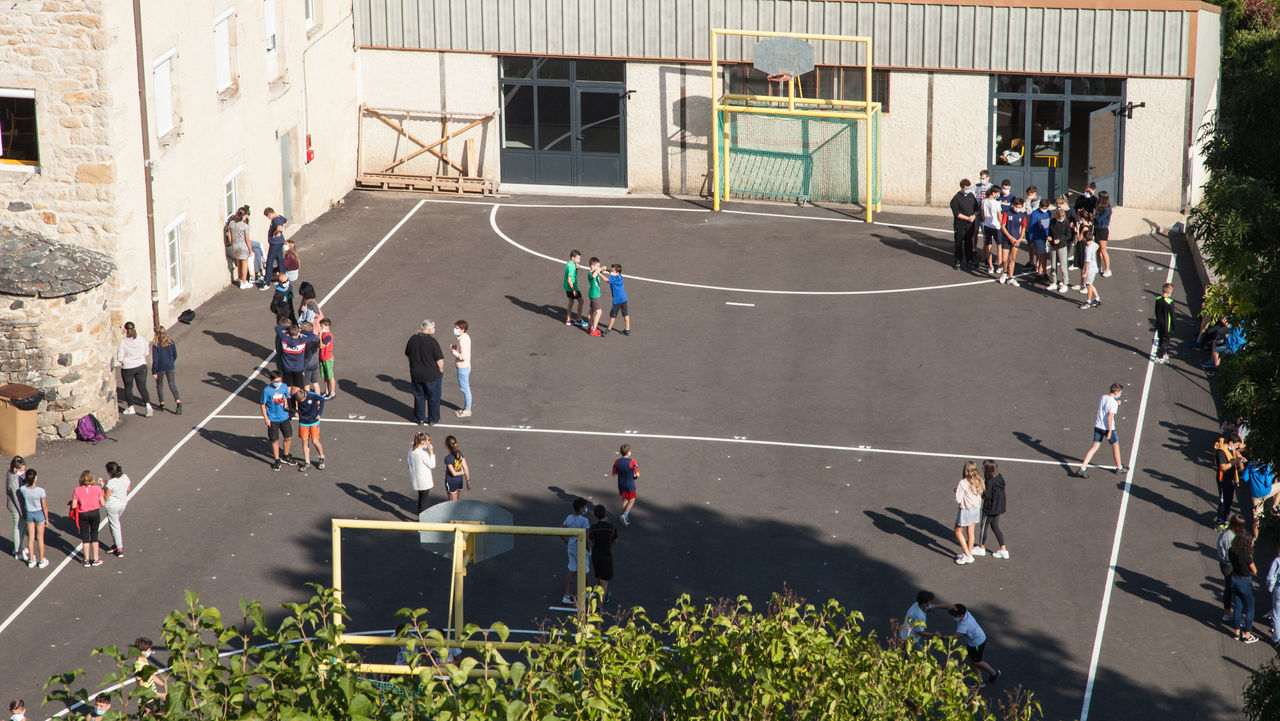
Rural schools have traditionally been valued less highly than schools located in towns and cities. According to this perspective, which is primarily based on stereotypes, rural schools are less modern, with fewer activities, and the teachers who work there are not specialists. While it is true that they often lack resources and suffer from high levels of staff turnover, as well as shortcomings in infrastructure, rural schools have qualities that city schools do not have, such as close ties to their local area, their natural environment and smaller class sizes. These characteristics mean they have the potential to undertake strong educational projects, taking advantage of the richness of their natural environment and the specific characteristics of life in the rural world.
A research team at the Universitat Oberta de Catalunya (UOC) has produced the Transformant l'Educació Rural [Transforming Rural Education] guide with a view to facilitating transformation and innovation at these schools, with pedagogy, the digital world and the environment as its three main focuses.
“Rrural schools are not worse; on the contrary, they have many high-quality pedagogical projects”
Marta López Costa, a researcher in the Education Research Group (GREDU) and a member of the Faculty of Psychology and Education Sciences at the UOC, explained that "although some shortcomings are real, such as those related to infrastructure and specialization, rural schools also have some pedagogical strengths, such as their potential for providing more individualized attention, a closer link with their community than city schools have, and meaningful learning. This added value which rural schools have is not always reflected in the indicators used to assess schools."

López Costa, the leader of the project Transforming rural education: a three-dimensional perspective, which was the basis for the design of the guide, said that the UOC examined many initiatives in rural education, and concluded that "rural schools are not worse; on the contrary, they have many high-quality pedagogical projects."
The guide aims to foster the transformation of these centres, while striking a balance between their rural identity and including modern characteristics which are necessary for the development of individuals, the community and the global world. It contains a series of practical recommendations within both educational policy and at the local level, aimed at head teachers, teachers and government bodies.
Leadership, and pedagogical, digital and environmental transformation
As part of the quantitative analysis carried out during the preparation of the guide, 76 heads of rural schools in Catalonia completed a questionnaire. Their responses revealed a wide range of circumstances, with small schools having strong ties to their communities and a number of systemic constraints being common to all schools: instability and staff turnover; shortcomings in infrastructure (varying degrees of internet connectedness and limited numbers of computers); excessive bureaucracy and a lack of time to implement pedagogical changes; an absence of a shared pedagogical vision and a lack of leadership to channel transformation efforts; limited access to specialists; and mobility and transport problems.
With these issues in mind, the research team has designed a series of recommendations, which are grouped into four main areas: promoting leadership as the driving force behind the transformation of rural schools, with the involvement of families and local agents, in order to consolidate the school as a benchmark in the region; evolving its pedagogical approach towards meaningful, contextualized and holistic learning; leveraging technology towards inclusion and innovation, within the area of digital transformation; and working on the environmental dimension, focusing on sustainability, and integrating with the natural environment as part of the educational transformation.
In the practical realm, it includes initiatives that have already been launched in rural schools across Catalonia, including resources for networking and sharing, like those in the Moianès Llevant Rural School Area, where the schools in the municipalities of Sant Quirze de Safaja, L'Estany and Collsuspina in the province of Barcelona are working on joint projects, such as helping to foster scientific vocations with the help of retired engineers living in the area.
Another recommendation, which involves contextualizing the school syllabus in projects linked to the local area and promoting sustainability, has been implemented by the Antoni Tous School, in the Conca de Barberà Rural School Area (in the province of Tarragona). There, the children go out into their natural environment and carry out activities like observing animal tracks and identifying plants and animals, as well as motor exercises.
Preserving rural identity by incorporating modernity
It is essential for village schools to preserve their rural identity while avoiding being left behind in terms of teaching and technological innovation. For this reason, the guide proposes a hybrid model to help them maintain their rural character and bring themselves up to date. It advocates designing a syllabus that uses local projects to teach modern skills and places technology at the service of identity. A good example is the work done by the Valldemur school in the Conca de Barberà region in the province of Tarragona, which undertakes STEAM projects carried out by the children at the school linked to rural heritage, including robotics activities related to the environment.
"Digitalization is a key challenge, although it is not the only one, but the project presents it as a catalyst: if infrastructure and training are guaranteed, technology can drive pedagogical innovation and inclusion. Concrete solutions are needed: investment in broadband, organizing a loan service for devices, and providing media libraries and training for professionals, an activity that is carried out within the framework of the DigCompEdu project," said López Costa, who is a researcher affiliated to the UOC-FuturEd centre.
Finding teachers who want to work in rural areas is another challenge. The guide calls for measures including guaranteeing stable employment and reducing turnover, offering financial incentives and support for mobility, specific training and mentoring for rural environments, and professional recognition. It also suggests building communities of practice and networking to reduce isolation and share resources, as well as improving infrastructure and bureaucracy to make work more appealing to teachers.
It is also necessary to foster links between education and the local economy in order to create opportunities in the future. For example, the L'Esqueix school in the Moianès region (Barcelona province) has created a chicken coop that is a source of activities and learning for children of all ages.
Schools are also encouraged to participate in decisions related to preservation and modernization and to design sustainable spaces that are based on bioclimatic criteria and use local materials.
Contributions to the guide were also made by the UOC-FuturEd centre researchers Guillermo Bautista and Eduard Masdeu of the GREDU group, Nati Cabrera, Ludovica Fanni, Lourdes Guàrdia and Marcelo Maina of the Education and ICT (Edul@b) group, and Isabel Ruiz-Mallén of the Urban Transformation and Global Change Laboratory (TURBA Lab), which is affiliated to the UOC-TRÀNSIC centre.
This research by the UOC is part of the Education of the future mission, and supports UN Sustainable Development Goal (SDG) 4, Quality Education: Ensure inclusive and equitable quality education and promote lifelong learning opportunities for all.
Related resource
Bautista, G., Cabrera, N., Fanni, L., Guàrdia, L., López, M., Maina, M., Masdeu, E., & Ruiz, I. (2023). La transformació educativa i la innovació a les escoles rurals: Propostes i recomanacions. Universitat Oberta de Catalunya UOC Research Accelerator 2023 Call. https://blogs.uoc.edu/transformacio-escoles-rurals/guia/
Transformative, impactful research
At the UOC, we see research as a strategic tool to advance towards a future society that is more critical, responsible and nonconformist. With this vision, we conduct applied research that's interdisciplinary and linked to the most important social, technological and educational challenges.
The UOC’s over 500 researchers and more than 50 research groups are working in five research units focusing on five missions: lifelong learning; ethical and human-centred technology; digital transition and sustainability; culture for a critical society, and digital health and planetary well-being.
The university's Hubbik platform fosters knowledge transfer and entrepreneurship in the UOC community.
More information: www.uoc.edu/en/research
Experts UOC
Press contact
-
Leyre Artiz