The typical rural entrepreneur is now female and under 34 years old
Women now outnumber men in the creation of new projects, and entrepreneurial activity is increasing among people aged between 18 and 34Entrepreneurial projects create new job opportunities, contribute to making rural communities more resilient, innovative and cohesive, and prevent depopulation
The UOC has created an award to boost entrepreneurial talent in the rural world

The figures in the Spanish Entrepreneurship Observatory's Global Entrepreneurship Monitor (GEM) report show an upward trend in female entrepreneurship in the rural world since 2021, and that the percentage of women creating new businesses (7%) is now higher than the equivalent for men (5%), although there are still more men in established businesses (i.e., those that are more than 3.5 years old). There has also been an increase in entrepreneurial initiatives among people aged 18 to 34 in rural areas, as they now outnumber entrepreneurs in the group aged between 35 and 44 years old, which has historically led the way in terms of entrepreneurial ideas and activity.
Several studies, like the GEM reports, show that women's participation in rural entrepreneurial projects amounts to around 45-50% of the businesses created, or in other words, there is a tendency towards gender parity, and some of the sectoral differences found in urban areas are being overcome. This figure is particularly significant in services, rural tourism and the social economy.
“Promoting entrepreneurship in rural areas is a priority, due to its direct impact on economic diversification and the creation of job opportunities ”
Because gender parity has almost been achieved, policies and programmes to promote rural entrepreneurship must be both gender-neutral and sensitive to women's needs (related to work-life balance, access to finance and networks). It is also important to adapt communication and training to different age groups by providing support programmes for people over 45 years of age and innovation and digitalization programmes for people aged between 25 and 44.
In this context, the proportion of rural projects with strong technological content is lower than the average for urban areas, but initiatives that include ICTs (for instance, e-commerce of local products, digital farm management, digital experience tourism) are constantly increasing, so digital training is crucial for rural entrepreneurs. This skill building is essential for breaking into wider markets, in lines of work that are strategic for rural development such as enhancing the value of local products (including locally sourced agrifood processing) and sustainable tourism.
An award to boost rural entrepreneurship
Rural entrepreneurship contributes to regenerating the social and productive fabric, through new products, services and opportunities, and has positive impacts on both the community and the local economy. It fosters new businesses and also promotes social innovation, enhances the value of heritage and encourages generational renewal. Fostering entrepreneurship in rural environments involves making a commitment to comprehensive development, with more opportunities, an increased capacity for innovation, and a better quality of life for the people who live there.
For this reason, the Universitat Oberta de Catalunya (UOC) has made promoting rural entrepreneurship one of its priority lines of work, and it is now launching the SpinUOC Rural Award:
- An award which aims to provide visibility and support for the best entrepreneurial projects from towns with fewer than 5,000 inhabitants or which offer innovative solutions to some of the major challenges faced by rural areas today.
- The winning project will receive €10,000 and a place as a finalist in SpinUOC 2026, which means that it will subsequently compete for one of the other prizes offered for the same amount.
- The ten best projects will receive guidance tailored to their needs and all the participants will receive online training on entrepreneurship as a result of registering for the competition.
The deadline for submitting projects is 18 January.
According to Carles Rocadembosch, the technical coordinator of the UOC Rural Network, which was created in 2023 to promote co-creation and knowledge transfer and to contribute to bridging the territorial gap and the inequalities it creates, "promoting entrepreneurship in rural areas is a priority, due to its direct impact on economic diversification, the creation of job opportunities, innovation and digitalization, enhancing the value of local heritage and resources, strengthening communities and generational renewal."
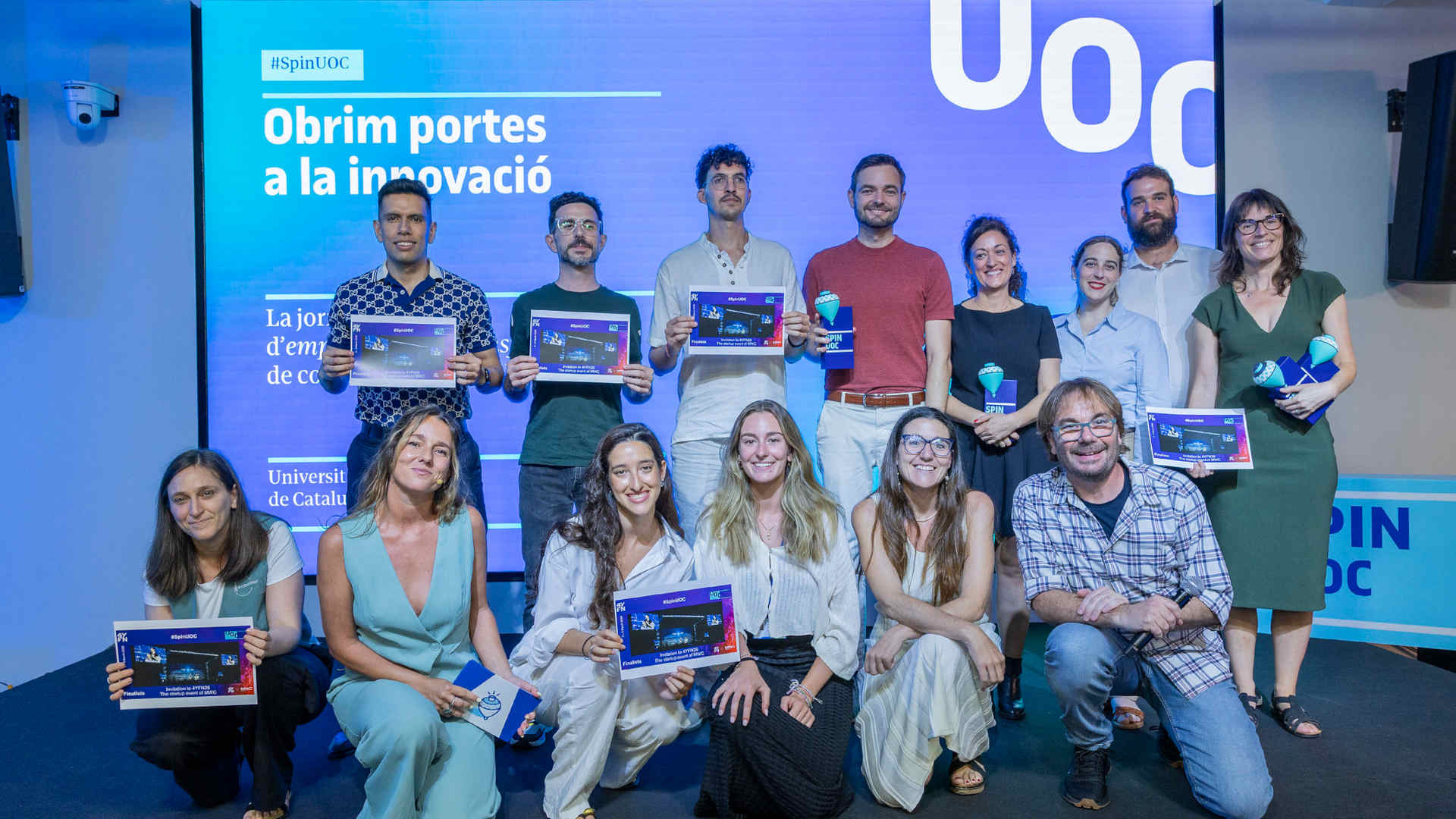
SpinUOC Rural joins and expands the scope of the SpinUOC programme, which is aimed at fostering entrepreneurship and innovation and was launched in 2013. More than 1,700 initiatives have now taken part in this entrepreneurship programme, which is coordinated by the Hubbik platform. In addition to the cash prizes, the finalist projects speak in particularly positive terms about the advice they receive "not only on communication skills, such as pitching to investors, how to introduce yourself to clients, but also about business skills, with very strong mentoring", said Àlex Rius, whose Levelab project won the 2025 edition of the programme.
The SpinUOC 2026 finalist projects, including the project winning SpinUOC Rural, will be presented at a ceremony at the UOC's Barcelona centre on 18 June.
Transformative, impactful research
At the UOC, we see research as a strategic tool to advance towards a future society that is more critical, responsible and nonconformist. With this vision, we conduct applied research that's interdisciplinary and linked to the most important social, technological and educational challenges.
The UOC’s over 500 researchers and more than 50 research groups are working in five research units focusing on five missions: lifelong learning; ethical and human-centred technology; digital transition and sustainability; culture for a critical society, and digital health and planetary well-being.
The university's Hubbik platform fosters knowledge transfer and entrepreneurship in the UOC community.
More information: www.uoc.edu/en/research
Experts UOC
Press contact
-
Leyre Artiz