
Almost half of the women who do sport in Spain run the risk of suffering from the female athlete triad
A UOC-led study calculates the incidence of a syndrome that affects menstruation, bone health and energy availabilityPressure in sports regarding weight and appearance increases the risk of developing unhealthy eating behaviours that contribute to the condition
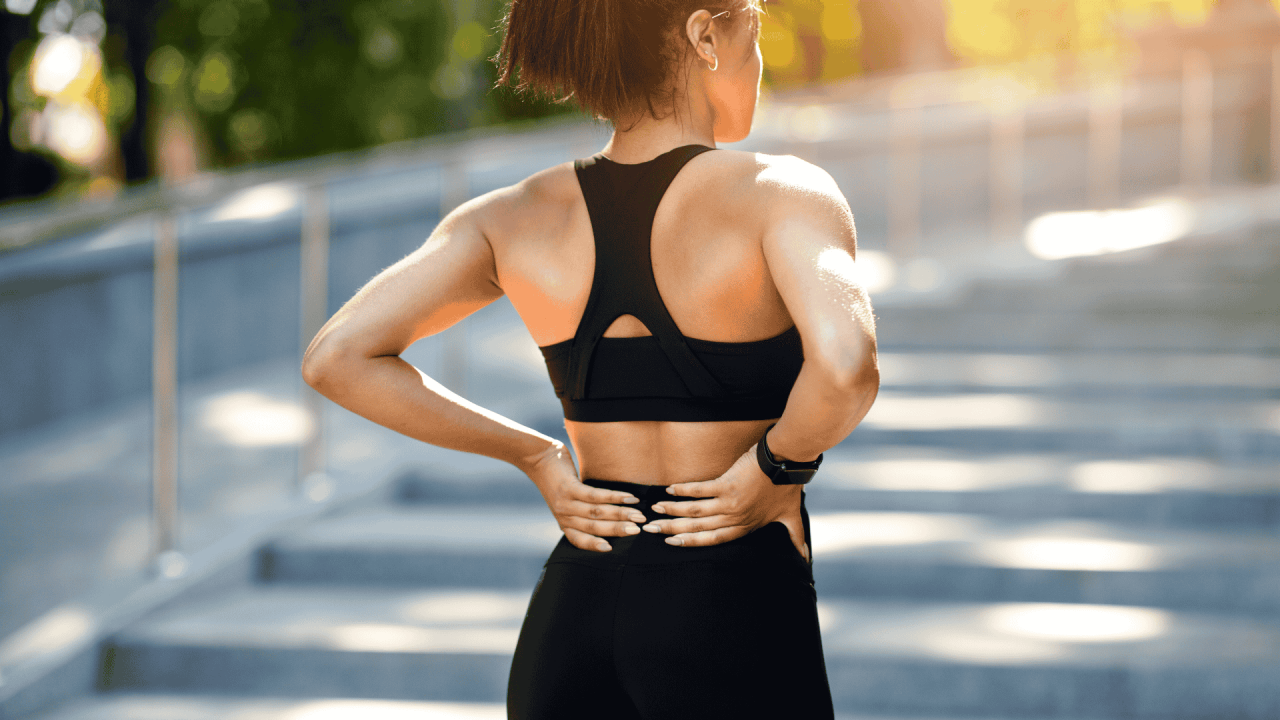
Women who exercise for more than three hours a week may suffer from what is known as the female athlete triad, a set of three disorders related to a deterioration in bone health, menstrual irregularities and energy deficiency.
Research led by the Universitat Oberta de Catalunya (UOC) estimates that in Spain 40% of female athletes are at risk of developing this condition. "All physically active women are susceptible to the female athlete triad, regardless of what sport they do, although men can also be affected," explained Laura Esquius de la Zarza, a researcher with FoodLab, the Food, Nutrition, Society and Health Interdisciplinary Research Group attached to the UOC's eHealth Centre.
“The sporting and personal environment of athletes must be aware of the damage that certain pressures related to weight and body size can cause”
The study, published in open access in the Journal of the International Society of Sports Nutrition, involved 1,154 women aged between 15 and 45, ranging from recreational participants to elite athletes from the High Performance Centre in Sant Cugat del Vallès (Barcelona).
"Factors that increase the risk of being affected by the female athlete triad include participating in sports with an aesthetic component, disciplines where being slim is an advantage and sports where there are weight categories," said Ana Torres Dos Ramos, first author of the study, whose doctoral thesis, directed by Esquius de la Zarza, focuses on these disorders.
According to the authors, pressures on weight and appearance in the sports environment, along with the exposure of athletes' bodies in certain types of competition, increase the risk of body dissatisfaction and, consequently, unhealthy eating behaviours.
The study showed that 24.3% of female athletes were at risk of suffering from a subclinical (incipient) eating disorder and 7.3% of suffering from a clinical eating disorder. Nevertheless, "energy deficiency can develop in various ways, such as intentional weight loss without an eating disorder, or involuntary insufficient intake," said Esquius de la Zarza, who is also a member of the teaching staff at the UOC's Faculty of Health Sciences.
How to prevent irreversible damage
The results can be considered representative of Spain as a whole. "The study included a large sample of physically active women who participated in sport at all levels: recreational, regional, national and international. "The analysis of demographic data shows this is prevalent throughout Spain, with cases in every province," Torres Dos Ramos said.
The results of the research, in which the High Performance Centre in Sant Cugat del Vallès and the Terrassa Health Consortium also participated, are in keeping with previous European studies and confirm the real magnitude of the problem in Spain.
"40% of physically active women are at risk, an alarming figure that can translate into clinical and subclinical menstrual disorders, such as functional hypothalamic amenorrhea, low bone mineral density, infertility and an increased risk of stress-related bone injuries, among other consequences for their health. "In the most severe cases, bone damage can be irreversible," Esquius de la Zarza said.
To prevent these disorders, the authors recommend paying attention to the menstrual cycle and incorporating menstrual education programmes aimed at both sexes from an early age. Access to up-to-date, quality information on the need for adequate food intake that meets all one's energy requirements is also essential.
"Those in the sporting and personal environment of female athletes should be aware of the harm that can be done by certain pressures related to weight and body size. It is essential to eradicate gender stereotypes and beliefs with no sound basis in evidence, such as the misconception that athletic performance or competitive success depends on body weight, as well as weight control practices that are inadvisable and counterproductive," said Torres Dos Ramos.
Under-representation in sports research
The next step in the research involves analysing all the information gathered in this study to provide results that are useful to health and exercise professionals. The goal is to familiarize them with the female athlete triad and its implications, given its prevalence and the serious health consequences it can have.
The researchers also criticize the under-representation of women in research into the sciences of physical activity and sport. "It has been reported that only 6% of publications focus exclusively on women, and many of the current guidelines are based on studies conducted with male participants, whose results are generalized without considering the anatomical, physiological, and endocrinological differences between the sexes," said Torres Dos Ramos.
According to the authors, the scientific evidence supports an equity-based approach to sport and exercise, committed to eradicating gender stereotypes, prejudice, and discriminatory practices that will enable us to challenge hegemonic discourses about women's bodies and move towards a view that accepts and celebrates body diversity.
This study is part of the UOC's Planetary health and well-being research mission. It also supports the following Sustainable Development Goals: SDG 3, Good Health and Well-being; SDG 4, Quality Education; and SDG 5, Gender Equality.
Reference article
Torres Dos Ramos, A., Bellver, M., Esquius, L., Martínez Pastor, I., Barea Monte, A., & Andrés, A. (2025). Prevalence of physically active females at risk for the female athlete triad in Spain, Journal of the International Society of Sports Nutrition, 22:1, 2590641. https://doi.org/10.1080/15502783.2025.2590641
Transformative, impactful research
At the UOC, we see research as a strategic tool to advance towards a future society that is more critical, responsible and nonconformist. With this vision, we conduct applied research that's interdisciplinary and linked to the most important social, technological and educational challenges.
The UOC’s over 500 researchers and more than 50 research groups are working in five research units focusing on five missions: lifelong learning; ethical and human-centred technology; digital transition and sustainability; culture for a critical society, and digital health and planetary well-being.
The university's Hubbik platform fosters knowledge transfer and entrepreneurship in the UOC community.
More information: www.uoc.edu/en/research
Experts UOC
Press contact
-
Anna Sánchez-Juárez