
- Portada
- The Virtual Campus
- Support and answers to your questions
- Library
- Grants and financial aid
- Career and Employment
- Provisions for people with specific educational support needs
- International mobility
- Put what you have learned into practice
- Volunteering programme
- Athlete support programme
- Alumni
- Xarxa d'associacions
Student Guide 2026/2027

The learning model

An educational model based on an innovative, high-quality online methodology has been the UOC's hallmark since the university was first founded, and this model continually develops thanks to the advances made in research and innovation in e-learning.
What's it like to study at the UOC?

What are the key characteristics of our learning model?
The UOC learning model responds to the educational needs of people engaged in lifelong learning, optimally leveraging the potential offered by the internet and education technology.
Providing a memorable learning experience is the definitive purpose of this model. To this end, the model has developed the following qualities:
- Central focus on students and their learning activity: you are provided not only with fitting resources, but also guidance and support from teaching staff who set activities and challenges that encourage participation and enable you to achieve your learning objectives. This fosters active involvement in your learning and the development of critical thinking.
- Digital, dynamic and flexible: the digital environment enables the learning experience to be personalized and adapted to specific social and technological contexts. Using multi-format, multi-device digital resources, available at any moment and wherever you are, makes learning adaptable to everyone's individual needs and pace.
- Collaborative: the teaching staff actively encourage participation and interaction, as this aids the shared construction of knowledge among all members of the class.
- Constantly evolving together with society and technology: it is a live model that continuously incorporates the latest trends in e-learning.
The environment in which all these constituent parts come together and interrelate is the UOC's Virtual Campus, where you can access your online classrooms.
What are the learning model's components?
Students' learning activity is the backbone of our model. Four aspects come into play to support you in your learning:
Teaching support: teaching staff who will guide and support you throughout your learning process.
Networking environment: a dynamic and collaborative environment that encourages you to work with others and create knowledge together.
Assessment for learning: an assessment system designed not only to measure your progress but also to help you in your learning process.
Tools and resources: multi-format materials and technological tools for a richer educational experience.
An innovative model in constant evolution
Our educational model is always evolving thanks to innovation, applied research and our ability to harness the latest trends in e-learning.
This educational evolution is led by the eLearning Innovation Center (eLinC). The eLinC team strive to improve the student learning experience by supporting teachers when redesigning their courses and programmes and developing teaching innovation projects. They also promote experimentation opportunities, encourage the use of learning analytics and explore the new educational possibilities opened up by technologies such as generative artificial intelligence (GAI).
Against this backdrop, the UOC has launched UOC2TheFuture, a knowledge-sharing initiative that explores the latest trends in online learning. It provides resourcesuseful for teaching staff and anyone else with an interest in the education of the future.
Within the UOC's innovation ecosystem, SofIA stands out as a key initiative. Among other functions, it is tasked with analyzing the educational uses of GenAI to provide criteria, propose strategies, and promote actions that guarantee a responsible, ethical, and efficient application of GenAI, ensuring at all times the reliability and academic integrity of learning activities and the assessment system.
Thanks to these initiatives, the UOC's learning model is updated to integrate GenAI where it adds the most value, preparing students to apply it across the various professional contexts of each degree program, boosting their competitiveness in the labor market Have a look at this interactive infographic to learn more about generative artificial intelligence (GenAI) tools: How to incorporate GenAI into learning activities and to discover one of the most ambitious projects in the history of our university, the uoc.Omega Mission—a process of shared reflection on what an agentic UOC should look like, which will receive a fundamental boost during this 26/27 academic year.
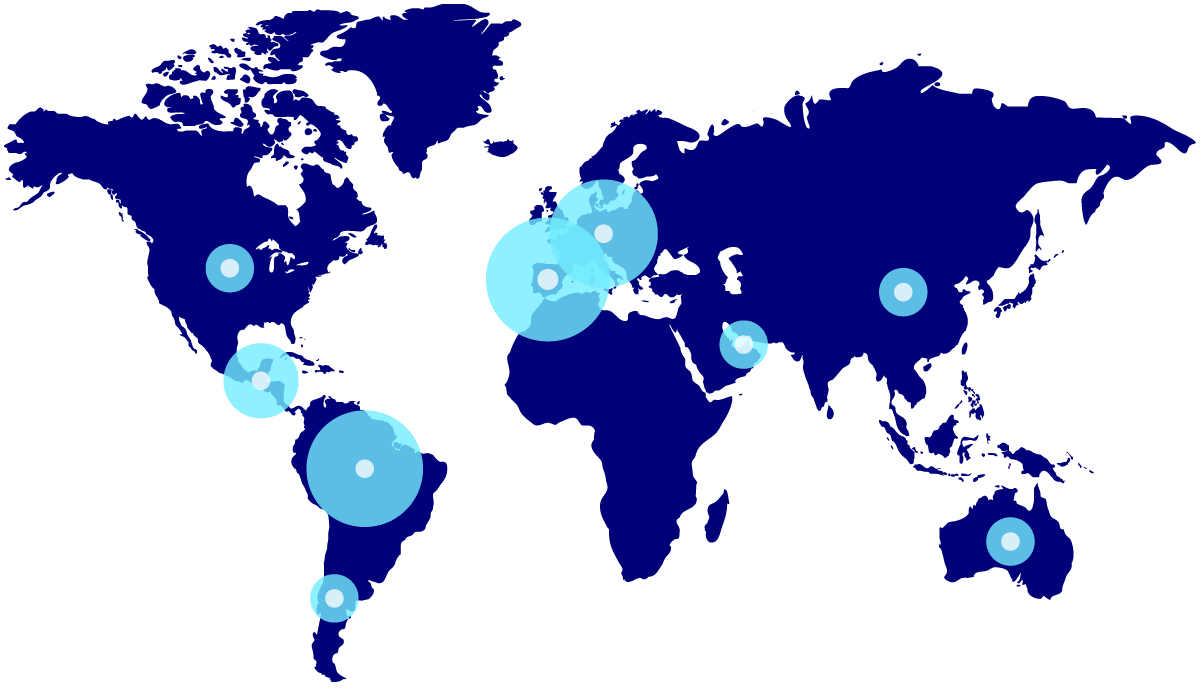
UOC students around the world