
Gene swapping helped build the planet's decomposers
A new study reveals that fungi-like, absorption-feeding life evolved repeatedly by sharing genes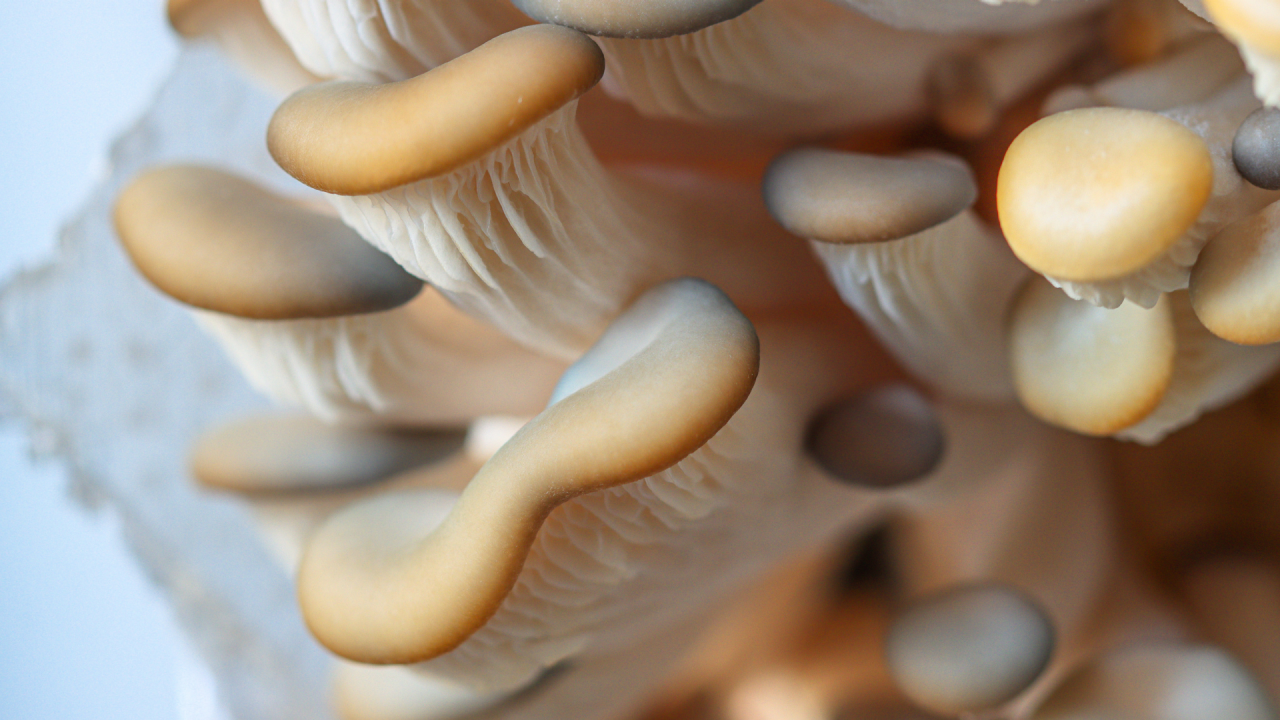
Decomposers are crucial for keeping Earth habitable, breaking down dead biomass and returning key nutrients, like carbon, nitrogen and phosphorus, back into the ecosystem. Most decomposers, including fungi, survive through osmotrophy, a means of feeding by absorbing dissolved nutrients rather than devouring prey. But how this method of feeding repeatedly arose across the eukaryotic tree of life – the large group of living things with complex cells, including plants and animals, but also other lesser known but ecologically-relevant groups of organisms – remains unclear.
A new study, led by the Universitat Oberta de Catalunya (UOC), with researchers from the Okinawa Institute of Science and Technology (OIST), the University of Oxford, the Barcelona Supercomputing Center (BSC) and the Institute for Research in Biomedicine (IRB Barcelona), among others, has reconstructed the evolutionary history of osmotrophic specialization in eukaryotes, showing that genetic exchange between species played a role in the repeated evolution of this feeding strategy. Their findings suggest that osmotrophs first arose between 720 million and 1 billion years ago. The results also indicate that horizontal gene transfer – the process in which genes swap from one species to another – played an important role in the evolution of these genes. This represents an important conceptual break, sharing horizontally instead of waiting for a gene function which already exists in other organisms to evolve from scratch.
The paper, recently published in Nature Ecology and Evolution, adds to the slow shift in how biologists think about how life evolves and how genes are inherited.
“The paper, recently published in Nature Ecology and Evolution, adds to the slow shift in how biologists think about how life evolves and how genes are inherited”
Digging deep into the history of decomposers
In this research, the team compared the genomes of species within four distantly related osmotrophic groups. Apart from Fungi, which is the most well-known and studied of these groups, three other eukaryotic lineages also transitioned towards a specialized osmotrophic lifestyle. Pseudofungi and Labyrinthulea, which are phylogenetically unrelated to Fungi, and Teretosporea, which are closer to animals than to Fungi. In short, four different groups of organisms that, evolutionarily, have ended up finding a similar solution to survive.
"Despite sitting at opposite sides of the eukaryotic tree, a series of traits have repeatedly evolved in these groups as an adaptation to an osmotrophic lifestyle, including filamentous networks and tough cell walls," said lead author Eduard Ocaña-Pallarès, a Ramón y Cajal research fellow in the Internet Computing & Systems Optimization (ICSO) research group, affiliated with the UOC-TECH centre. "Importantly, they also share a common metabolic toolkit necessary for decomposition and osmotrophy, including genes involved in nutrient uptake, ion regulation and anabolic metabolism. We wanted to know where these shared genes came from."
Through automated analyses combined with manual inspections of hundreds of gene trees, the researchers identified 166 cases where horizontal gene transfer was likely to have occurred between these groups, involving genes mostly related to metabolic functions. In particular, horizontal gene transfer occurred predominantly between Fungi and Pseudofungi, and between Labyrinthulea and Teretosporea.
"It could be that we see 'transfer highways' between these groups due to their shared terrestrial and aquatic ecology, respectively. In other words, coexistence in the same environments facilitated the sharing of these genetic 'tricks'," the researchers suggested.
Unanswered questions
Looking forward, the researchers pinpoint important directions for future research, including deciphering the actual function of these shared genes within each group.
A further mystery to solve is how horizontal gene transfer happened between these lineages. "For example, was it driven by the acquisition of foreign DNA directly from the environment or through viral intermediates?" said Ocaña-Pallarès. "The main question is no longer if horizontal gene transfer takes place in eukaryotes, but how it occurs. We still know very little about the mechanisms by which this process takes place in eukaryotes."
Reference article
Ocaña-Pallarès, E., Richards, T.A., Gabaldón, T. et al. Signatures of gene transfer in the parallel evolution of osmotrophic specialization in eukaryotes. Nat Ecol Evol (2026). https://doi.org/10.1038/s41559-026-03054-w
Transformative, impactful research
At the UOC, we see research as a strategic tool to advance towards a future society that is more critical, responsible and nonconformist. With this vision, we conduct applied research that's interdisciplinary and linked to the most important social, technological and educational challenges.
The UOC’s over 500 researchers and more than 50 research groups are working in five research centres focusing on five missions: lifelong learning; ethical and human-centred technology; digital transition and sustainability; culture for a critical society, and digital health and planetary well-being.
The university's Hubbik platform fosters knowledge transfer and entrepreneurship in the UOC community.
More information: www.uoc.edu/en/research
FAQs
Press contact
-
Anna Sánchez-Juárez