
Solar eclipse drives bookings and collective expectations
UOC experts explore the effects on tourism and the emotional and practical impact of an astronomical phenomenon that has sparked travel bookings, collective anticipation and eye safety concernsAstrotourism could evolve from a specialized niche into a mass phenomenon
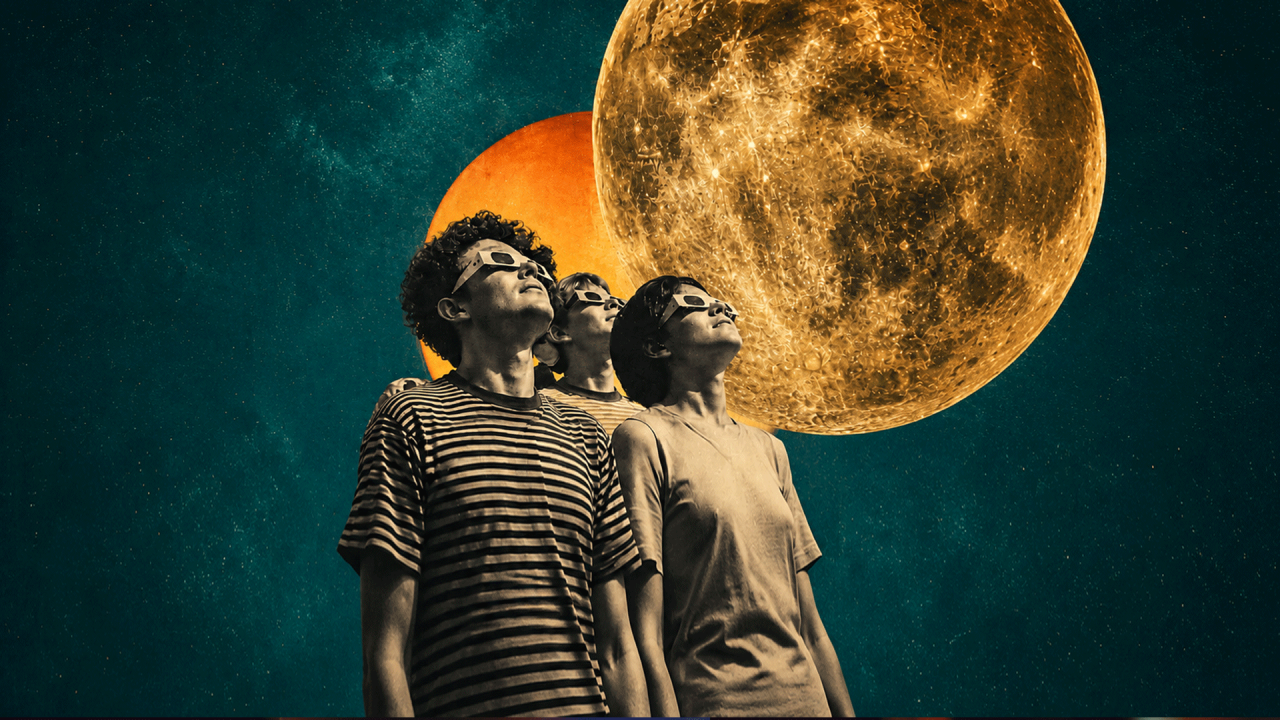
On 12 August 2026, for just over a minute, daylight will fade before sunset in some parts of the country. The total solar eclipse will be visible along a corridor that crosses the Iberian Peninsula and the Balearic Islands, while the rest of Spain will experience a partial eclipse. According to the National Geographic Institute (IGN), in cities such as Burgos, the eclipse will begin at 7:33 p.m. and reach totality at 8:29 p.m. The total phase will last 104 seconds, with the Sun positioned just eight degrees above the horizon.
The significance of the event extends far beyond astronomy. Experts from the Universitat Oberta de Catalunya (UOC) are analysing how a phenomenon lasting only a few minutes can drive hotel bookings, mobility, educational activities and public expectations, while also raising eye safety concerns if it is not observed with appropriate protection.
“Without proper planning, the eclipse could turn into an economic mirage; with good management, it can serve as a calling card for the region.”
"Per tal que la rendibilitat transcendeixi el benefici immediat i deixi una empremta territorial duradora, els gestors de les destinacions han de construir un ecosistema astroturístic col·laboratiu", assenyala Garay. Això implica integrar l'astronomia amb altres actius del territori: patrimoni biocultural, gastronomia, arqueologia, turisme rural, activitats familiars i protecció del cel nocturn. També exigeix millorar la senyalització, el transport públic, la gestió del trànsit i el control de la contaminació lumínica. Sense aquesta planificació, l'eclipsi es pot convertir en un miratge econòmic; amb una gestió adequada, pot funcionar com a carta de presentació d'un territori.
Per què ens fascina mirar el cel junts
L'eclipsi també activa una expectativa col·lectiva intensa. Per què un esdeveniment natural de pocs minuts genera tanta anticipació? Emilia Redolar, professora de neurociència dels Estudis de Psicologia i Ciències de l'Educació de la UOC i investigadora del grup e-RLab (Ètica, equitat i eines digitals per a la millora de la salut), explica que el primer factor és la novetat. Un eclipsi solar total és un fenomen natural poc habitual, i el cervell està preparat per detectar allò que és infreqüent, rellevant o potencialment significatiu.
Segons Redolar, hi intervenen les neurones dopaminèrgiques, que van de l'àrea tegmental ventral fins al nucli accumbens, una regió de l'estriat. Aquest sistema participa en la motivació i en la detecció d'estímuls importants. "Aquestes neurones senyalitzen allò que és important per a nosaltres i també s'activen davant la novetat", explica. Davant un fenomen com un eclipsi, poden impulsar conductes orientades a no perdre-se'l: buscar informació, comprar ulleres homologades, reservar allotjament, triar una ubicació o organitzar una experiència compartida.
The impact on tourism is already evident. According to Reuters, international hotel bookings in small towns along the eclipse path have increased by 383% this year, and the event could generate €362 million in tourism revenue. The Spanish government expects to attract around 10 million international astrotourists. According to data from Booking, reservations for the night of 12 August have risen by 260% in A Coruña, 170% in León and 120% in Burgos. IGN's interactive viewer allows users to check the timing, duration, degree of obscuration and solar elevation for each municipality.
When astrotourism moves beyond a niche
Astrotourism has traditionally been defined as a form of special-interest tourism aimed at a limited audience with scientific, cultural and nature-based motivations. It is also part of an experience-based tourism model rooted in the heritage, landscapes, local narratives, culture and gastronomy of a destination.
"This year's eclipse, which will be visible across a large part of the Iberian Peninsula, is different. We're talking about an exceptional event that could serve as a catalyst and temporarily transform this niche into a much broader mass phenomenon", explained Lluís Garay, a professor in the Faculty of Economics and Business at the UOC and a researcher with the NOUTUR group (New Perspectives in Tourism & Leisure).
The precedent of the 2019 solar eclipse in Chile's Coquimbo region, which attracted nearly half a million visitors, illustrates this transformation. According to Garay, these phenomena can attract a more diverse tourist profile, one that is more willing to spend and whose motivations are not always directly linked to astronomy. The eclipse could attract experts, enthusiasts, families, summer holidaymakers and occasional travellers.
The economic benefits are not necessarily long-lasting. Garay pointed out that eclipse studies show a significant short-term impact on accommodation, restaurants, transport and experience-based tourism offerings, but they also indicate that this impact may be temporary. If a destination only prepares to receive visitors for a few hours or days, the outcome may be limited to a short-term peak in revenue.
"To ensure that the benefits extend beyond the immediate impact and leave a lasting effect on the territory, destination managers must build a collaborative astrotourism ecosystem", said Garay. This involves integrating astronomy with other assets of the destination, such as biocultural heritage, gastronomy, archaeology, rural tourism, family activities and the protection of dark night skies. It also requires improvements in signage, public transport, traffic management and light pollution control. Without this planning, the eclipse could become an economic mirage; with proper management, it may serve as a showcase for a destination.
Why are we so fascinated by looking at the sky together?
The eclipse is also generating a strong sense of collective anticipation. Why does a natural phenomenon that lasts just a few minutes create such excitement? Emilia Redolar, a professor of neuroscience in the Faculty of Psychology and Education Sciences at the UOC and a researcher with the e-RLab group (Ethics, Equity and Digital Tools for Health Improvement), explained that the main factor is novelty. A total solar eclipse is a rare natural phenomenon, and the brain is wired to detect things that are unusual, relevant or potentially significant.
According to Redolar, dopaminergic neurons play a role in this process. These neurons extend from the ventral tegmental area to the nucleus accumbens, a region of the striatum. This neural system is involved in motivation and detecting significant stimuli. "These neurons signal what is important to us and are also activated by novelty", she explained. Faced with a phenomenon such as an eclipse, they can drive behaviours aimed at making sure we don't miss it, such as looking up information, buying certified eclipse glasses, booking accommodation, choosing a viewing location or organizing a shared experience.
The collective dimension further reinforces this process. Seeing a photograph is not the same as sharing the anticipation, watching the light change, feeling the drop in temperature or experiencing the sudden silence that settles over the landscape. An eclipse brings people together around an exceptional event.
In addition, some people may experience saturation or indifference. Redolar explained that dopaminergic neurons learn and update their responses. If a stimulus is no longer perceived as novel because it is constantly discussed, some people may become used to it and stop paying attention before they have even seen it. Meanwhile, others will maintain their sense of anticipation because they have not yet experienced it. Thus, the same phenomenon can generate fascination, indifference or rejection.
How to observe and photograph the eclipse without putting your eyesight at risk
The main rule is simple: never look directly at the Sun without proper eye protection. Because the Sun appears to darken during an eclipse, some people may assume it is less dangerous. It is not.
David Merino, a professor in the Faculty of Computer Science, Multimedia and Telecommunications at the UOC and a researcher in the AIWELL group (Artificial Intelligence for Human Well-Being), warns that observing the Sun without protection can cause solar retinopathy, also known as eclipse retinopathy. Even a very brief glance may leave a temporary blind spot, while longer exposure can exceed the amount of light the eye can tolerate and cause photochemical damage to the retina. Other symptoms may appear hours later: persistent blind spots can be accompanied by eye pain or tearing. In some cases, these can last for weeks or months and, depending on the length of exposure and the characteristics of each eye, the damage may be permanent.
Conventional sunglasses do not provide adequate protection, nor do homemade alternatives. Eclipse glasses must be certified and comply with the ISO 12312-2 international standard, which specifies the requirements for safe solar viewers. In case of doubt, it is best not to use them.
Children require particular care. According to Merino, they are at greater risk for two reasons. First, the optics of their eyes, especially the crystalline lens, are more transparent than those of adults, which means that more ultraviolet and infrared radiation reaches the retina. Second, the curiosity and excitement generated by such an unusual event may tempt them to look directly at the Sun without protection. They must always wear certified eclipse glasses and be supervised by an adult.
A safe and educational alternative is to observe the eclipse indirectly using a camera obscura or a pinhole projector. This simple experiment allows the Sun's image to be projected without looking at it directly and can be an excellent activity for children.
Cameras should also be protected. Recording the Sun for an extended period, particularly with a camera mounted on a tripod, can damage the image sensor. Merino recommends that viewers place a filter in front of the camera, whether they are using a smartphone, a consumer camera or professional equipment. For smartphones, certified eclipse glasses can be placed in front of the lens, while always avoiding looking directly at the Sun when focusing.
When using professional cameras, telescopes or binoculars, appropriate solar filters must be fitted to the front of the optics. NASA warns that the Sun should never be viewed through cameras, binoculars or telescopes unless they are equipped with suitable solar filters.
The solar eclipse of 12 August 2026 will be an extraordinary astronomical event, a test of tourism management and an opportunity for science communication. The best way to experience it is to prepare in advance, choose a suitable location and observe it only with appropriate protection.
Experts UOC
Press contact
-
Núria Bigas Formatjé