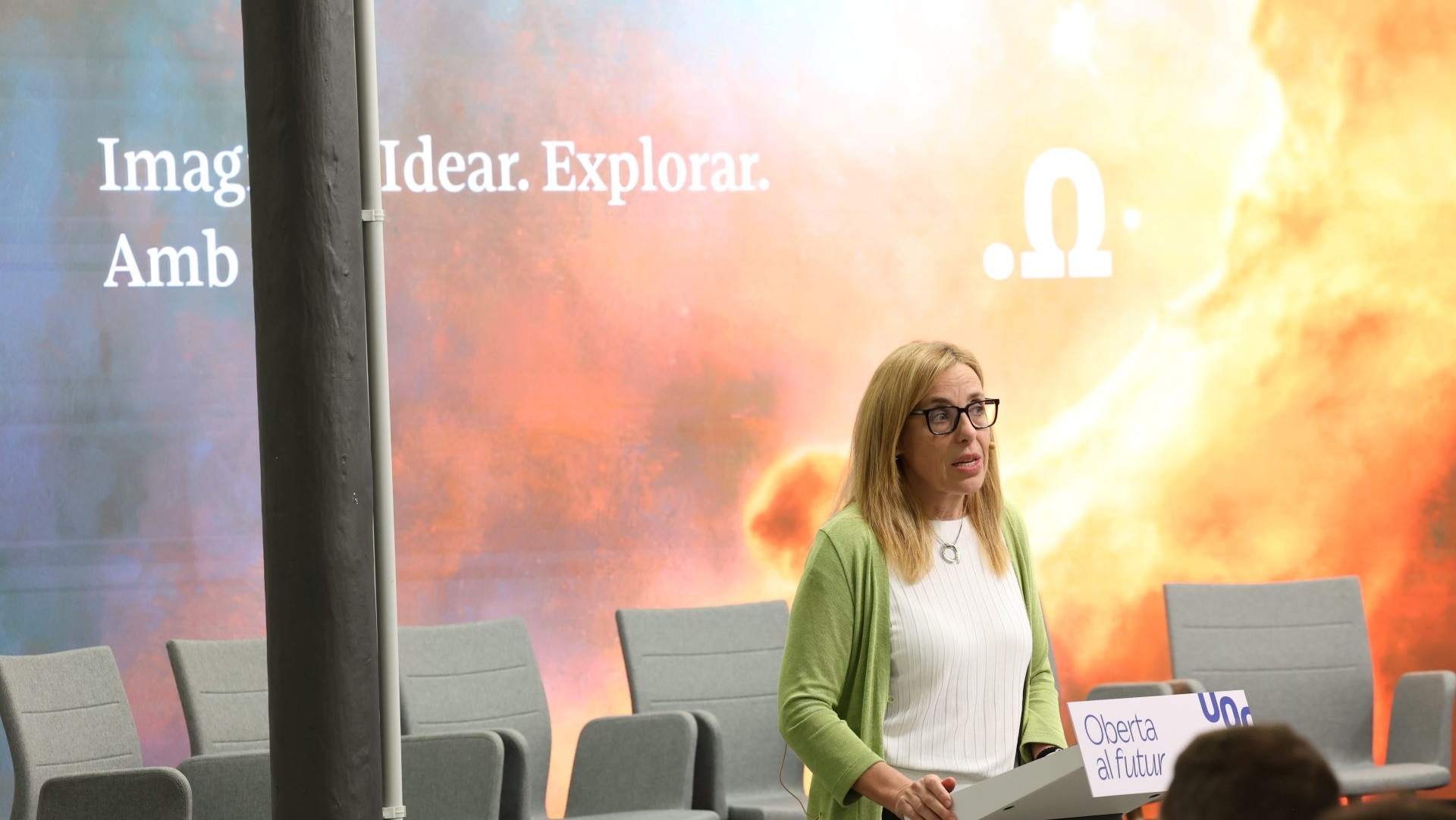
UOC launches uoc.Ωmega mission to rethink its educational model in the age of AI
The university is striving to become AI-native and stay ahead of the curve in terms of the future of higher education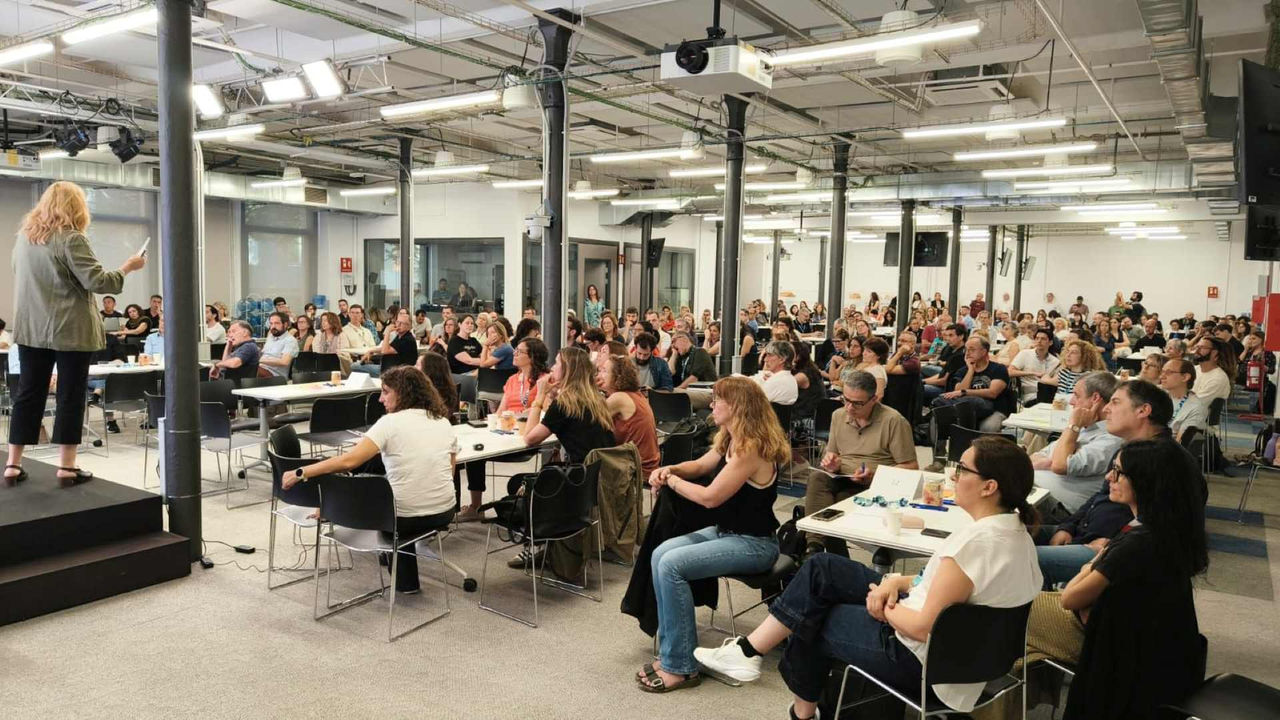
The Universitat Oberta de Catalunya (UOC) is once again at the forefront of global educational transformation. Thirty years after becoming one of the world's first online universities, the UOC is now embarking on a new phase of evolution to establish itself as an international benchmark in the transformation of higher education in the age of artificial intelligence.
“The most significant transformations do not happen simply because the context changes, but because communities are able to understand it and build their own responses.”
The university has launched the uoc.Ωmega mission, a strategic and collective initiative designed to foster reflection at the institution on how it should evolve in today's AI-driven world. The project is centred around one key idea: AI is not only a new technology, but a contextual shift in how we learn, produce knowledge and build trust.
The initiative aims to explore new approaches to learning, teaching roles and support models, as well as new ways of generating social impact. Beyond harnessing AI tools, this means rethinking the university's model from the ground up and foreseeing what role higher education has to play in this new scenario.
The UOC is once again posing a fundamental question: what kind of university does society need in a profoundly transformed technological context? According to UOC Rector Àngels Fitó, the institution was founded on "a bold insight": that the internet was not simply a technological tool, but an opportunity to completely rethink the university institution.
Now, the emergence of AI is putting that question back on the table. Fitó said: "Artificial intelligence is no longer a promise for the future, but a contextual shift that directly impacts the heart of the university model. Today, as before, we must embrace a new intellectual commitment, an act of institutional will, forward thinking and a deep understanding of the conditions that make learning possible. And this is something we must build together."
The rector emphasized that the UOC's mission extends beyond adapting to technological change to leading the international conversation on the future of higher education in the digital and AI era. In her own words, "great transformations are driven not by passive adaptation, but by the ability to anticipate change and chart our own path forward".
Collective intelligence: the university's driving force
This is the backdrop to the uoc.Ωmega mission, a broad call to action designed to harness the collective intelligence that has long defined the university.
The initiative revives the UOC's founding spirit, namely the willingness to rethink the university from the ground up, and projects it into a new AI-shaped landscape.
The mission includes a system of “ideation expeditions”, collaborative spaces designed to explore what the new UOC should be like. Nearly four hundred people are participating in these expeditions, which will make it possible to gather perspectives, proposals, and experiences from different areas of the university community. The conclusions will help guide the first transformation initiatives and will begin to be tested throughout the next academic year, in line with the UOC’s new strategic cycle.
The university presents these expeditions as living laboratories for experimentation and transformation, where innovation is not limited to technology but also affects learning, organization, and the role of the institution. “The UOC has entered a chrysalis phase,” the rector notes. “And this transformation will only be possible with the active participation of the entire university.
”In this context, UOC Vice Rector for Teaching and Learning Teresa Guasch stressed that the university faces a significant challenge that demands the continuous evolution of its educational model in response to the social and technological changes brought about by AI.
Guasch argued that educational innovation entails far more than adopting new technologies. In her view, it requires a fundamental rethinking of learning and the role of the university in an environment profoundly shaped by digitalization and AI, while keeping the focus firmly on teaching quality, personalization, support, inclusion and the continuous improvement of the learning experience.
The uoc.Ωmega mission forms part of the Strategic Plan 2026-2030 and complements other initiatives promoted by the university to accelerate the integration of AI across all areas of activity.
AI Week: understanding, experimenting with and applying AI at the UOC
As part of this broader transformation effort, the UOC's first AI Week will take place from 2 to 4 June, turning the university into a shared space for AI-focused experimentation, learning and action.
The initiative is aimed at the in-house team and was born of a clear objective: to accelerate the practical, responsible integration of AI across teaching, administration and research. Following an initial phase focused on strategic planning, governance and early use cases, the UOC is now taking the next step by moving from reflection to implementation and mobilizing the people and teams that make up the university community.
With the theme of "Understanding, experimenting and applying AI at the UOC", the initiative invites participants on a shared journey to better understand the impact of this technology, identify practical opportunities for its application and foster a common culture of AI use across the university. Over three days, participants will take part in more than 28 hours of training and some 20 sessions, including presentations, panel discussions, use-case demonstrations, workshops, webinars and boot camps delivered both in person and online.
The AI Week programme combines shared sessions with tailored tracks for teaching, administrative and research staff. The aim is for each team to identify practical uses of AI in their day-to-day work, share ongoing experiences and experiment with tools and applications in real-world contexts.
The programme also includes a session on emerging developments and trends in AI led by Mariano Salas, digital transformation manager Spain at Google for Education. Open to all participants, the session will explore technological advances, the impact of generative models and the rise of intelligent agents. AI Week will also bring together leading voices from across the UOC's academic and technology community, alongside external experts. The closing session will feature Vinyet Bravo, founding CEO of VB Consulting; Ariadna Morancho, AI governance & data project manager at Volkswagen Group España Distribución; and Genís Roca, president of Accent Obert.
SofIA
AI Week forms part of the UOC's journey towards becoming a fully AI-enabled university. In 2023, the institution presented its first action plan in this area and created AFIA, an institutional assessment, feedback and artificial intelligence group focused on the use of AI in digital assessment. In 2024, it launched SofIA, a strategic initiative to promote the innovative use of AI across the university, alongside a training programme designed to help staff understand generative AI and incorporate it into their work. In 2025, tools such as Gemini and NotebookLM were integrated into the UOC community's digital work environment, while new training initiatives were introduced, including boot camps for teaching staff or the Gems catalogue in the eLCKit.
Now, in 2026, the university is cementing this transformation through new governance structures and institution-wide initiatives, including the UOC's AI Expertise Centre, AI Week and the uoc.Ωmega mission, a broad call for participation to collectively reimagine what a native AI university can be.
Experts UOC
Press contact
-
Leyre Artiz