
A guide to building resilience for the prevention of wildfires
The document, prepared by UOC researchers, offers guidelines for organizing community preparedness days in urban areas bordering on woodland that are particularly exposed to the risk of fireThe first two sessions have been organized in Sant Cugat del Vallès, in three neighbourhoods located in the Collserola mountain range
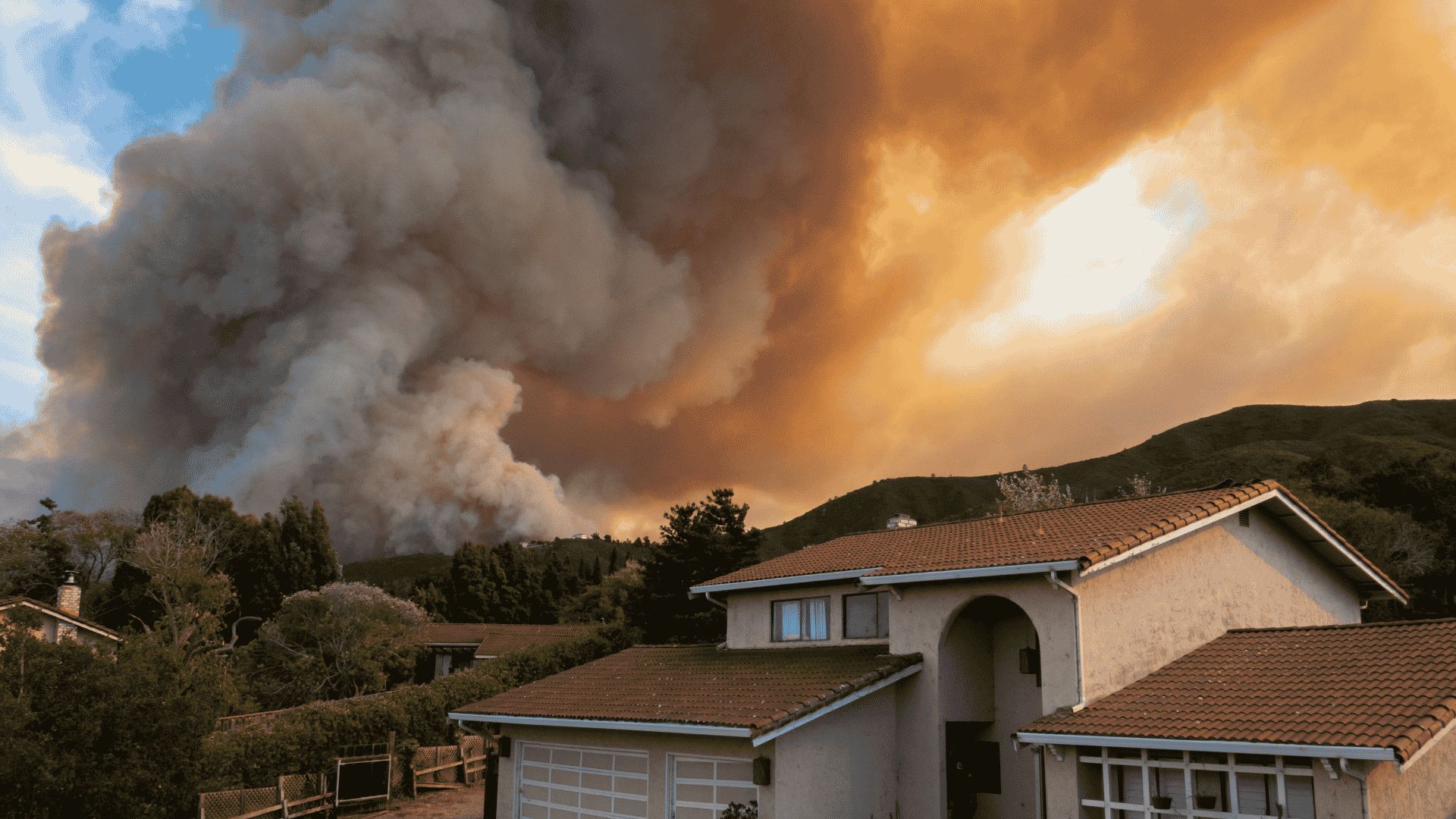
In Mediterranean environments, forests have been spreading and increasing in density for decades. This, combined with the effects of climate change, leads to fires that are more intense and spread faster. At the same time, there is an increase in the number of wildland-urban interface areas: built up areas in contact with forest land, which means that increasing numbers of people are exposed to the risk of fire.
To tackle this issue, researchers from the Universitat Oberta de Catalunya (UOC) have developed a Practical guide to forest fire preparedness It contains advice on how to organize preparedness days, community events to prepare for the risk of forest fires, with a special emphasis on dialogue between residents of these risk areas, public authorities and emergency services.
“Preparedness days create spaces where technical knowledge and neighborhood experience are shared to analyze the risk of each area”
"These events allow technical knowledge and the experiences of the residents to be shared and the risk for each neighbourhood to be analysed jointly, identifying both vulnerabilities and community resources that can be activated before, during and after a fire," said Maria Cifre-Sabater, a researcher from the CareNet research group, who has prepared the guide together with Israel Rodríguez Giralt, a member of teaching staff at the Faculty of Psychology and Education Sciences and a researcher in the same group, which is part of the UOC's Interdisciplinary Research Centre on Social and Cultural Transformations (UOC-TRÀNSIC).
The document has been produced as part of the European Programme for Wildfire-Prepared Communities (FIREPRIME), co-funded by the European Union. The programme's aim is to develop a set of tools, such as mobile applications, games and other materials, to improve fire safety for homeowners, strengthen the resilience of infrastructure and encourage community participation and education.
In addition to the UOC, the project participants are the Universitat Politècnica de Catalunya (UPC), the Pau Costa Foundation, the University of Natural Resources and Life Sciences, Vienna (BOKU) and the RISE Research Institutes of Sweden. "This collaboration has made it possible to develop and test the tools in several European regions with very different characteristics (Mediterranean, Central Europe and Northern Europe), producing solutions that are transferable and adaptable to different contexts," said the UOC researchers.
The active role of the community
Responses to the risk of fire focus above all on extinguishing fires, while, according to the researchers, prevention tends to focus on managing plant fuel and individual or household self-protection measures, neglecting other significant aspects of collective fire preparedness.
"Although in Catalonia there are community initiatives linked to the risk of fire, such as the Forest Defence Group (ADF) and self-protection groups, there is often a failure to incorporate communities as an active part of management: not only as recipients of information, but also as agents with knowledge of the area and day-to-day experience of coexisting with risk," the researchers said.
They also warned of the lack of direct interaction between local residents, government bodies and emergency services, as well as the lack of collective preparedness. In addition, they pointed out that social vulnerabilities that can make it difficult for certain people or groups to tackle a fire or recover from it, are still rarely taken into account. These can include poor housing, social isolation or difficult access in mountain areas.
The importance of dialogue between all involved
The new guide responds to these shortcomings with tools to activate community preparedness processes based on dialogue between local residents, government bodies and emergency services. "Forest fire preparedness is a shared responsibility and requires the coordination of actors with different knowledge, roles and experience," they said.
This exchange is key, so that information on how to reduce risk reaches everyone, is easy to understand and is adapted to each context. "Not all communities have the same material or social conditions and, therefore, the recommendations cannot always be applied in the same way," they said.
According to the authors, it is not just a matter of transmitting information, but of creating spaces for conversation that allow knowledge to be shared, to clarify doubts, to generate trust and to prepare better collectively.
A flexible resource that can be adapted to each local situation
The guide provides advice on how to adapt community preparedness days for different social and regional contexts, through workshops, drills, spaces for dialogue or activities focusing on specific issues. "For example, in communities that are poorly organized to deal with the risk of fire, these sessions can be used to highlight vulnerabilities, generate awareness and start processes of community organization. In communities with previous experience, they can help fine-tune protocols, review coordination mechanisms and study complex fire scenarios in greater depth," they said.
Preparedness days can be organized at any time of the year, although they have a special relevance before the season when most fires occur. The guide also offers recommendations to stimulate dialogue, consolidate learning and continue work already under way, among other aspects.
The document emphasizes the importance of diverse and inclusive participation, with people of different ages, origins and genders, and with the involvement of social entities and services that work with groups in vulnerable situations.
Events of this type follow the example of countries such as the United States and Canada, where initiatives such as Wildfire Community Preparedness Day, usually an annual event, have helped to boost communities' ability to reduce risk and reinforce public involvement in the management of forest fires.
From guidance to practice
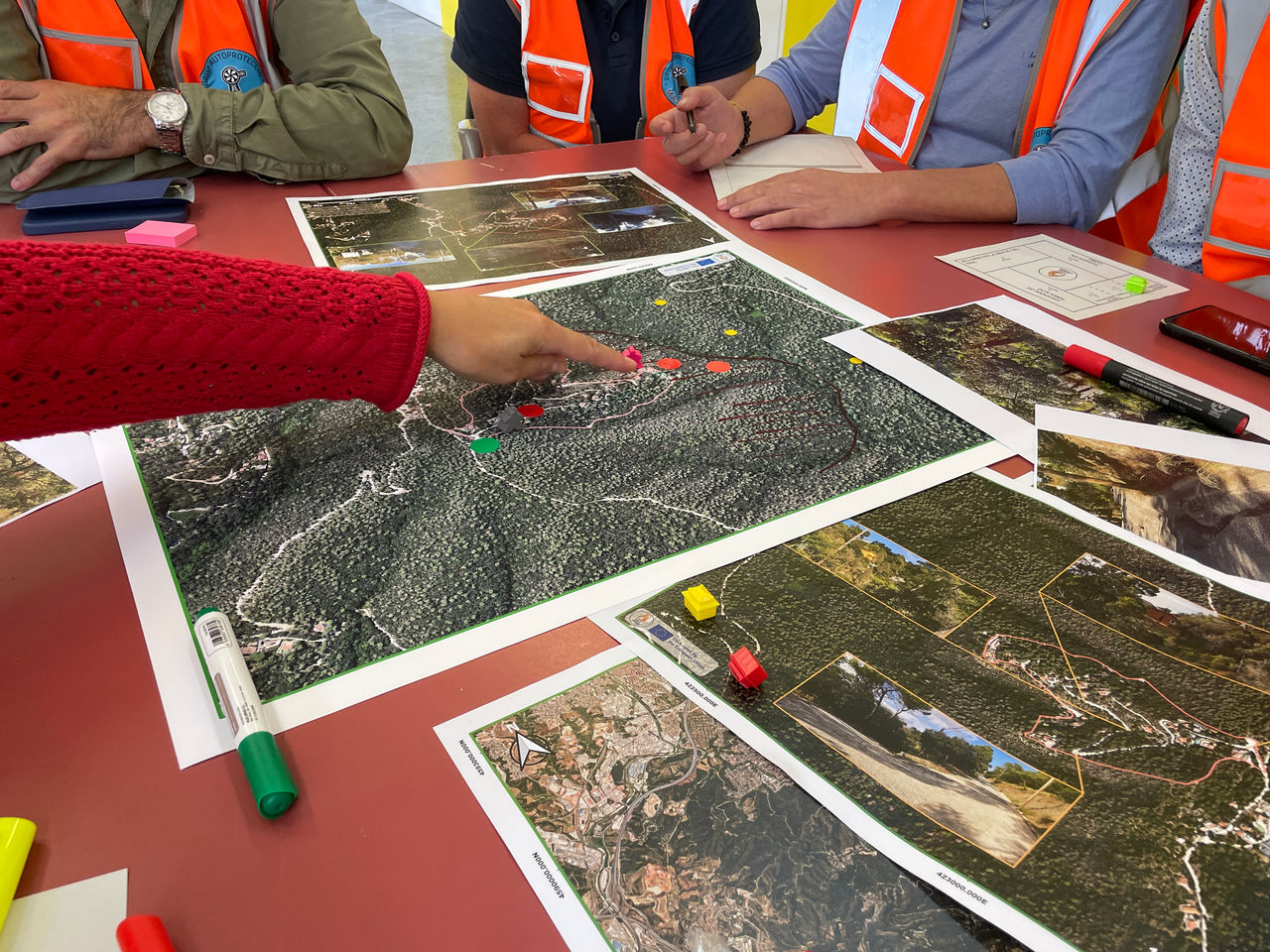
In 2025, as part of the FIREPRIME project, two community preparedness days were organized in Sant Cugat del Vallès, with the participation of residents of Sol i Aire, La Floresta and Mas Fortuny, three neighbourhoods located in the Collserola mountain range. Government of Catalonia firefighters, Civil Protection, members of the Forest Defence Group (ADF) and representatives of local government also participated.
At both events, knowledge was shared and all those involved were able to meet together, with group work and analysis of specific fire scenarios for each neighbourhood. "These events have shown the value of informal spaces to develop trust and relationships between actors as well as their potential as a starting point for more sustained processes of community preparedness," said the researchers.
This project is aligned with the UOC's research missions Digital transition and sustainability and Culture for a critical society, which support the following UN Sustainable Development Goals (SDGs): 10, Reduce inequality within and among countries; 11, Make cities inclusive, safe, resilient and sustainable, and 13, Take urgent action to combat climate change and its impacts.
Transformative, impactful research
At the UOC, we see research as a strategic tool to advance towards a future society that is more critical, responsible and nonconformist. With this vision, we conduct applied research that's interdisciplinary and linked to the most important social, technological and educational challenges.
The UOC’s over 500 researchers and more than 50 research groups are working in five research centres focusing on five missions: lifelong learning; ethical and human-centred technology; digital transition and sustainability; culture for a critical society, and digital health and planetary well-being.
The university's Hubbik platform fosters knowledge transfer and entrepreneurship in the UOC community.
More information: www.uoc.edu/en/research
Experts UOC
Press contact
-
Anna Sánchez-Juárez