
"Laws in the city are never neutral"
Gabriela Fauth, professor and researcher at the UOC.
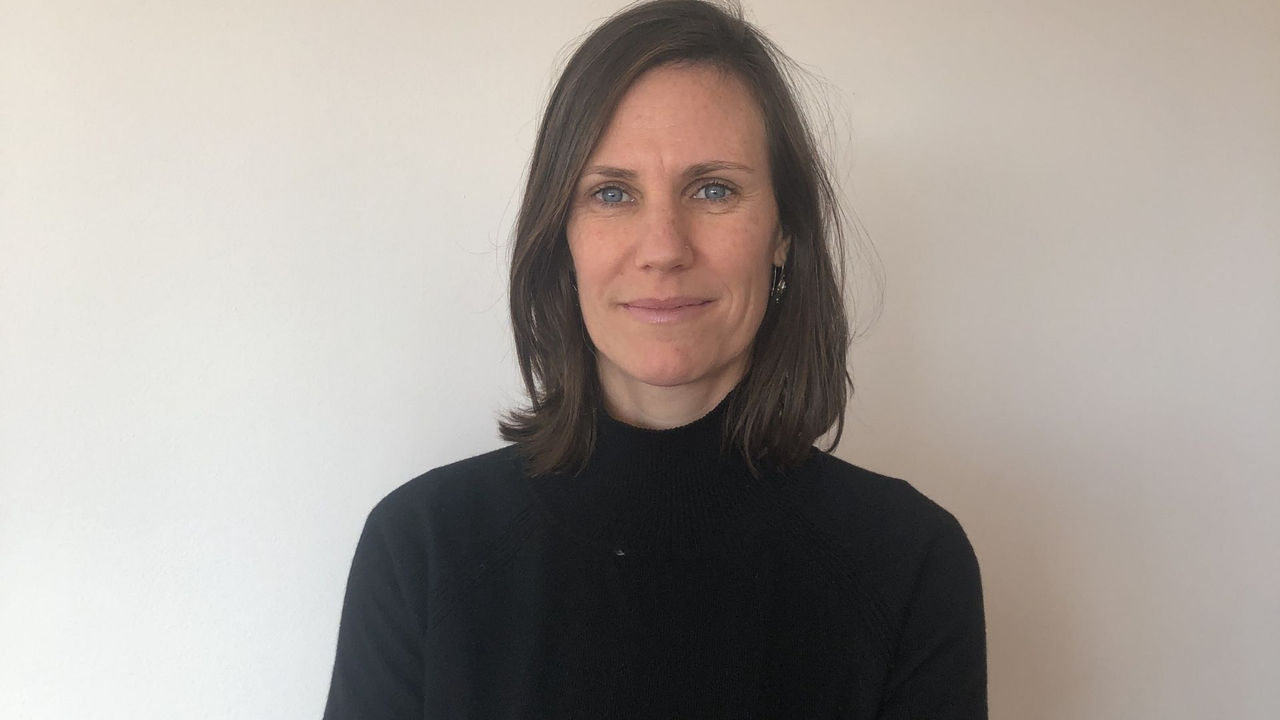
Where are people's rights from a spatial perspective? This is one of the fundamental questions of the project Right to housing: where and why does territory matter?, led by Gabriela Fauth, a lecturer in the Faculty of Law and Political Science at the Universitat Oberta de Catalunya (UOC) and a researcher in the CitiesLab group, which is linked to the UOC-TRÀNSIC research centre. Fauth, a jurist with a PhD in Law from Universitat Rovira i Virgili, a background in urban planning and research experience in Brazil and Spain, focuses her work on the right to the city, urban vulnerabilities, the social effectiveness of the norm and instituent social practices.
The project, funded by a UOC Research Accelerator grant, examines how the right to housing is experienced unequally depending on the territory, the social conditions of the people who live there and the distribution of power in the city. The study examines people's life stories, whether or not they are affected by housing insecurity, and the results will be presented in a multimedia map exhibition open to the public.
Fauth will moderate a panel discussion at the presentation of the book SOS habitatge [Housing SOS] during the conference to be held on 1 June by CitiesLab in collaboration with the FAVB (Federation of Residents' Associations of Barcelona).
“Laws in the city are never neutral: their application, or their absence, conditions who stays in their environment and who is displaced”
What are the causes of housing insecurity?
The feeling of insecurity stems from a lack of safeguarding of fundamental rights, a result of structural vulnerability amid neoliberal policies that promote financialization of the land and lead to consequences such as gentrification. This is seriously detrimental to everyday life, leading to constant worry, a feeling of powerlessness and fear about the rise in the cost of living and the threat of forced displacement.
What do you lose when you leave your neighbourhood?
Moving away means losing personal connections, neighbourhood or family support networks, familiar surroundings and key social relationships that give meaning to urban life. Beyond physical facilities, when people are forced out of their neighbourhoods, they lose the ability to fully exercise their right to the city, which is tied to the guarantee of living and getting around with dignity and fairness in their own environment. Job insecurity can also be aggravated, with long daily commutes that can become unsustainable.
Why does a person's neighbourhood matter so much?
In Barcelona, as in other large cities, each neighbourhood is the result of different processes of the production of urban space. Quality of life and the ability to exercise one's citizenship rights are linked to the effective protection of people's fundamental social rights and the implementation of comprehensive public policies. Local circumstances are not the same everywhere: urban precarity is characterized by its uneven distribution across the territory, causing economic crises or external environmental factors to affect people unequally, with more severe consequences in areas with high housing demand, social exclusion or social inequality.
What are the hidden factors behind the housing crisis?
Urban planning plays a key role in this, because the housing crisis has a significant territorial and urban dimension linked to the crisis in city models and to property ownership patterns. Conversations about price also involve ideas of ownership, location and the commodification of land. We need to question why certain properties are more valuable than others, why there is more market interest in some parts of the city than in others or why ownership is concentrated in the hands of a few and large corporations. Although these are the least visible factors of the housing crisis, they lie at the heart of the problem. Why is territory such a decisive factor when examining the right to housing? This is the question that inspired this study.
What can we learn from life stories?
Allowing the people who are directly affected by this to have their voice heard ensures that local communities are actively listened to and empowers those who are experiencing the problem first-hand. Interviews are an established methodology in the field of social sciences. In this project, they were used to collect qualitative data that cannot be found in statistics. The aim of the data is to build narratives with potential for truly meaningful analysis, which are key to humanizing the information obtained and understanding people's spatial experience. The idea arose from earlier projects and the experience of researchers at CitiesLab.
What can we learn from districts such as Ciutat Vella, Nou Barris and Sant Martí?
Further progress in the research is necessary before definitive data can be presented, as it is still early days and a more thorough analysis is needed. However, there is no doubt that some of these districts have historically been the target of real estate speculation, for example with the 22@ project in Sant Martí or the touristification seen in Ciutat Vella. Nou Barris, on the other hand, a popular working-class neighbourhood with a large migrant population, has always been one of the most affordable parts of the city, but it is now starting to see some changes due to high demand for properties caused by the arrival of families and other people who can no longer afford to live in Barcelona's more central neighbourhoods.
Why should the law be considered from a territorial perspective?
Looking at the law and people's rights from a territorial perspective is fundamental because, rather than being an abstract entity, the legal framework actively shapes spaces and the legal arrangements that materially affect people's everyday lives. According to the study, space and the law are bound by a dialectical relationship in which access to housing defines who really exercises the right to the city. In view of its uneven distribution across the territory, any strict legal definition of urban precarity will be inadequate unless it takes into account the constant transformation of space and the bodies that inhabit it.
What do we mean by "spatializing" the law?
In order to analyse the law from a spatial perspective, we must examine how regulations go beyond discourse to shape – or fail to influence – the physical reality of space and people. Formally recognizing the right to housing is not enough: we must question where it is effectively exercised and what barriers preclude its enjoyment in some parts of the city. The legal framework is neither neutral nor invisible: its application – or lack thereof – determines who can stay in their own environment and who is forced out of it. Ultimately, rights are not an abstract notion but a device that delineates the city and decides who has the prerogative to live in it and under what conditions.
Why must academia listen to those who are directly affected by this issue?
This listening and collaborative effort between academia and local players is key to boosting communities' ability to drive change. Exchanging knowledge, conducting empirical studies and adopting a transdisciplinary approach foster the collective construction of academic and social knowledge from a diverse perspective. This initiative plays an essential role in helping us understand and collectively address the needs of society, expanding the real-life application of democracy in local areas.
What is the key takeaway from the SOS habitatge conference?
The work presented at the conference is a rigorous study on the housing emergency in Barcelona from the perspective of residents' movements. This perspective is fundamental, as it is social organizations that diagnose the issues they experience first-hand, providing situated knowledge that can be used to guide public administrations. Recognizing the importance of the territory helps us gain critical awareness of the role of residents' movements in upholding the right to housing, the limitations of urban policies and the need for new regulatory frameworks that guarantee fairer and more democratic and sustainable cities.
Press contact
-
Sònia Armengou