
Airlines keep flight frequencies despite increased competition from liberalized high-speed rail
Air carriers have responded by reducing seat capacity, but not the number of flights, in order to avoid harming connectivity with air hubsEn els corredors principals d’alta velocitat, la freqüència va passar de 78 a 115 viatges diaris
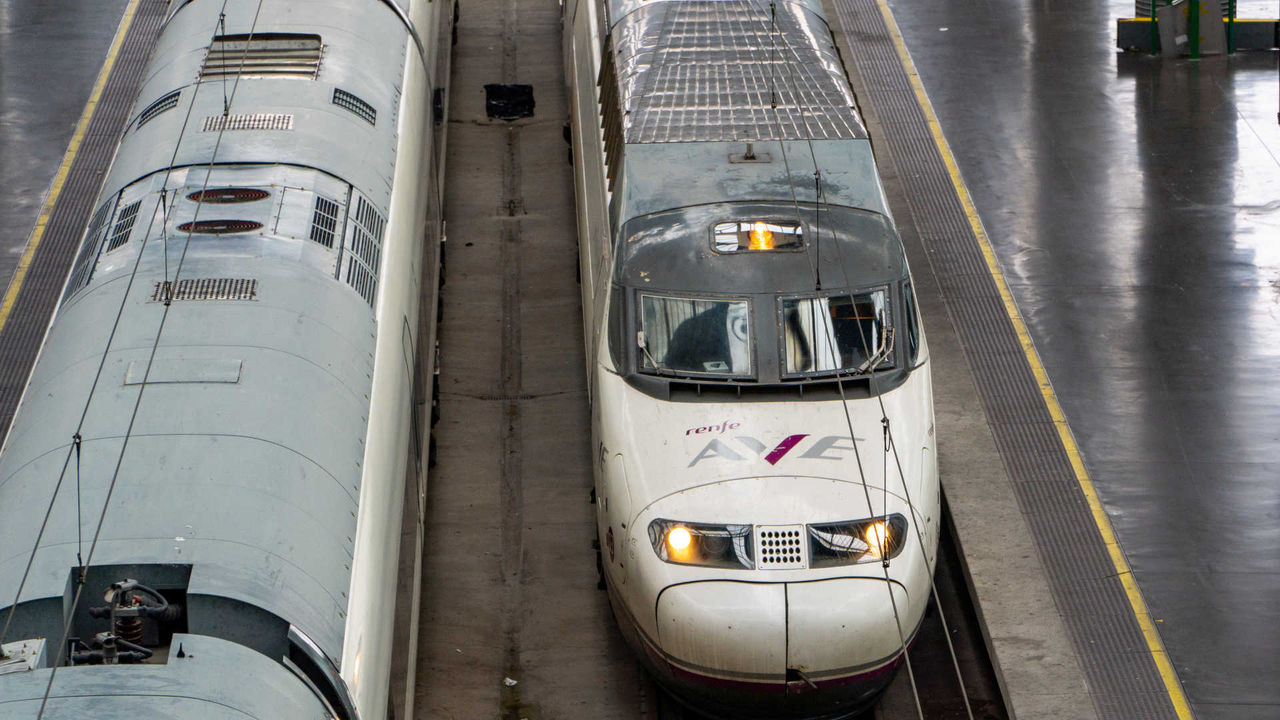
The liberalization of Spain's high-speed rail market in 2020 led to an increase in passenger numbers relative to its main competitor: air travel. Airlines responded to this increased competition by reducing seat capacity by between 10% and 16%, while maintaining flight frequencies to avoid compromising connectivity with major hub airports. This is the main finding of a paper by researchers from the Universitat Oberta de Catalunya (UOC), the University of Barcelona (UB) and the Universitat Autònoma de Barcelona (UAB).
The open access article explains that the European Union supports high-speed rail as a more sustainable mode of transport, and that one way of promoting it is through market liberalization. Spain is one of the few countries to have adopted this approach. In 2020, the market was opened to competition on the country's main high-speed corridors: Madrid–Barcelona, Madrid–Valencia, Madrid–Alicante, Madrid–Seville and Madrid–Málaga. The result was an increase in both service provision and passenger demand. The number of daily services on these key routes increased from 78 to 115, while seat capacity rose by 60%, climbing from nearly 24 million in 2019 to around 37 million in 2023. Passenger demand also grew by as much as 45%, from around 20 million travellers in 2019 to more than 30 million in 2023.
The success of liberalization enabled high-speed rail to capture more than 80% of the market on most corridors where it competes directly with air travel. In response, airlines reduced seat capacity by replacing some aircraft with smaller models, while keeping flight frequencies unchanged.
“Even if legislation were to move towards banning short-haul flights, its impact on the number of flights would be very limited”
Neither market forces nor legislation has reduced the number of flights
“The sharp increase in high-speed rail services in Spain following market liberalization has not led to fewer flights,” the three authors of the article state: Daniel Albalate, Director of the Public Policy Analysis and Evaluation Observatory at the UB; Albert Gragera, from the UAB; and Professor Pere Suau-Sanchez, a member of the UOC Faculty of Economics and Business and head of the Sustainability, Management and Transport Research Group (SUMAT) at UOC-DIGIT.
They add: “This has implications for promoting high-speed rail as a more sustainable mode of transport; making high-speed rail more attractive through market mechanisms does not appear to be a path that leads to significant environmental and climate improvements.”
“The reason appears to be the interest of network airlines, which must maintain high flight frequencies even with smaller aircraft, as many domestic flights feed into the Madrid–Barajas hub; even with fewer passengers, these flights continue to operate in order to fill intercontinental aircraft,” they explain.
“In conclusion, if a successful market liberalisation such as that of high-speed rail has not been able to reduce flights, it is unlikely that any market-driven dynamic will achieve this,” they state. They even argue that “even if Spanish legislation were to move towards banning short-haul flights, its impact on the number of flights and emissions would be very limited if flights connecting with hubs continue to be exempted.”
Reference article
Albalate, D. [Daniel], Gragera, A. [Albert] & Suau-Sanchez, P. [Pere] (2026). Fewer seats, resilient frequencies: Impacts of large-scale high-speed rail liberalisation on air transport supply, Research in Transportation Business & Management, 67. https://doi.org/10.1016/j.rtbm.2026.101712.

This study is related to the UOC research mission “Digital Transition and Sustainability” and to UN Sustainable Development Goal (SDG) 9, Industry, Innovation and Infrastructure.
Transformative, impactful research
At the UOC, we see research as a strategic tool to advance towards a future society that is more critical, responsible and nonconformist. With this vision, we conduct applied research that's interdisciplinary and linked to the most important social, technological and educational challenges.
The UOC’s over 500 researchers and more than 50 research groups are working in five research centres focusing on five missions: lifelong learning; ethical and human-centred technology; digital transition and sustainability; culture for a critical society, and digital health and planetary well-being.
The university's Hubbik platform fosters knowledge transfer and entrepreneurship in the UOC community.
More information: www.uoc.edu/en/research
FAQs
Experts UOC
Press contact
-
Núria Bigas Formatjé