
An entrepreneurial project to remove microplastics from water
These pollutants have a significant impact on both human and planetary healthPlastikóre, one of the winners of the SpinUOC programme, removes pollutants from wastewater without generating toxic waste
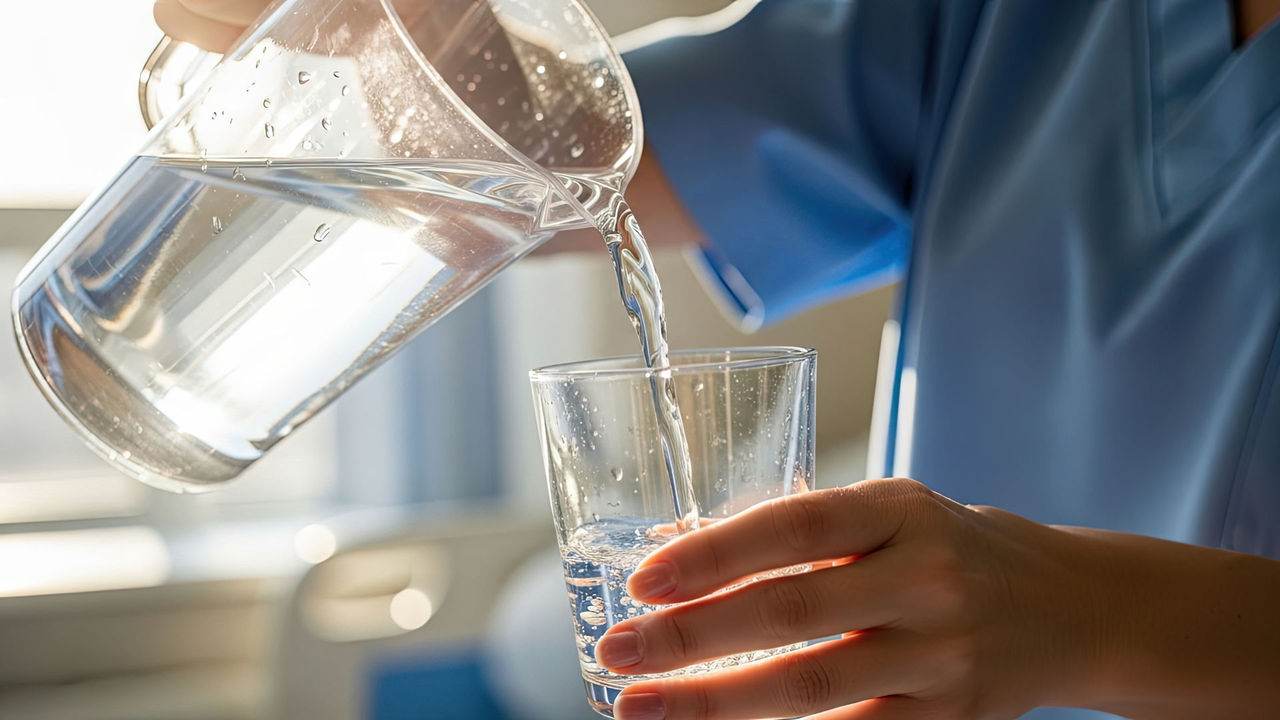
Thousands of synthetic fibres are released every time we wash clothes – whether at home or in industrial settings. As these are not filtered out by wastewater treatment plants (WWTPs), they end up in rivers and the sea, directly affecting ecosystems and potentially even human health. Medicines, cosmetics and additives contain microplastics that stay in the environment for decades, eventually entering our food chain.
According to a research study published in Nature Medicine, microplastics can build up in vital organs, such as the brain and kidneys, which are responsible for eliminating toxins from the body. Another study, published in the New England Journal of Medicine, found that they increase inflammation and can damage our arteries, increasing the likelihood of stroke or other conditions.
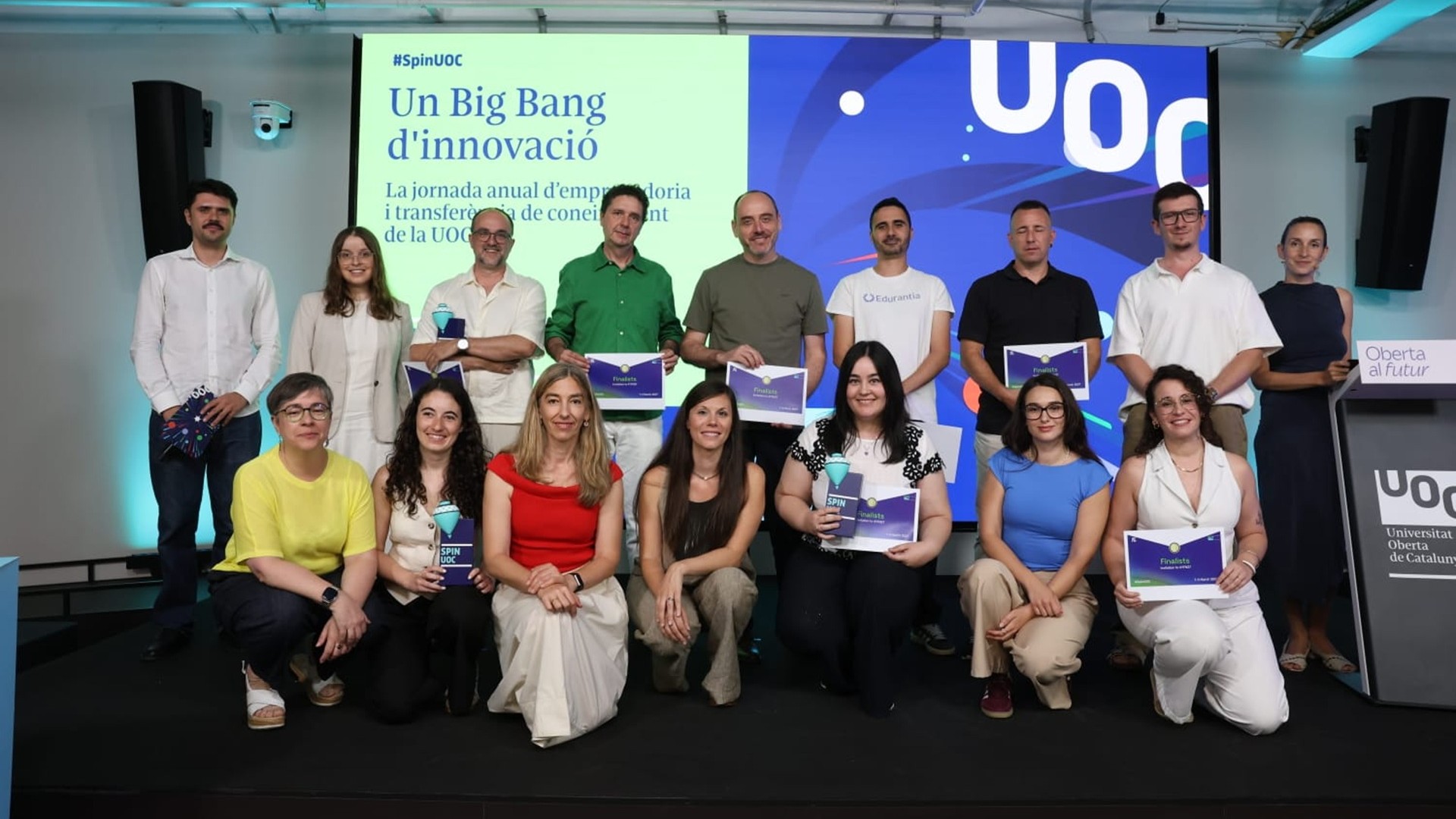
This project, which earned both the Audience Award and the Ramon Molinas Foundation Award for Social Impact at SpinUOC – the Universitat Oberta de Catalunya's (UOC) entrepreneurship programme – seeks to address this environmental issue by launching a new technology that has shown promising results in the removal of microfibres and microplastics.
Plastikóre, a project carried out with the participation of Marcel Bassachs, an expert in knowledge transfer and management with a Master’s Degree in Cultural Management from the UOC, has developed an advanced quaternary wastewater treatment system that can remove 85–95% of microfibres from wastewater.
The solution is based on a circular physical process carried out without chemical reagents, with no toxic by-products. In addition to making it more sustainable and environmentally friendly, these features set it apart from technologies on the market that rely on other treatment methods.
“Plastikóre offers a concrete and quantifiable solution to the global issue of microplastic pollution, leading to better water quality and protecting aquatic ecosystems.”
A solution to a global environmental problem
Plastikóre, a spin-off of the University of Girona and the Catalan Institute for Water Research, uses a combination of three components that work together to capture, separate and recover microfibres using minimal amounts of energy. Microscopic magnets are used to adhere precisely to the plastic; the microfibres are trapped by a coarse sand reactor, and a magnetic system removes the microplastics, all this without polluting chemical agents.
According to Bassachs, "Plastikóre offers a concrete and quantifiable solution to the global issue of microplastic pollution, leading to better water quality and protecting aquatic ecosystems. As a knowledge transfer and management professional, I believe that research should not be confined to laboratories: it should be used to create technologies and services that improve people's lives and the places where they live."
According to this entrepreneur, the master's degree he completed at the UOC provided him with "a solid foundation in project management, strategy and critical thinking, which I am now applying to a more technological field but with the same aim of serving the common good".
A field in urgent need of regulation
Current primary, secondary and tertiary water treatment processes are designed to target solids, organic matter and nutrients, but not microparticles. The recently adopted European Directive 2024/3019 concerning urban wastewater treatment requires WWTPs to include a quaternary treatment process capable of removing at least 80% of a broad range of micropollutants, including microplastics and pharmaceutical and cosmetic residues. This new and stringent regulation implemented to address the planet's climate crisis represents a significant business opportunity for Plastikóre, as well as the chance to help reduce the industrial sector's environmental footprint.
The services provided by the company, which operates under a B2B (business-to-business) business model, are mainly targeted at urban wastewater treatment plants, textile industries and engineering companies operating in the water sector. It provides a number of technological services that vary according to the type of client involved, as well as maintenance and technical support. The technology is currently at TRL (Technology Readiness Level) 3–4 and is being verified through proof-of-concept testing in a laboratory environment. The plan is to start the first pilot projects in the next one to two years.
This entrepreneurial project supports UN Sustainable Development Goals (SDGs) 6, Clean Water and Sanitation; 11, Sustainable Cities and Communities; 12, Responsible Consumption and Production; and 14, Life Below Water.
Transformative, impactful research
At the UOC, we see research as a strategic tool to advance towards a future society that is more critical, responsible and nonconformist. With this vision, we conduct applied research that's interdisciplinary and linked to the most important social, technological and educational challenges.
The UOC’s over 500 researchers and more than 50 research groups are working in five research units focusing on five missions: lifelong learning; ethical and human-centred technology; digital transition and sustainability; culture for a critical society, and digital health and planetary well-being.
The university's Hubbik platform fosters knowledge transfer and entrepreneurship in the UOC community.
More information: www.uoc.edu/en/research
FAQs
Experts UOC
Press contact
-
Anna Torres Garrote