
Some 450 UOC students and graduates take part in this year's meet-ups around the world
The university is strengthening its alliances and links with its community through UOC Nexus and nodes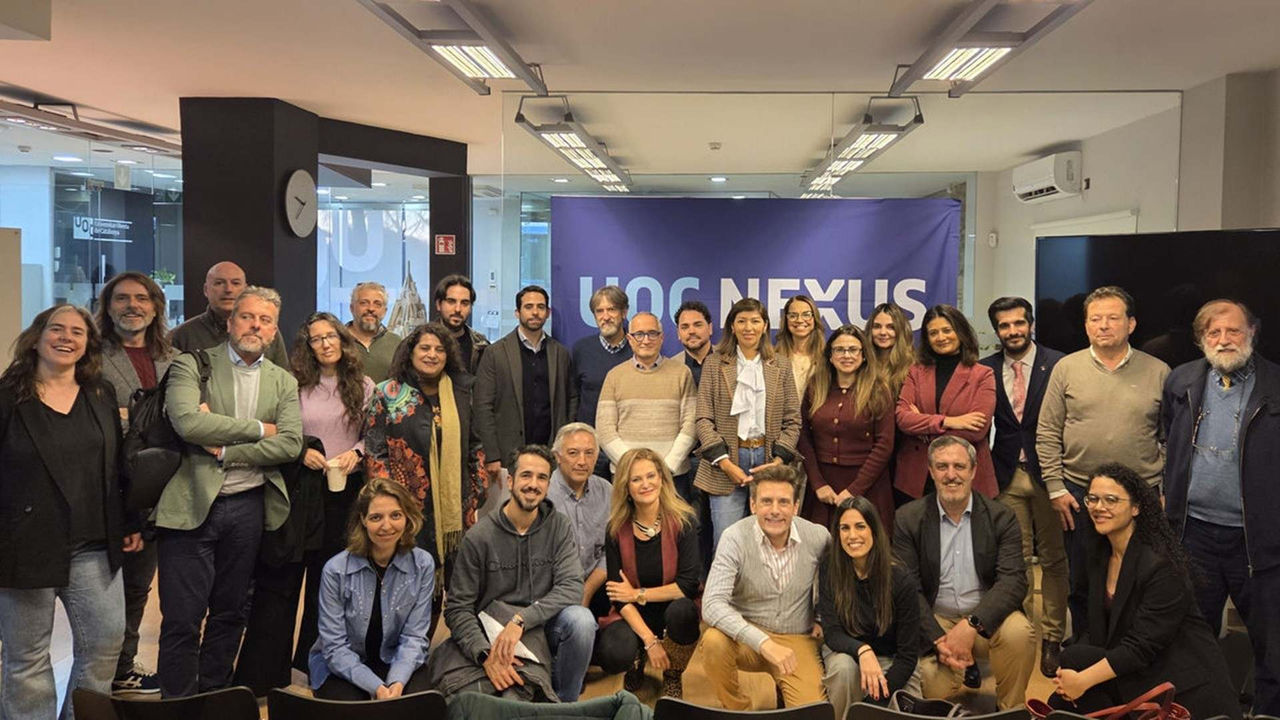
In 2025, over 300 students and 150 graduates took part in the nine Nexus meetings. These are UOC community meetings where people can present transformative, socially impactful projects, forge links, share experiences and create new opportunities for cooperation with the university. Five nodes – Brussels, London, Paris, Madrid and Bogotá – have been established as a result of these meetings, and two online nodes – Entrepreneurship and Contemporary Thought – have also been launched.
This year saw UOC Nexus events held in Lleida, Seville, Salt, Palma, Tortosa, Reus and Valencia under the motto "Forging alliances within the community", alongside events in Latin America, in Bogotá, Colombia, Lima, Peru, Mexico City, Mexico and Cali, Colombia. At these events, the university both showcased the impactful projects carried out by the UOC community and provided opportunities for those involved to make new connections.
UOC Nexus forms part of the university's new institutional strategy to strengthen its ties with the university community around the world and with social, institutional and economic partners. It is part of the commitment made by the Office of the Vice Rector for Alliances, Community and Culture to implement what has been defined by the European Commission as universities' community engagement. Universities must help address the challenges facing society through the knowledge they generate and transfer.
UOC Nexus involves four lines of action that establish a new way of connecting the university with local communities: creating nodes; establishing strategic ties and alliances; developing knowledge-sharing platforms, and creating a map to show the UOC's impact.
Establishment of the first community nodes
The first community nodes were created this year, in Brussels, London, Paris, Madrid and Bogotá. Two online nodes on Entrepreneurship and Contemporary Thought, respectively, were also launched. These regional and thematic groups led by UOC graduates are open to the entire university community. In addition to bringing the community together and helping to reinforce a sense of belonging based on common interests, the nodes also enable the most significant challenges to be identified thanks to regional or thematic knowledge.
Alliances
The UOC has established many alliances based on academic knowledge in local areas with institutions, companies and other organizations to help improve local communities and their contexts. These connections enable the university to develop projects in partnership with stakeholders in the local society, businesses and institutions, ensuring a genuine and sustainable impact.
Initiatives of the Office of the Vice Rector for Alliances, Community and Culture
Manel Jiménez, Vice Rector for Alliances, Community and Culture, described UOC Nexus as "a key initiative in the university's strategy to cement its position as an active driver of change in communities through collective participation and the generation of knowledge." Along the same lines, Gemma Xarles, Director of Alliances, Community and Equity, said that "getting to know the university community and forging closer links with partner institutions and organizations enables us to strengthen the UOC's role and increase its impact in those areas in which it operates".
Both Jiménez and Xarles, who are responsible for policy for the university community and engagement, noted that the university's global nature and network of alliances highlight how the UOC helps to drive change in many different contexts. UOC Nexus is another step forward by the university in its goal of connecting people and institutions, generating and raising the profile of the UOC's knowledge and talent, and ensuring an engaged community.
Press contact
-
Anna Torres Garrote