SynaptIA, the platform that enables physiotherapists to practise with AI-generated patients
An online training platform makes it possible to create virtual patients to practise physiotherapy techniques in an automated ecosystemThe project was a finalist in SpinUOC, the entrepreneurship programme that awards innovative initiatives

Training healthcare professionals represents one of the major challenges in the academic world. Traditionally, doctors, nurses and physiotherapists have practised on animals, human bodies, volunteers or specially designed training mannequins. However, these are complex, costly and sometimes sensitive processes that require strict protocols and advanced training to ensure that volunteers are not harmed or injured, as well as to comply with ethical regulations.
Now, a project led by Iker Villanueva, a graduateof the online Master's Degree in E-health at the Universitat Oberta de Catalunya (UOC), aims to transform healthcare training through artificial intelligence. This project, SynaptIA, is an AI-based online training platform designed to generate virtual humans that allow users to practise physiotherapy techniques in an automated environment.
“SynaptIA allows users to interact with realistic patients anytime and anywhere, from a mobile phone or a computer”
"SynaptIA emerged from the idea of transferring what is learned through clinical experience to the classroom, as many of the skills required for patient care are acquired through direct interaction with patients," explained Iker Villanueva, who added that, "face-to-face simulations require extensive resources, including teaching staff, actors and spaces, and once the simulation is over, students can't continue practising". This is where SynaptIA offers an alternative, as it "allows users to interact with realistic patients anytime and anywhere, from a mobile phone or a computer", he said.
Virtual patients
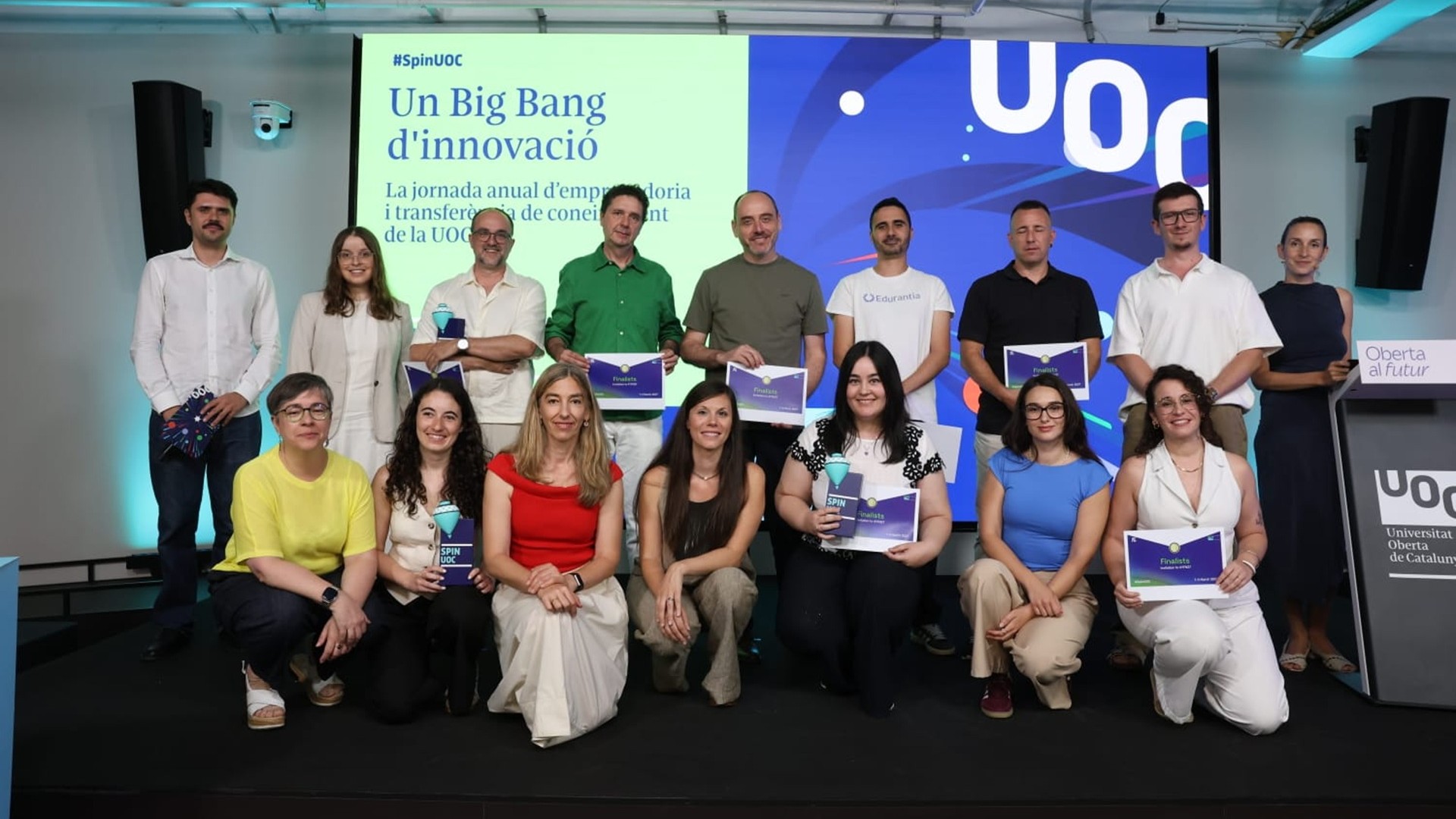
Advances in AI are introducing a new dimension to healthcare professional training, as demonstrated by this platform, a finalist in SpinUOC. This programme is coordinated by the Hubbik platform to promote technology-based entrepreneurial initiatives originating within the UOC university community, with the final held on 18 June.
In this regard, SynaptIA makes it possible to create AI-based chatbots that "behave like patients", according to its developer. However, these differ from common chatbots such as ChatGPT, Gemini and Claude, since SynaptIA adapts their approach and behaviour. As noted by Villanueva, "these systems are normally designed to help humans, not to behave like patients and allow themselves to be helped".
Thus, physiotherapy students – or their teachers – can design patient models that embody typical characteristics they will encounter in real clinical practice, including the type, frequency and intensity of pain reported, medical history and associated symptoms. This requires students to find solutions tailored to each individual case. "They also have certain 'personality' traits, as we have designed patients who are shy, very talkative or embarrassed", added Villanueva.
Automated evaluation
Another strength of SynaptIA is its integration of AI-based automated evaluators that analyse and score student interactions with the virtual patients. "Once the interaction with the patient is complete, the conversation is transferred to the evaluator, which provides instant feedback," explained Villanueva.
This system is based on rubrics designed by the teaching staff to ensure that the evaluations closely match their own. In a comparative study conducted by SynaptIA's creators, an 87% agreement rate was achieved between evaluations made by human instructors and those generated by the automated system, reinforcing the quality of the training.
In this regard, they emphasized that the aim of SynaptIA is not to eliminate human interaction, "but rather to enable the remote development of certain content and skills without the limitations of traditional simulations", said Villanueva, who also stressed that the platform is intended to complement traditional training for both university students and working professionals seeking to update their knowledge. "We always recommend that the tool be used within the framework of formative assessment rather than summative assessment, which should always be carried out by teaching staff," he added.
In any case, platforms like SynaptIA demonstrate that AI can play an essential role in training at all levels, particularly in healthcare professions. "These tools are here to stay", said the UOC alumnus, who also recommended "that these technologies be implemented ethically and with a humanistic perspective, without creating barriers, because whether we like it or not, AI will be part of both healthcare and non-healthcare training in the future".
SynaptIA was one of the finalists in SpinUOC 2026, an annual competition that recognizes innovative projects with the potential to change how we understand the world. Villanueva pointed out that the competition also allowed him "to discover other very interesting projects and connect with people with great potential".
This entrepreneurial project is aligned with UN Sustainable Development Goal (SDG): 3. Good Health and Well-being.

Transformative, impactful research
At the UOC, we see research as a strategic tool to advance towards a future society that is more critical, responsible and nonconformist. With this vision, we conduct applied research that's interdisciplinary and linked to the most important social, technological and educational challenges.
The UOC’s over 500 researchers and more than 50 research groups are working in five research units focusing on five missions: lifelong learning; ethical and human-centred technology; digital transition and sustainability; culture for a critical society, and digital health and planetary well-being.
The university's Hubbik platform fosters knowledge transfer and entrepreneurship in the UOC community.
More information: www.uoc.edu/en/research
FAQs
Experts UOC
Press contact
-
Anna Sánchez-Juárez