
Rethinking the sustainability of the planet through Indigenous knowledge systems
An UOC study, carried out in collaboration with Indigenous communities in Brazil, highlights the knowledge systems of these communities, which have been rendered invisible for centuriesINDIWOMINT denounces the exploitation of the ancestral knowledge of these communities by western corporations
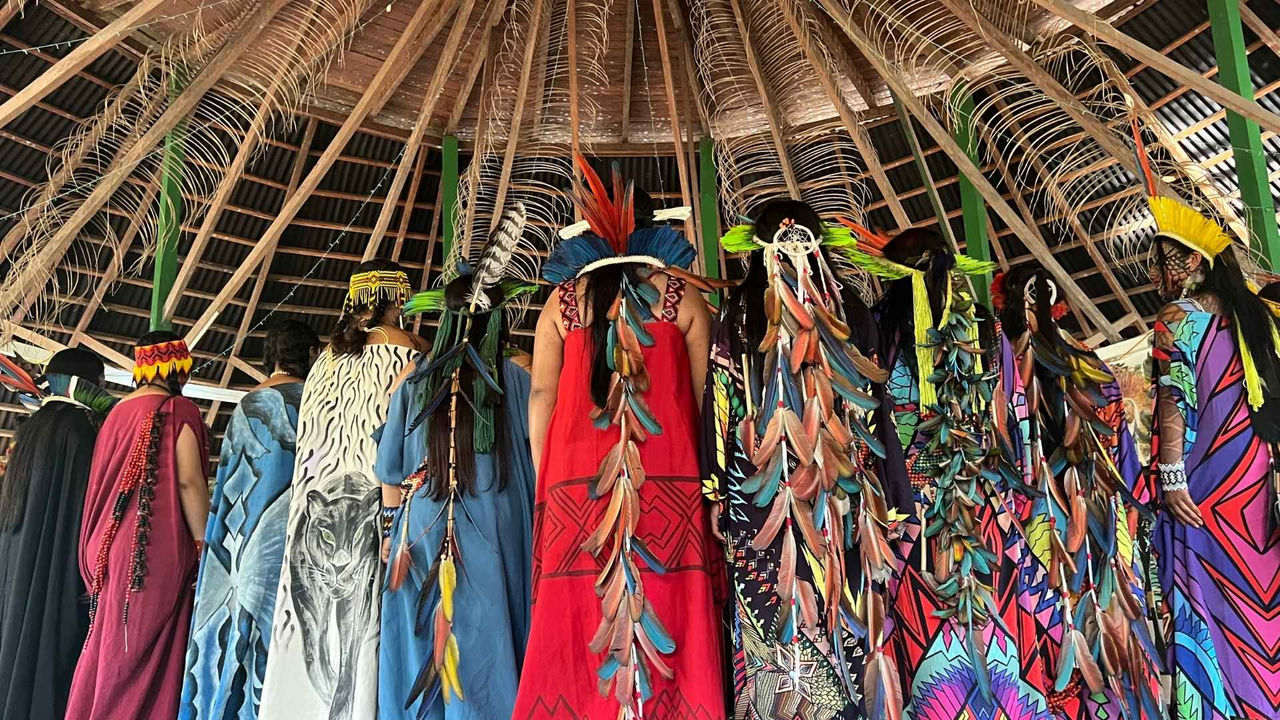
In the context of the acute climate, political and social crisis we are currently experiencing, knowledge systems such as those of Amazonian Indigenous peoples, deeply rooted in their territories, embody models that reshape our relationship with the planet. These forms of knowledge, developed over centuries by these communities and passed down from generation to generation, emerge from deep connections with the land and from an understanding of life that challenges the modern separation between culture and nature, and between humans and non-humans. All of this has contributed to the sustainability and regeneration of life over time.
With the aim of recognizing and reclaiming these knowledge systems, researcher Ana M. Noguera Duran of the Gender and ICT (GenTIC) research group at the Universitat Oberta de Catalunya (UOC) has led the INDIWOMINT project (Indigenous women interconnecting knowledge: bodies, territories and technologies for life). Carried out in collaboration with Indigenous women from Amazonian territories in Brazil, the project explores new ways of thinking about the relationships between territory, knowledge and the sustaining of life. It also challenges the colonial "extractivist" model that for years has exploited Indigenous lives and knowledge, particularly through the actions of large western corporations.
“There can be no gender justice without historical, territorial and epistemic justice”
INDIWOMINT has been funded by the European Commission's Marie Skłodowska-Curie Actions (MSCA) programme. Through this collaborative research project, carried out over two years and completed at the end of June, Noguera sought to reclaim Indigenous knowledge systems that have historically been rendered invisible. The researcher aimed to "support and strengthen the recognition of the struggles and knowledge systems that, for generations, have sustained ways of life based on reciprocity, care and the regeneration of territories, offering alternatives for addressing the multiple socio-environmental crises we face today", she explained.
A decade of building relationships and gathering Indigenous knowledge
An expert in feminism, territorial studies and Indigenous knowledge systems, Noguera is also an activist who has spent more than a decade building relationships of trust and collaboration with Indigenous peoples in Abya Yala. During this time, she has co-created collaborative methodologies with Indigenous leaders based on in-depth interviews – both individual and collective – and ongoing dialogue. This has enabled her to learn from and gain a deeper understanding of the practices and experiences of Indigenous communities, while developing a close relationship with these peoples. The project has combined a mixed-methods approach, including both quantitative and qualitative methods, to document the role of Indigenous women in caring for territories, biodiversity and Amazonian ways of life.
For Noguera, the project has represented a process of learning and transformation that extends beyond the boundaries of academic research: she has taken part in mobilizations to defend the territory and has witnessed firsthand the harms experienced by these communities, while also experiencing the impact of the climate crisis in the region. "It has been a process of mutual learning, based on trust and respect, in which I have been able to learn at the university of the forest alongside great teachers. All of this has profoundly changed the way I understand the relationships between knowledge, territory and the care of life," she said.
Among the knowledge shared by communities during the research process were forest management practices based on the ecological cycles of the territory; knowledge of medicinal plants passed down from generation to generation; and diversified agricultural production methods that foster biodiversity and food sovereignty. These were complemented by practices focused on care, regeneration and the continuity of water cycles, "which reflect a deep understanding of the interconnections between water, forest, soil and life", the researcher added.
Rethinking research from a decolonial perspective
One of the outcomes of this project is the Decolonial Methodological Guide for Research and Action in Indigenous Territories, published in Spanish, English and Portuguese. Developed from lessons learned through the collaborative work with Indigenous women and communities, the guide aims to promote more responsible and respectful research practices in Indigenous territories.
Practical in nature and focused on action, it explicitly encourages recognition of the autonomy and self-determination of Indigenous peoples, while avoiding extractive or instrumental approaches to knowledge. "A clear example of this historical appropriation of knowledge by colonialism is biopiracy, whereby knowledge about medicinal plants has been used by the pharmaceutical industry without the consent, recognition or compensation of these Indigenous peoples," she explained.
Another outcome of the INDIWOMINT project is the Guide for the Collective Use, Care and Continuity of Knowledge in Indigenous Territories, available in Spanish and Portuguese, developed to transmit and protect Indigenous knowledge. The document recognizes the right of Indigenous peoples to make autonomous decisions about their knowledge and the ways in which it is transmitted, and opposes all forms of extractivism that instrumentalize or dispossess them of their knowledge.
"One of the central motivations behind this guide was to highlight how Indigenous knowledge has historically been appropriated without recognition or benefit for their communities. The guide seeks to prevent these practices and strengthen respect for Indigenous peoples' self-determination over their knowledge," she said.
Feminism and collective struggles: in the Global South and the Global North
As a culmination of the project, the scientific article "Transcontinental reflections of feminist advocates: embracing plurality, embodying care, and pushing forward intersectionality" (Gender & Development) has recently been published, in which Noguera engages in dialogue with the researcher Rachel Palmén, also from the GenTIC group at the UOC-TRÀNSIC research centre.
Through a dialogue between the two authors, the article explores the lessons learned, challenges and opportunities for collaboration between different forms of feminist activism: on the one hand, the struggles of Indigenous women defending Amazonian territories in Brazil and, on the other, feminist communities promoting gender equality in academic and scientific spheres in Europe and Latin America.
Far from establishing simplistic equivalences, the article proposes a dialogue between experiences rooted in different historical and political contexts that nevertheless share concerns around care, justice, the sustainability of life and the transformation of structures of exclusion. The authors highlight that body-territory relationships, collective care practices and Indigenous knowledge systems offer important lessons for rethinking contemporary feminist strategies from more relational, plural and intersectional perspectives. "This dialogue represents an opportunity to build mutual learning and strengthen alliances in the face of the multiple forms of violence, inequality and extractivism that permeate our societies," explained Noguera.
The meeting brought together the experiences of the two UOC researchers in activism and academia. As Noguera pointed out, "It is about building respectful alliances to continue advancing the struggle for the rights of women and gender-diverse people. Because there can be no gender justice without historical, territorial and epistemic justice."
Reference article:
Noguera Duran, A. M., & Palmén, R. (2026). Transcontinental reflections of feminist advocates: embracing plurality, embodying care, and pushing forward intersectionality. Gender & Development, 34(1), 203-220. https://doi.org/10.1080/13552074.2026.2649439
This research contributes to the UN 2030 Agenda's Sustainable Development Goals (SDGs), including SDGs 5 on Gender Equality, 11 on Sustainable Cities and Communities, 13 on Climate Action, 14 on Life Below Water, and 15 on Life on Land. It is also aligned with the UOC's research missions, Culture for a critical society and Planetary health and well-being.
Transformative, impactful research
At the UOC, we see research as a strategic tool to advance towards a future society that is more critical, responsible and nonconformist. With this vision, we conduct applied research that's interdisciplinary and linked to the most important social, technological and educational challenges.
The UOC’s over 500 researchers and more than 50 research groups are working in five research centres focusing on five missions: lifelong learning; ethical and human-centred technology; digital transition and sustainability; culture for a critical society, and digital health and planetary well-being.
The university's Hubbik platform fosters knowledge transfer and entrepreneurship in the UOC community.
More information: www.uoc.edu/en/research
Press contact
-
Anna Sánchez-Juárez