Observa, the platform that uses technology and peer assessment to improve teaching quality
The platform uses technology and peer assessment to improve the standard of teachingThe project's aim is to provide a platform for the ongoing improvement of classroom education

Education has recently come into the spotlight after a series of demonstrations and other actions by teaching staff calling for better conditions to provide the best possible teaching with the resources they consider necessary. As well as institutional support to hire the necessary staff, schools need data on the quality of teaching to ensure that educational processes and student learning are of the highest possible quality.
Teacher assessment has traditionally been a fragmented process, without a stable system designed to improve teaching practice. Some countries have used standardized student surveys, a method that is generally opposed by teachers on the basis that it reduces a complex task with many contributing factors – such as context, group dynamics, diversity and conditions at the school – to an outcome that does not always accurately reflect the teacher's commitment and the quality of teaching. This does not mean that they are against being assessed; on the contrary, they often argue that teachers should be assessed through more qualitative methods, such as classroom observation, which they consider particularly valuable when undertaken by fellow teachers.
“Schools need qualitative data that can lead to actions to improve teaching and learning processes”
According to Gerard Ferrer-Esteban, a member of the Faculty of Psychology and Education Sciences of the Universitat Oberta de Catalunya (UOC) and head of the Laboratory of Social Education research group (LES), "schools need qualitative data that can lead to actions to improve teaching and learning processes". As demonstrated by the research undertaken throughout his career, classroom observation can help provide valuable assessments for teaching staff. Furthermore, technology can be a valuable ally when it comes to arranging assessments and drawing up thorough and accurate reports.
An entrepreneurial project to facilitate formative assessments for teaching staff
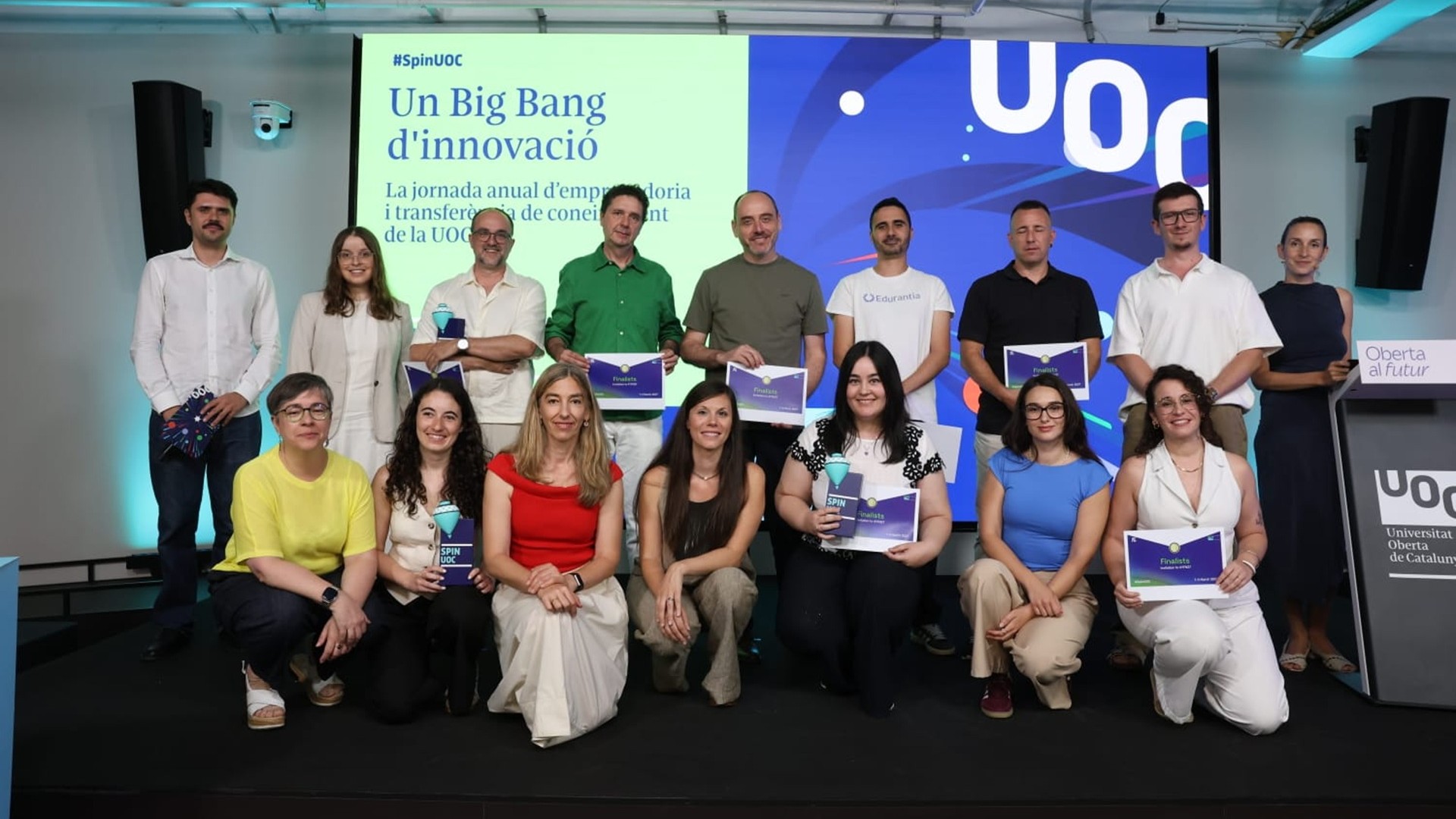
The Observa project, led by Ferrer-Esteban, offers primary and secondary schools a platform that enables teams of teachers to review videos of lessons delivered by their peers. Reports with personalized feedback on matters such as teaching methods, classroom management, atmosphere and classroom interaction are then produced. The project, which was shortlisted as a finalist in the SpinUOC entrepreneurship programme, also includes in-person and online training sessions to support teaching staff in their continuous professional development.
Ferrer-Esteban, a member of teaching staff at the UOC and researcher with its Futures of Education in the Digital Age research centre (UOC-FuturEd), has published several academic papers on classroom observation, teacher assessment and teaching strategies. This has led to the creation of Observa, which he defines as an integrated teaching assessment and improvement system based on peer observation and formative feedback. "I was inspired to do this by years of research and firsthand classroom observation experience. Everyone knows what teachers do, but it's often hard to tell how effective their work is and how it could be improved. I've noticed that many teacher assessment tools are too bureaucratic, rigid or reliant on quantitative measures and, above all, that they don't provide a true understanding of what goes on in the classroom or provide meaningful feedback that could be used to change teaching practices," he said.
Artificial intelligence as an enabling tool
In the Observa project, teachers record parts of their lessons using a simple kit (a camera or mobile phone and a tripod) with no need for complex technical equipment. The aim is to make the process practical and straightforward and ensure that only accredited assessors (teaching staff trained in classroom observation) can access the recording.
Using the rubrics provided and the observers' feedback, artificial intelligence (AI) tools are used to sort and summarize the information to help produce structured personalized reports. Ferrer-Esteban highlighted that "the AI tool neither assesses the teaching staff themselves nor makes autonomous decisions: it only helps reviewers prepare their feedback". The final reports are always subject to human review and validation before being shared with the teachers concerned.
As a result, you receive personalized reports with clear, evidence-based explanations setting out the teacher's strengths and areas for improvement, as well as concrete recommendations on matters such as teaching methods, student participation, time management and classroom interactions.
Crucially, Observa safeguards the privacy of both teaching staff and students. "We adhere to principles of informed consent, minimal data collection, access control, audit records and storage on secure European servers. School reports are presented in aggregated form, and criteria designed to prevent detection are applied. Furthermore, videos are processed to ensure that students cannot be identified. We want to convey the fact that the aim of assessments carried out with Observa is not to control but to improve", said Ferrer-Esteban.
The project is currently at the development and validation stage. The next step will be to carry out a pilot project with schools in Barcelona and Turin to assess its usefulness and feasibility and the degree of trust it inspires among teaching staff. The potential for expansion across networks of schools and education authorities will then be examined.
In the UOC researcher's words, "if assessment leads to professional development through useful feedback and clear recommendations to improve teaching and other practices in schools, everyone will benefit, and thousands of students will learn in richer and more engaging environments".
This research is part of the UOC’s Lifelong learning research mission and supports UN Sustainable Development Goals (SDGs) 4, Quality Education, and 10, Reduced Inequalities.
Transformative, impactful research
At the UOC, we see research as a strategic tool to advance towards a future society that is more critical, responsible and nonconformist. With this vision, we conduct applied research that's interdisciplinary and linked to the most important social, technological and educational challenges.
The UOC’s over 500 researchers and more than 50 research groups are working in five research units focusing on five missions: lifelong learning; ethical and human-centred technology; digital transition and sustainability; culture for a critical society, and digital health and planetary well-being.
The university's Hubbik platform fosters knowledge transfer and entrepreneurship in the UOC community.
More information: www.uoc.edu/en/research
FAQs
Experts UOC
Press contact
-
Anna Sánchez-Juárez