A new educational platform uses a virtual city to motivate students while reducing the workload for teaching staff
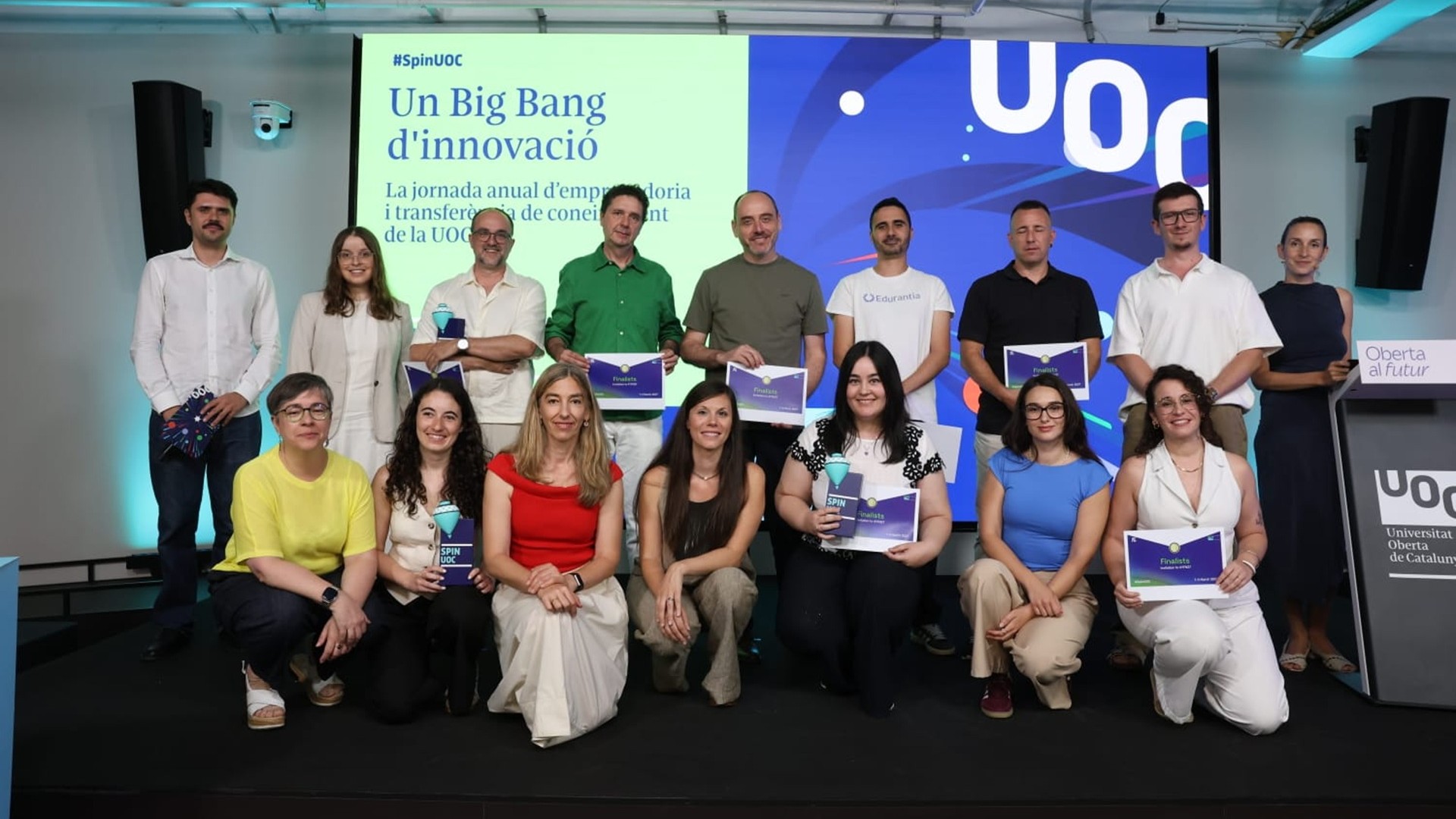
Edurantia has been developed to tackle student disengagement in the classroomThe platform was selected as one of the finalist entrepreneurial projects in SpinUOC 2026
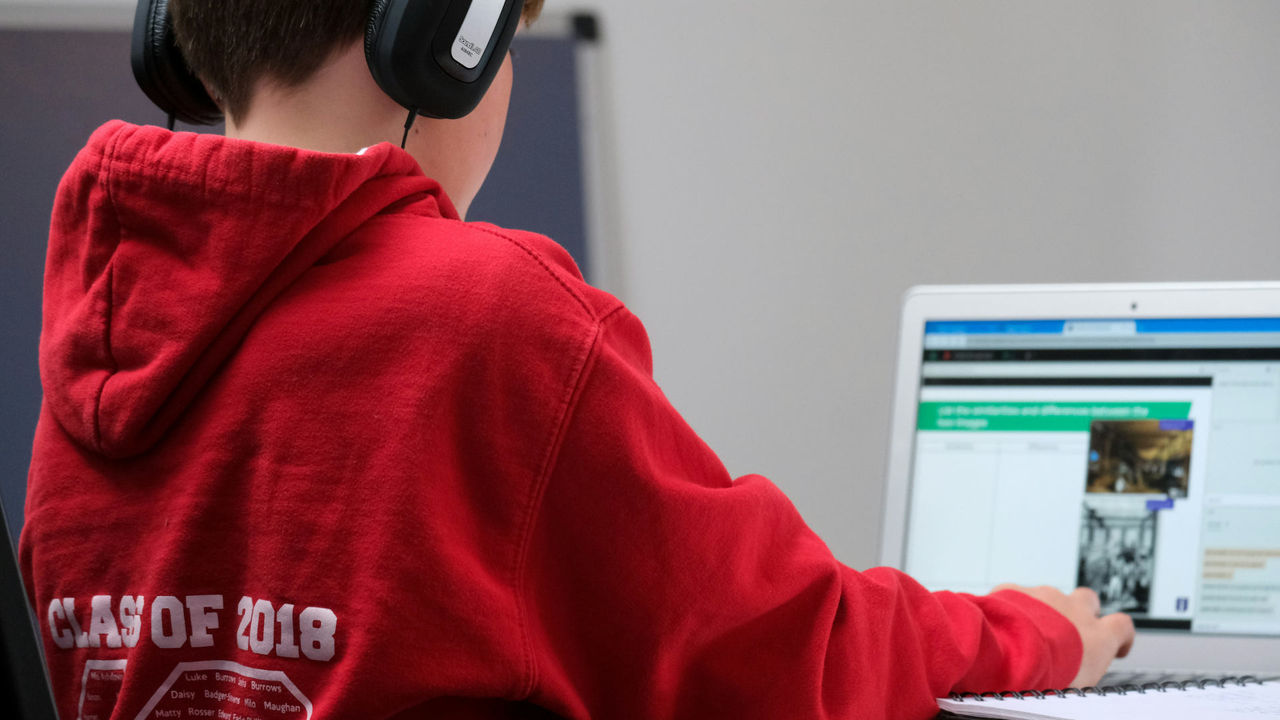
Amid overwhelming workloads for teaching staff and a shortage of resources in schools, initiatives such as Edurantia play a key role in educational settings. Edurantia is a platform for schools that uses a gamified app and a game to encourage students to build a city using their own efforts and what they have learned, while easing teachers' workloads. The platform, which improves academic performance by encouraging students to apply what they have learned to real-world problems, focuses on the development of four key competencies: entrepreneurial spirit, STEM (science, technology, engineering and mathematics) competencies, communication through language, and learning to learn.
The project was first conceived in a classroom, by a history teacher. "I spent five years teaching in Kyrgyzstan, a country that did not appear in textbooks", said Óscar Herrero, a graduate of the Bachelor's Degree in International Relations and co-creator of Edurantia. To engage his students, Óscar created an Excel spreadsheet with screenshots and asked them to work in groups. Each group was assigned to work on a city that was in some way connected to the history topic they were studying at that moment. According to Óscar, this completely changed the way his students learned.
“We believe our product can rekindle curiosity and a love of learning”
"After four years, students went from doing very little to going off on their own to explore every area of knowledge and apply it to their assigned city," he said. In view of their enthusiasm, Óscar decided to create Edurantia as a way to tackle disengagement in the classroom. "Having realized that the main problem in Spanish classrooms was student disengagement, I joined forces with Srinivas Bhamidipati, a computer engineer who now oversees the technical side of the project, and we took the plunge," he said.
A project designed from and for the classroom
Edurantia is a platform created by and for schools. The project seeks to reach as many schools as possible. To achieve this, it has been constantly updated since its creation, with help from teachers and students alike. "We believe that our product can have a very positive impact in classrooms and on students, rekindling their curiosity and love of learning", said Óscar, explaining the importance of having a dynamic and constantly evolving product that provides both fun and educational challenges.
Edurantia consists mainly of an app and a game. As Óscar himself explained, the main aim of the app is to inspire students to want to learn more. One of the ways it does this is by encouraging them to earn points awarded by their teacher, which they can then use to develop their cities through the ministries in the app. It also works by motivating them to learn new concepts that they can then apply in their cities. "In the end, running a city involves every field of knowledge, from art to science," he said. In the game, students can set their own challenges. "A city's success is relative, so it's the students themselves who must set its goals," he said.
Óscar explained that the cities are fully automated "so that teachers don't have to do anything; they're run by students in teams of four to six". Edurantia can be used for any course, and it offers benefits in three areas: firstly, in classroom management, with teachers being able to give students points as needed for use in their cities; secondly, students apply the concepts learned in the classroom to the problems of a real city through projects and activities; and finally, the classroom management requires transferable skills, which are further developed during the process.
An educational platform with a promising future
Edurantia is already at the beta testing stage, with five pilot projects under way in Catalonia and Kyrgyzstan schools. According to its co-founder, the pilots have shown "very positive results so far". "Students seem to enjoy the platform and are motivated by it. We've even spotted some of them doing maths in the school corridors or in the playground, just to improve their cities." Furthermore, he said that the schools involved are keen to continue using the platform.
When asked what sets Edurantia apart from other apps or games with similar educational purposes, the co-founder explained that the main difference is its ability to keep students motivated all year round. He acknowledged that "while there are other gamified platforms, the experience is usually limited to a single session", and asserted that, with Edurantia, the city grows throughout the school year, providing increasingly challenging tasks and greater customization as the year wears on.
He argued that gamification is simply another way to engage students, adding that it also works with adults. "We all like to set ourselves small challenges or games every once in a while, and this is particularly true for students. However, what we're offering isn't just a point-based system (gamification) but a game whose very dynamics help you learn (this is known as a'serious game')," he explained. "And what better way to learn than by playing and having fun?"
Óscar acknowledged that bringing Edurantia to life has been no easy task. There are two reasons for this: firstly, because there are only two people (Óscar and Srinivas) driving the project; and secondly because, as they themselves admit, working with schools can involve long and complex processes. "Both teaching staff and schools are overworked, making it hard to find a moment to find out what Edurantia is all about," he said, explaining that, whenever they do have enough time for it, they are always impressed and clearly interested, although this interest is unfortunately often hampered by bureaucratic barriers.
Despite the obstacles encountered, over 250 students have tried Edurantia. As Óscar explained, "active participation has risen by up to 45% and academic performance has improved by up to 35%."
This entrepreneurial project supports UN Sustainable Development Goal (SDG) 4, Quality Education.
Transformative, impactful research
At the UOC, we see research as a strategic tool to advance towards a future society that is more critical, responsible and nonconformist. With this vision, we conduct applied research that's interdisciplinary and linked to the most important social, technological and educational challenges.
The UOC’s over 500 researchers and more than 50 research groups are working in five research units focusing on five missions: lifelong learning; ethical and human-centred technology; digital transition and sustainability; culture for a critical society, and digital health and planetary well-being.
The university's Hubbik platform fosters knowledge transfer and entrepreneurship in the UOC community.
More information: www.uoc.edu/en/research
FAQs
Experts UOC
Press contact
-
Anna Sánchez-Juárez