
GLIOGEN-X launches: the European project for the 'virtual biopsy' of gliomas
With the participation of the UOC and coordinated by Siena Imaging, the project is one of 7 funded by the European Innovation Council through the Pathfinder Challenges call€3.99 million over 4 years to verify, using generative AI systems, whether magnetic resonance imaging can distinguish the molecular profile of brain tumours
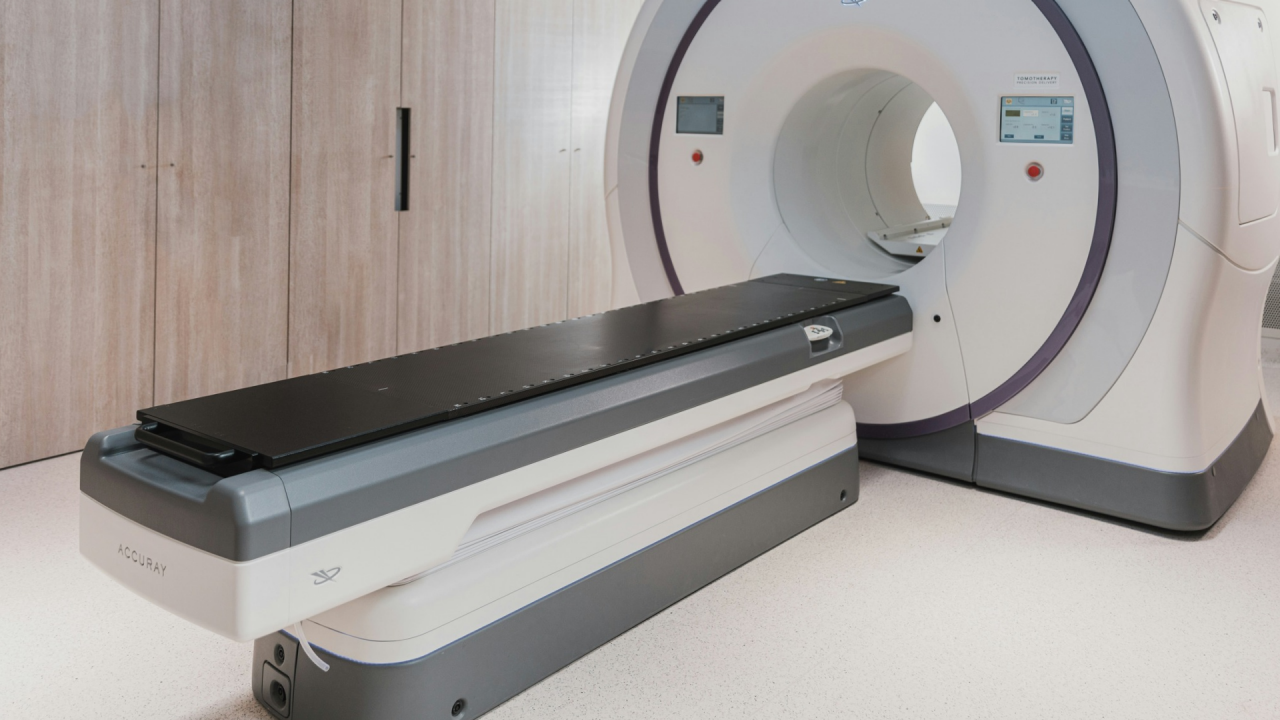
This Wednesday, GLIOGEN-X "From Magnetic Resonance Imaging to Molecular Signatures: Generative AI for Virtual Biopsy in Gliomas" was presented in Siena (Italy), a research project aiming to verify whether brain magnetic resonance imaging (MRI) already contains the information required to characterise the molecular profile of gliomas. This represents a new approach in neuro-oncology, based on the application of Artificial Intelligence (AI), to demonstrate how imaging techniques can provide information on the tumour's molecular characteristics, moving towards a non-invasive, personalised diagnostic process.
The UOC is taking part in the project through the NeuroADaS Lab Cognitive Neuroscience and Applied Data Science Lab research group, affiliated with the eHealth Centre. The project is coordinated by the Siena-based SME Siena Imaging s.r.l., and its partners also include the Fondazione Toscana Life Sciences (TLS), the University of Manchester, and the Northern Care Alliance NHS Foundation Trust (affiliated entity). It is one of 7 projects funded by the European Innovation Council (EIC) under a Pathfinder Challenges call, dedicated to high-risk, high-potential frontier research. GLIOGEN-X is funded with a total budget of €3,996,043.38 over a period of 4 years.
"For the UOC, taking part in an EIC Pathfinder European project like GLIOGEN-X is particularly significant, both due to the high level of competitiveness of this programme and the scientific ambition of the projects being driven in cancer research. This involvement reinforces the UOC's commitment to leading, interdisciplinary research aimed at generating a real impact on health and people's lives," states Ferran Prados, principal investigator at NeuroADaS Lab.
The focus of the project, gliomas, are the most common brain tumours in adults, with more than 27,700 new cases per year in Europe. Among these, the most aggressive form, glioblastoma, has a median survival of 12–15 months. Furthermore, it is estimated that the incidence of central nervous system tumours will grow by 50% by 2045. Today, diagnosis and treatment selection are based on the molecular profile of the tumour, which can only be "read" through biopsy: invasive procedures that are not always feasible, such as in fragile patients or those with tumours in deep locations.
The goal is the development of virtual biopsies
GLIOGEN-X aims to develop a "virtual biopsy" model based on more than 3,000 annotated magnetic resonance scans from hospitals in Manchester and Sheffield: that is, predicting the molecular profile of the glioma directly from magnetic resonance imaging (MRI) scans. The project was therefore conceived to validate the principle that images contain the molecular information necessary to diagnose this type of tumour, identifying the specific mutations by which they are classified. Siena Imaging has already obtained positive preliminary results in this field, with an accuracy of 86–96% in predicting the main molecular subtypes of gliomas in previous research.
The research is structured around three pillars: generative artificial intelligence that creates synthetic MRI images "similar" to the characteristics of each type of glioma, enabling datasets to be made available to the scientific community to study the disease; investigating and verifying the existence of a detectable molecular "biological footprint" in MRI images; and developing interpretable algorithmic models (a non-black-box approach) capable of non-invasively predicting the molecular characteristics of gliomas with maximum accuracy—all conducted via a "federated learning" infrastructure that allows hospitals to collaborate without transferring patient data, thus complying with GDPR and the AI Act.
"At the UOC, we are making our expertise in federated learning available to the project to design, implement, and deploy an infrastructure that allows artificial intelligence models to be trained and validated in a distributed, secure, and scalable manner. This will allow us to leverage data diversity from various centres, enhancing the robustness and generalisability of the models while respecting privacy and the European regulatory framework," explains Prados. "In parallel, whenever scientifically useful and technically feasible, we will explore the contribution of synthetic data to expand the variability available for training and help overcome some of the limitations associated with the scarcity and heterogeneity of clinical data," he adds.
GLIOGEN-X could pave the way for molecular diagnosis even for patients who cannot currently undergo invasive diagnostic and surgical procedures. Furthermore, the project aims to produce a reusable platform and dataset collection as European assets for trustworthy AI in health. The research approach will define more clearly the extent to which magnetic resonance imaging can reveal the biology of a tumour.
“Invasive procedures are not always feasible, such as in fragile patients or those with tumours in deep locations”
This project is aligned with the UOC's research missions: Planetary Health and Well-being and Ethical and Human Technology—and contributes to UN Sustainable Development Goal (SDG) 3: Health and Well-being.

Transformative, impactful research
At the UOC, we see research as a strategic tool to advance towards a future society that is more critical, responsible and nonconformist. With this vision, we conduct applied research that's interdisciplinary and linked to the most important social, technological and educational challenges.
The UOC’s over 500 researchers and more than 50 research groups are working in five research units focusing on five missions: lifelong learning; ethical and human-centred technology; digital transition and sustainability; culture for a critical society, and digital health and planetary well-being.
The university's Hubbik platform fosters knowledge transfer and entrepreneurship in the UOC community.
More information: www.uoc.edu/en/research
Experts UOC
Press contact
-
Anna Sánchez-Juárez