
UOC inaugurates academic year with a discussion on new tensions on the Earth’s limits
This year’s inaugural lecture highlights the need to rethink uses of natural resources and the role of borders to avoid violenceUOC Rector Àngels Fitó said the university must “open up” at a time when the world is “turning inwards in the face of uncertainty”
Minister Núria Montserrat paid tribute to the UOC’s capacity to rethink higher education with AI
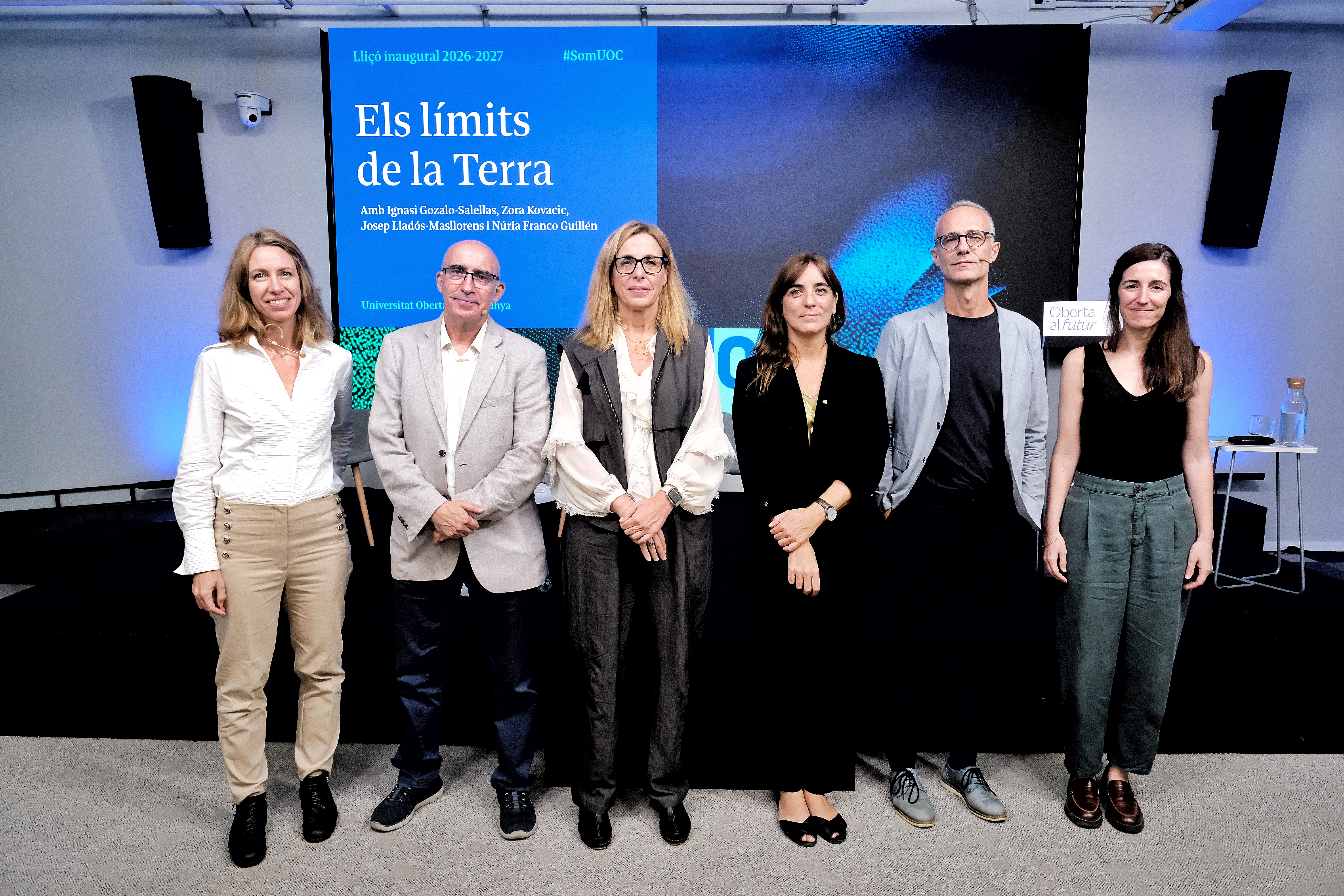
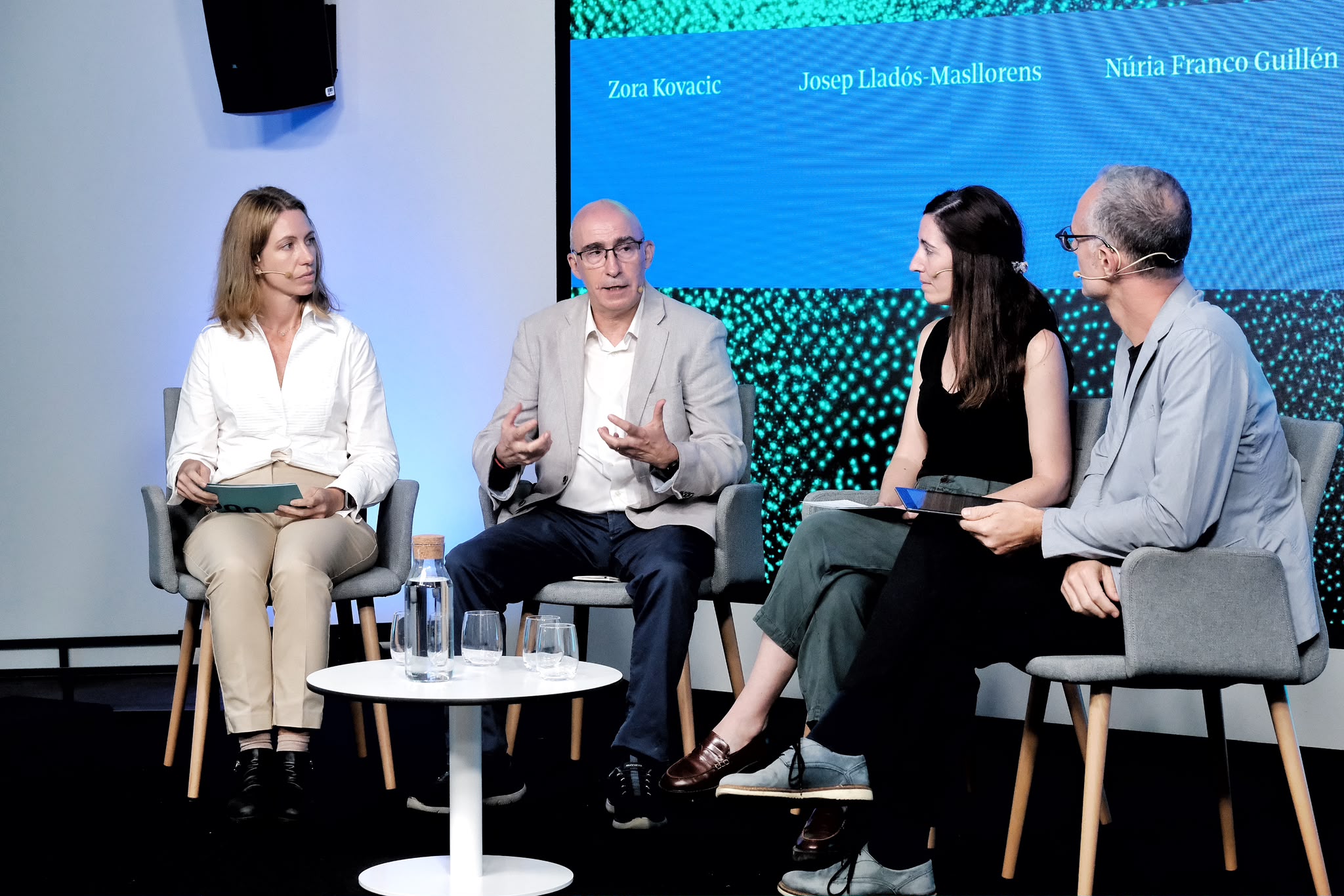
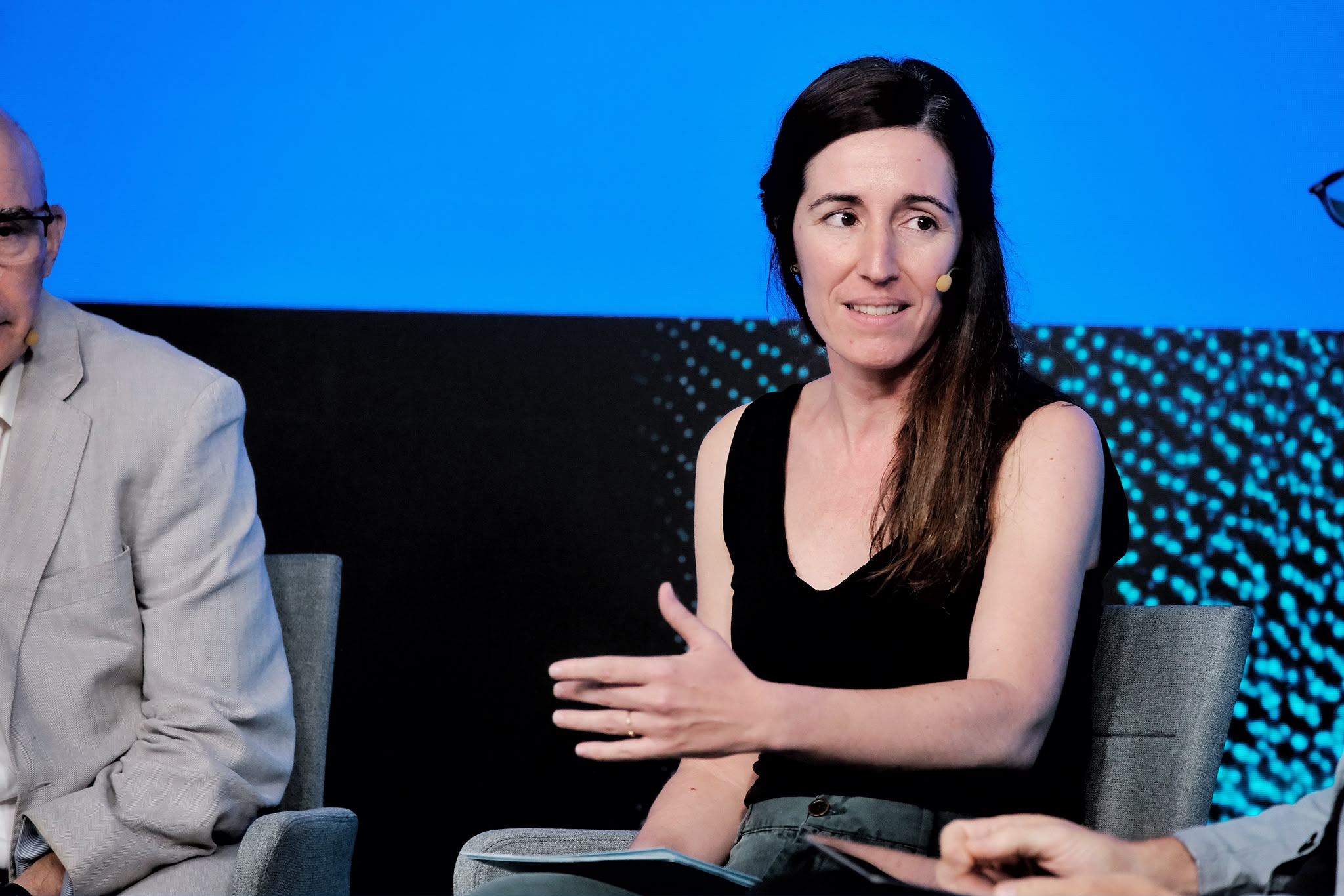
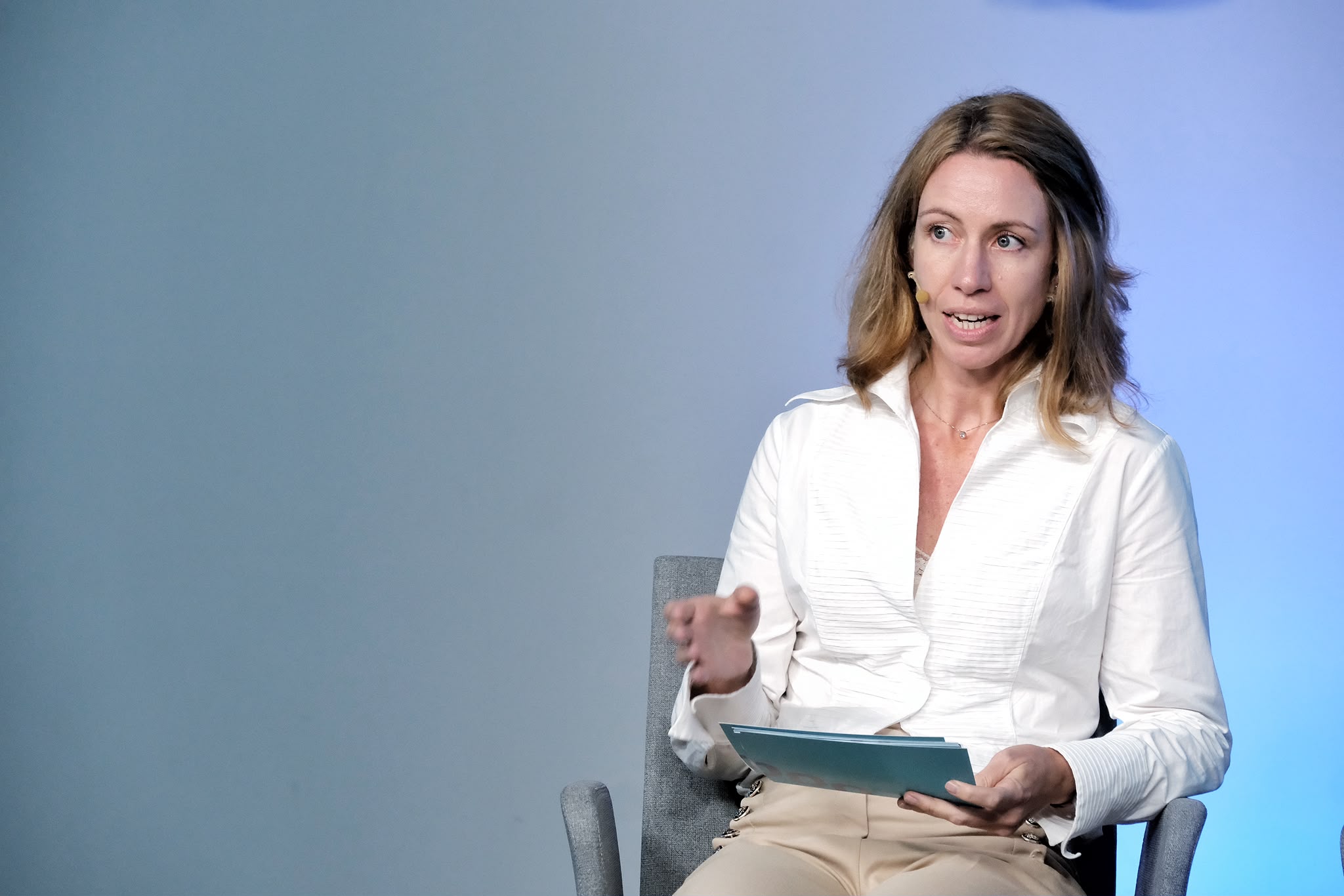
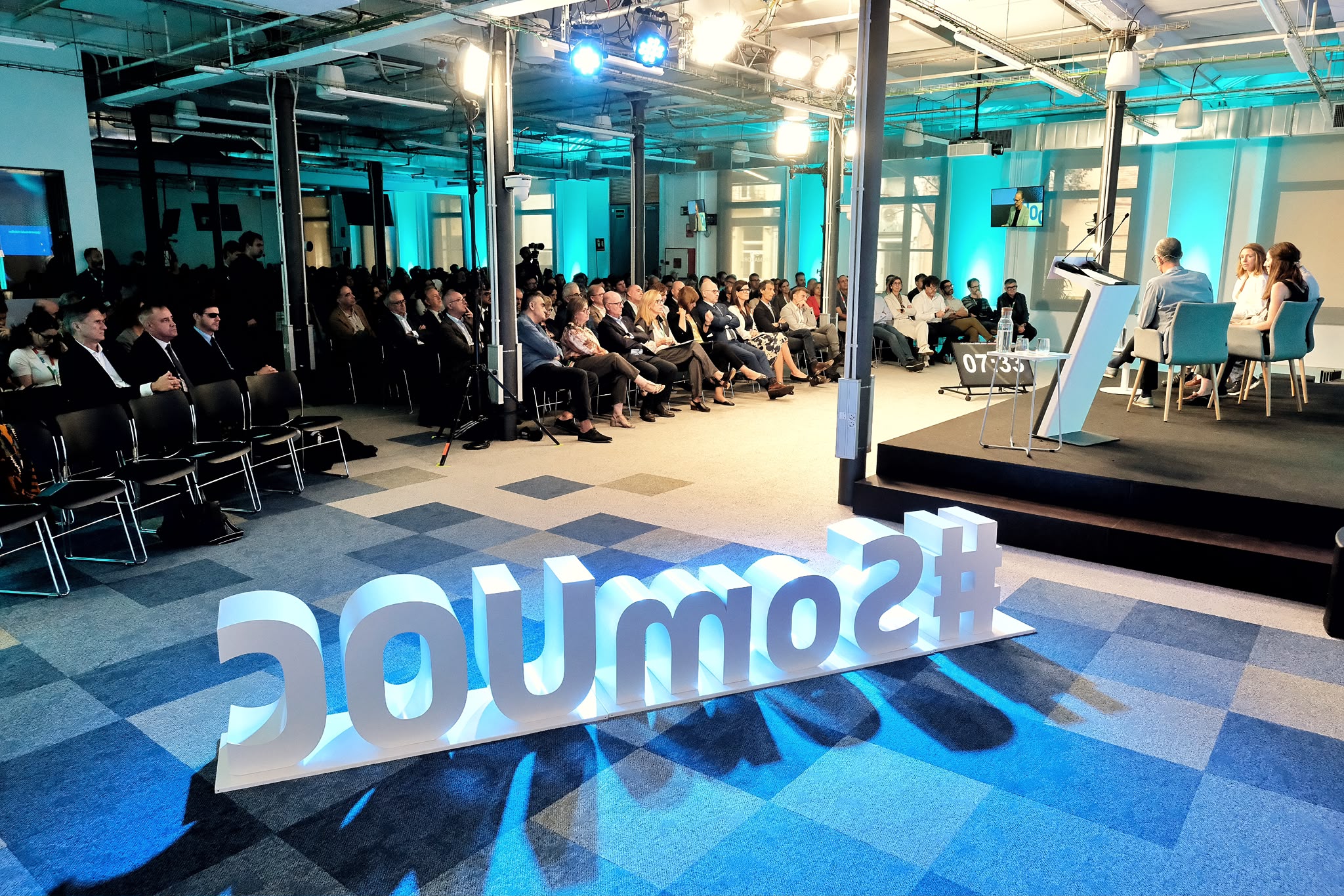
The Earth’s limits and the resulting wide-ranging tensions were the subject of reflection at the UOC’s inaugural lecture for academic year 2026/2027, which took place on Tuesday 6 October. The finite nature of the world’s resources, which form the basis of growth and technological progress, was the overarching theme of the debate, in which experts offered insights from geopolitics, technology, resources and emerging borders. The lecture, which included a video summary of academic year 2025/2026, was delivered by Ignasi Gozalo-Salellas, a member of the Faculty of Information and Communication Sciences and researcher in the MUSSOL research group. The event also featured contributions from Josep Lladós-Masllorens, a member of the Faculty of Economics and Business and researcher in the DigiBiz research group; Zora Kovacic, a Ramón y Cajal researcher in the TURBA Lab research group; and Núria Franco Guillén, a member of the Faculty of Law and Political Science and also a researcher in the TURBA Lab.
Gozalo-Salellas framed the lecture within the broader theme of the end of false promises. Following the fall of the Berlin Wall, globalization and the liberal euphoria of thinkers such as Francis Fukuyama promised “endless progress and an end to ideologies and wars”. However, the opposite has happened in practice, because “material life is constrained by insurmountable physical limits”. This has led to a “new cycle of violence” caused by “competition for resources” as a result of increasing rates of production, leading to planetary instability that has in turn fuelled “collective anxiety and identity-based reactions”. Through this lens, Gozalo-Salellas invited the speakers to debate the need to “rethink the relationship between culture and the natural world”.
The speakers discussed dematerialization and the technological trap that fuelled the myth that the digital world and the green transition consume no resources. Lladós-Masllorens warned that both artificial intelligence and mobile phones require substantial material resources. “Over 40 chemical elements go into making a mobile phone,” he said, adding that 50% of the world’s rare earth reserves are in China. Along similar lines, Kovacic added that the system is based on a model of economic growth that fails to take into account the “social metabolism”, in other words, that our social system is based on inputs, which are needed to sustain it, but which are by nature limited. According to this view, the system is moving towards a future marked by an absolute shortage of resources and highly unequal access to them.
What is going on with borders?
The physical limits of resources are redrawing the world’s political and trade borders. Franco explained that borders are no longer simply lines on a map but have instead become a “porous” mechanism that can be altered by the state, as illustrated by the migration crisis seen in Ceuta this summer. While some countries delegate the management of migration flows, others use them as a “tool to exert pressure”. Kovacic warned that borders are also being blurred by the actions of private companies and multinationals: “In an import-dependent economy, the search for strategic autonomy is leading to the redrawing of borders by private agents.” As regards technology, she added that “the corporate push to accelerate production prevails without democratic oversight”. She also referred to Pacing the Frontier, a public statement from employees of leading AI companies calling for regulation on the technology’s development.
The truth is that current discussions of borders must never lose sight of the need to control logistics and trade. Lladós-Masllorens noted that the green transition requires iron, copper and cobalt, which are often used as financial assets and instruments of geopolitical power, and that conflict now extends beyond access to materials to include logistics and transport, as illustrated by the crises involving the Strait of Hormuz, the Panama Canal or Greenland.
All these tensions lead to violence. Kovacic warned that, while relative scarcity is regulated by the markets, the prospect of absolute scarcity leads to energy wars, such as those being fought in Ukraine and Iran. Lladós-Masllorens also highlighted the forms of violence (such as child labour) triggered by this situation “at source”, i.e. in resource-producing areas. He also noted that the social and environmental costs of transformation are being passed on to others. At the same time, violence also erupts “at destination”, in the form of “irregular conditions and violent discourse against immigrants” from the regions whose resources are being exploited.
Franco warned of the “erosion of democracy” taking place within this global dynamic, as the far right continues to grow and easily mobilize its members with unprecedented backing from tech capital. This has given rise to the concept of “technofascism”, which involves practices such as mass surveillance and the manipulation of information beyond the reach of democratic oversight. “Democratic institutions can’t keep up with the speed at which technology is moving forward, and this leads to deep inequalities,” she said.
From the dark side to a brighter future
Although the discussion focused on the darker side of the dual (technological and ecological) transformation, the speakers also offered grounds for hope. Lladós-Masllorens called for greater “strategic intelligence” and “territorial cohesion”, acknowledging that “the best energy is the energy we don’t consume”. Reducing consumption prevents the “rebound effect”, which is when demand goes up due to resources becoming cheaper as a result of technological efficiency gains. Kovacic, in turn, said that we must stop believing the myth that technology will solve everything: “We must focus on balance and build a discourse based on ethics and care.” Franco concluded by placing her trust in “the strength of the public’s commitment to democracy to bring about the necessary changes before it’s too late”.
Following the discussion held between the experts Gozalo-Salellas, Franco and Kovacic, from the UOC-TRÀNSIC research centre, and Lladós-Masllorens, from UOC-DIGIT, the UOC rector, Àngels Fitó, and the Catalan minister Núria Montserrat delivered their institutional addresses.
The rector calls for “opening up” the UOC in the face of “uncertainty”
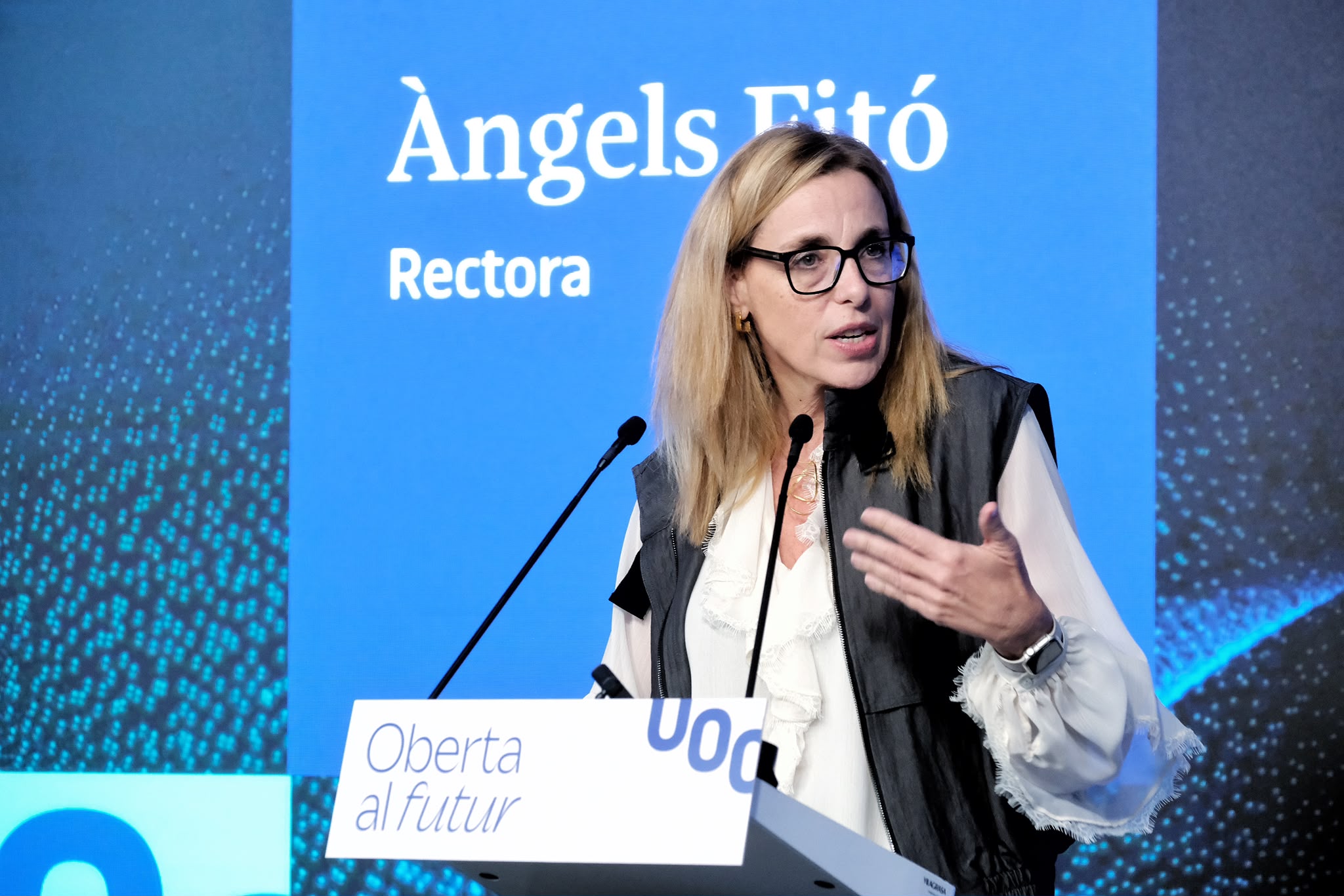
UOC Rector Àngels Fitó concluded the debate with a speech in which she asserted that addressing the issue of the Earth’s limits is “unavoidable”, because “we’re living in a world of paradoxes and overlapping crises”. Fitó acknowledged that, despite bringing us closer to each other, technology “doesn’t shield us from the risk of moving towards an increasingly inward-looking world”. And, faced with a world that “is turning inwards in the face of uncertainty”, she defended the UOC’s response: “The UOC is living up to its name now more than ever: we’re opening up.” She said that “what really counts when we reach a crossroads is the position we take,” and highlighted the UOC’s spirit: “We open up the debate to try to figure out how to navigate all these dilemmas.”
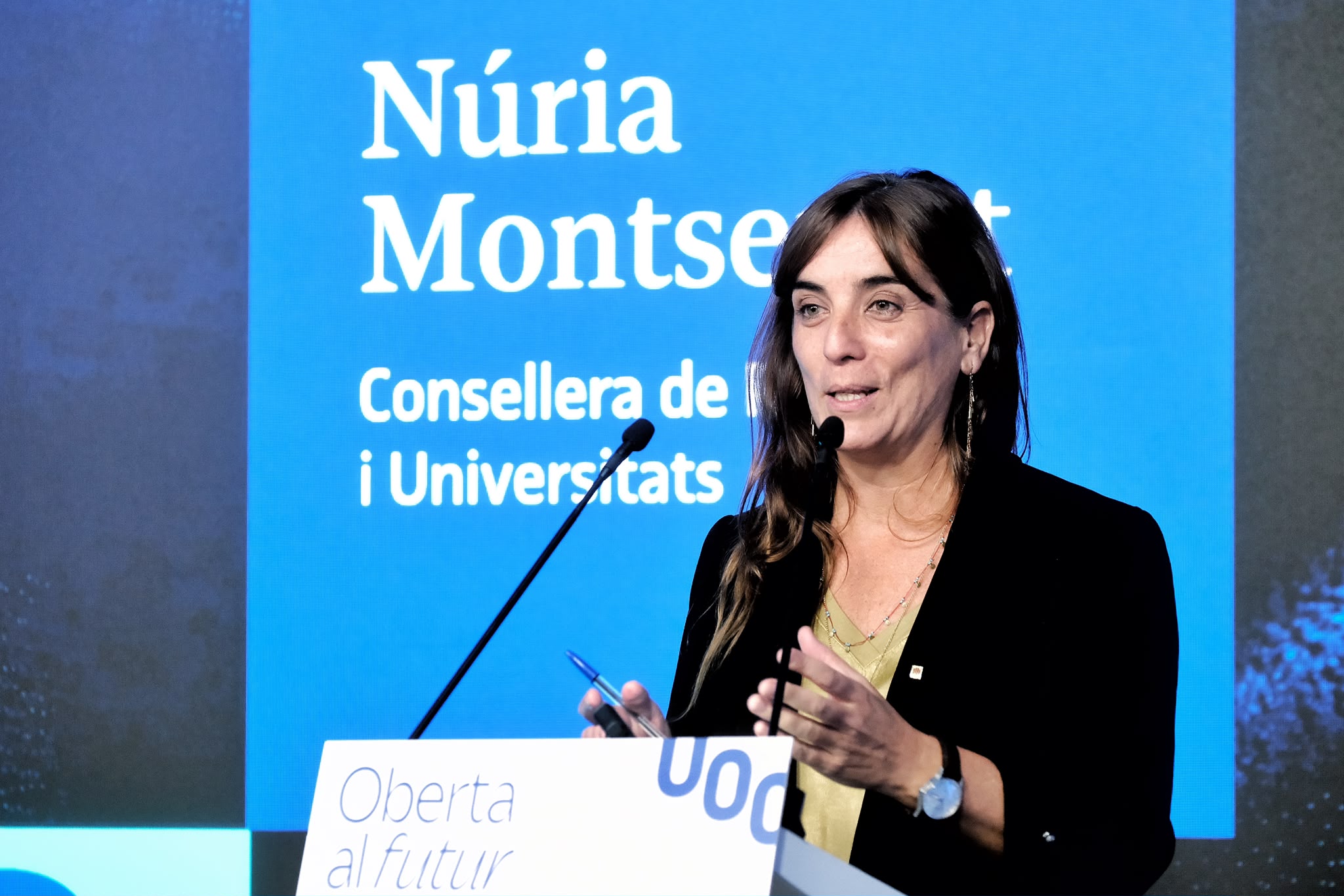
The event ended with an address by Núria Montserrat, the Government of Catalonia’s Minister for Research and Universities, in which she highlighted universities’ role as “orchestrators of regional innovation systems” with “the potential to have a social impact in partnership with citizens, public administrations and civil society”. Montserrat said that this perspective on universities has led to a shift in public policy in relation to these institutions, “and the UOC is no exception”. In her address, the Minister also expressed full confidence in the UOC’s innovative spirit to navigate the impact of AI on higher education, remarking: “If any university is equipped to rethink how AI can transform higher education, it’s the UOC.”

The UOC’s inaugural lecture for academic year 2026/2027

Photo album
Press contact
-
Anna Torres Garrote