
UOC and Vueling analyze the potential of SAF as a key opportunity to reduce energy dependence in Catalonia
Research by the Vueling-UOC Observatory on Air Transport identifies opportunities to produce sustainable aviation fuel in Catalonia with the potential to reduce emissions across the fuel life cycle and reinforce energy securityEuropean regulations already require action, but roll-out still faces technological, economic, and political challenges
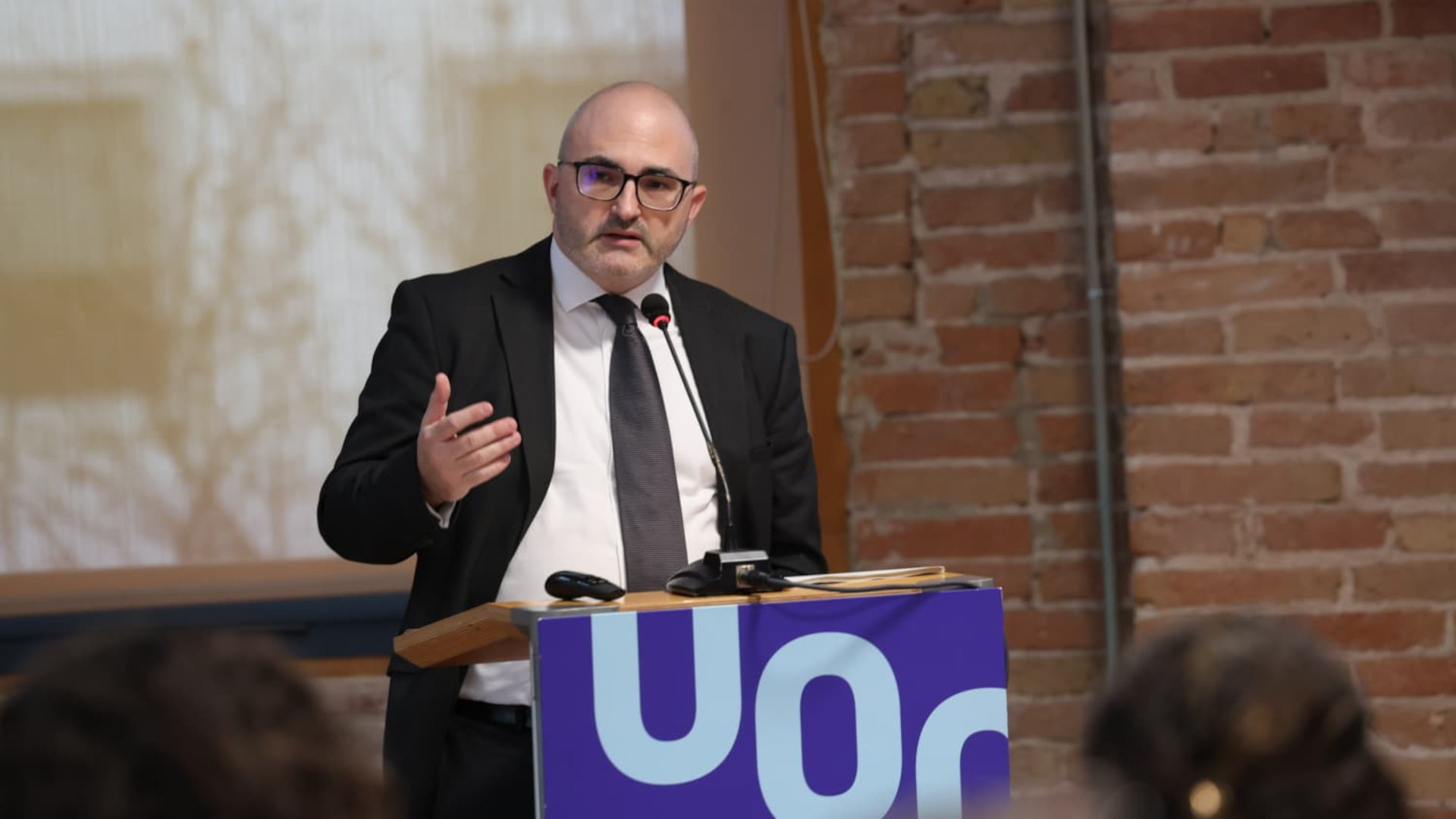
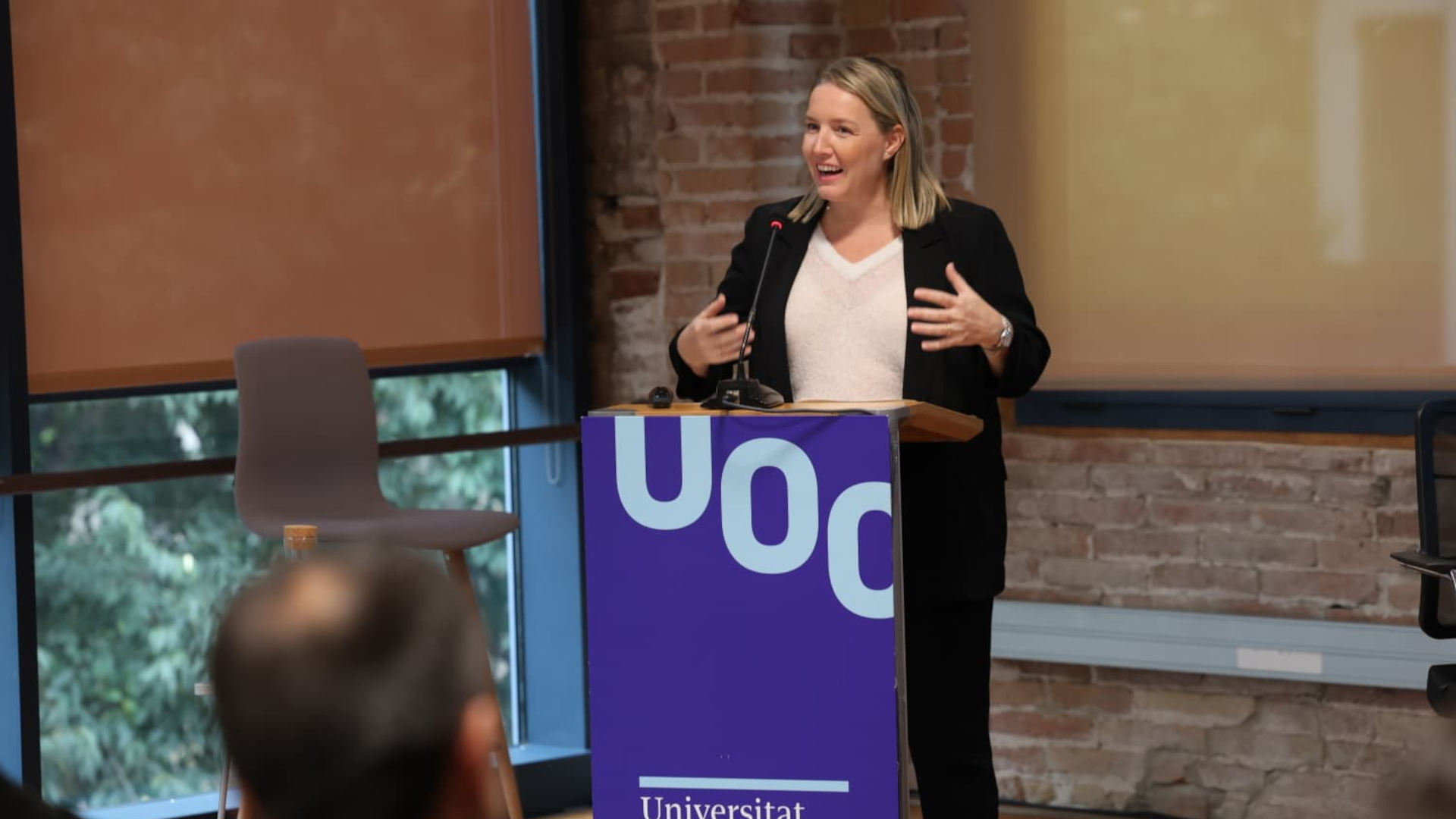
Aviation is a cornerstone of connectivity, trade, and tourism, but it also faces a major challenge: decarbonization. In this context, sustainable aviation fuels (SAF) are one of the pathways available to reduce greenhouse gas emissions associated with the fuel life cycle, although their development also sparks an industrial, regulatory, and energy debate.
The Universitat Oberta de Catalunya (UOC) has presented a study in Barcelona on the future of SAF in Catalonia. It was conducted by a research team from the university within the framework of the Vueling-UOC Observatory on Air Transport, a collaboration between both institutions governed by independent academic standards.
The conference, entitled "The future of SAF in Catalonia: decarbonization and energy security", brought together policymakers, academics, and professionals from the aviation, financial, and technological sectors to explain what these fuels are, what challenges they present, and why they are vital for the region.
The study was carried out by Professor Pere Suau-Sanchez, head of the Sustainability, Management and Transport Research Group (SUMAT) —affiliated with the UOC-DIGIT centre—, professor in the Faculty of Economics and Business, and event coordinator, alongside SUMAT researchers Berta Roset Pérez and Athina Sismanidou.
“"Producing part of aviation fuel from waste, biomass, or, in the longer term, hydrogen and CO₂, can help diversify energy sources and generate local industrial activity”
Sustainable aviation fuels (SAF) can be produced, for example, from certain organic wastes or, in the case of synthetic fuels, from renewable hydrogen and captured CO₂. They can be used in existing aircraft and supply infrastructure, blended with conventional kerosene in authorized proportions. Depending on the feedstock and production process, certain SAFs can achieve reductions of up to 80% in greenhouse gas emissions over the fuel life cycle compared to fossil kerosene. Their use continues to generate CO₂ emissions during flight.
For Suau-Sanchez, however, the climate debate is only part of the issue. "SAF usually appears solely as a tool to cut aviation emissions, and it is. But there is a second dimension that is often overlooked," he points out. Catalonia, like the rest of Spain and much of Europe, relies almost entirely on imported crude oil to obtain the kerosene used in aviation, a dependence that leaves it vulnerable to geopolitical tensions and market volatility. "Producing part of aviation fuel from waste, biomass, or, in the longer term, hydrogen and CO₂, can help diversify energy sources and generate local industrial activity. It will not eliminate external dependence, but it can reduce it and provide resilience," he explains.
Regulatory pressure is already underway. The European regulation ReFuelEU Aviation obliges aviation fuel suppliers to incorporate an increasing proportion of SAF into the fuel supplied to European Union airports. "Therefore, the question is where it will come from and who will produce it," notes the researcher. The answers remain open because the market is still nascent and available forecasts carry a high degree of uncertainty.
The study is grounded precisely in this caution. It analyzes the potential demand for SAF, industrial capacities, and available resources in Catalonia through a review of academic literature, industry reports, European legislation, public data analysis, and key stakeholder interviews, alongside a comparative assessment of production pathways and international case studies. The goal is to outline exploratory scenarios to understand which conditions could foster or hinder SAF production in Catalonia.
“European mandates for the use of SAF must be accompanied by incentives for both production and consumption. For this reason, boosting SAF is essential to meet decarbonization targets while helping diversify the sector's energy supply sources,” states Franc Sanmartí, Sustainability Director at Vueling.
Catalonia's assets and limitations
The Catalan baseline presents a clear tension. Catalonia accounts for a significant portion of the country's airport, tourism, logistics, and industrial activity, and holds assets such as the Tarragona petrochemical cluster, the Port of Tarragona, and the Hydrogen Valley of Catalonia. At the same time, announced SAF production in Spain has so far been concentrated in other territories. This asymmetry raises a fundamental question: whether Catalonia will primarily be a consumer of a mandated fuel, or whether it can also participate in its value chain.
The answer does not rely solely on feedstock availability. A portion of potential feedstocks, such as agricultural, forestry, and municipal waste or used cooking oils, already has competing uses or is difficult to mobilize: resources available on paper are not always accessible under industrial conditions. Furthermore, production pathways feature diverse profiles: certain technologies are more mature but rely on constrained feedstocks; others, such as those linked to renewable hydrogen and captured CO₂, align with Tarragona's assets, but require heavier investment, renewable energy, and technological development.
Coordination to unlock investment
This is where the primary barrier arises. Suau describes it as a systemic deadlock, as the various elements and actors depend on one another. "Without sufficiently predictable demand, investment does not flow. Without investment, technology does not scale. And without scale, costs remain high and demand is not unlocked," he summarizes. Added to this chain is the limited supply of feedstocks, for which other sectors are also competing.
"If I had to highlight one element, I would say the key is public-private coordination: administrations, the energy industry, investors, airlines, airports, and research institutions. Collaboration and coordination reduce uncertainty and help advance toward viable investment proposals," he states. The study also reviews how other European nations have addressed this challenge, deploying early-stage project subsidies, revenue certainty mechanisms, or public-private partnerships. In fact, the study points out that Europe has created the demand for e-SAF through regulation, but economic conditions must be consolidated for European production to become competitive.
According to Sandra Hors, Director of Corporate Affairs, Brand and Sustainability at Vueling, "the role of connectivity is essential as a driver of economic activity, jobs, and value creation. Our challenge is ensuring this connectivity persists in the future while simultaneously advancing sector decarbonization. At Vueling, we are already taking action with measures to improve fleet and operational efficiency, as well as incorporating SAF. However, to accelerate this transition, mandates must be accompanied by incentives and, above all, increased SAF production capacity at competitive prices. It is essential that all stakeholders across the aviation ecosystem work together to scale up SAF production at competitive prices and contribute to reducing emissions associated with the fuel's life cycle."
SAF alone will not solve all of aviation's impacts, but in a sector with limited decarbonization pathways, it cannot be ignored. "The future of SAF remains open and there are multiple possible trajectories. That is precisely why it makes sense to start working on it now, and this event aims to contribute to that discussion," Suau-Sanchez concludes.
Presentation event
The report was presented today at an event hosted by the UOC under the framework of the Observatory with Vueling, introduced by Xavier Vilajosana, Vice-Rector for Research, Transfer and Entrepreneurship, alongside Sandra Hors, director of corporate affairs, brand and sustainability at Vueling Airlines, and Pere Suau.
The event featured an introductory talk by Nadine Moustafa, researcher at the Centre for Environmental Policy at Imperial College London and contributor to the United Nations Intergovernmental Panel on Climate Change (IPCC) drafting team.
The presentation of the report was delivered by Suau, along with Berta Roset and Athina Sismanidou, researchers from the SUMAT group.
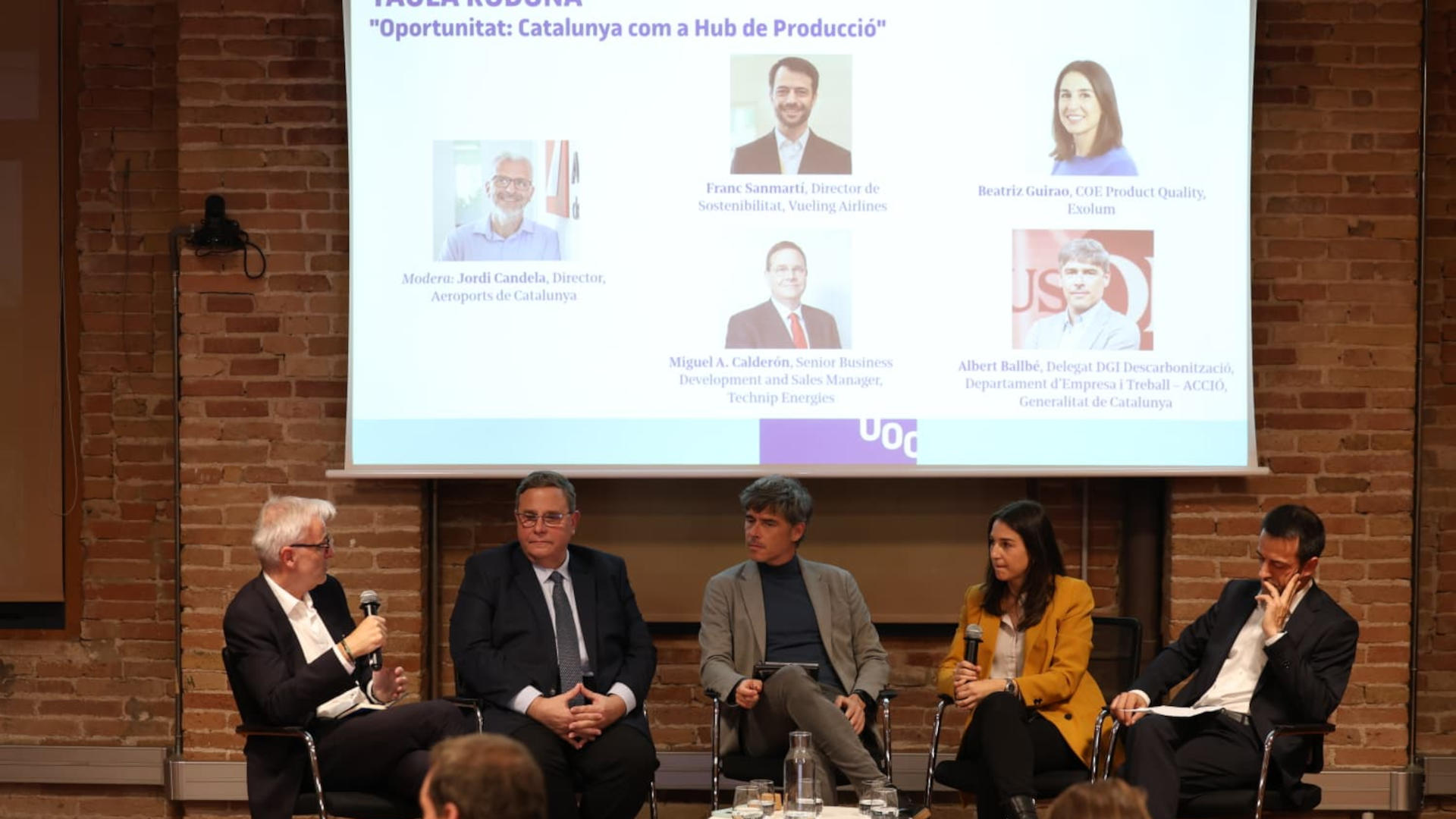
The session also featured a panel discussion on Catalonia's opportunity to become a sustainable aviation fuel production hub, moderated by Jordi Candela, director of Aeroports de Catalunya, with contributions from Franc Sanmartí, director of sustainability at Vueling Airlines; Miguel A. Calderón, senior business development and sales manager at Technip Energies; Beatriz Guirao, COE Product Quality at Exolum; and Albert Ballbé, head of decarbonization projects at ACCIÓ, the Catalan government's agency for business competitiveness. The closing remarks were delivered by Professor Joan Torrent, director of the UOC-DIGIT centre, together with Jaume Minguell, Director-General of Forests and Environmental Management of the Government of Catalonia.
This study is aligned with the UOC's research mission "Digital Transition and Sustainability" and UN Sustainable Development Goal (SDG) 9: Industry, Innovation, and Infrastructure.
Transformative, impactful research
At the UOC, we see research as a strategic tool to advance towards a future society that is more critical, responsible and nonconformist. With this vision, we conduct applied research that's interdisciplinary and linked to the most important social, technological and educational challenges.
The UOC’s over 500 researchers and more than 50 research groups are working in five research centers focusing on five missions: lifelong learning; ethical and human-centred technology; digital transition and sustainability; culture for a critical society, and digital health and planetary well-being.
The university's Hubbik platform fosters knowledge transfer and entrepreneurship in the UOC community.
More information: www.uoc.edu/en/research
FAQs
Experts UOC
Press contact
-
Núria Bigas Formatjé
