Smart Classroom Project showcases importance of the design of spaces to improve education at Catalan Parliament
The initiative to innovate in the design of educational spaces is a spin-off established by the UOC and the University of BarcelonaIn recent years, numerous educational innovation projects have been rolled out at both local and international levels
The design of educational spaces is emerging as a key factor in promoting student well-being and improving learning outcomes. The main aim of the Smart Classroom Project is to apply research on the design and use of educational spaces in practice with a view to transforming these environments and improving learning. This spin-off of the Universitat Oberta de Catalunya (UOC) and the University of Barcelona (UB) has extensive experience in developing research-based interventions with a real impact, both locally and internationally.
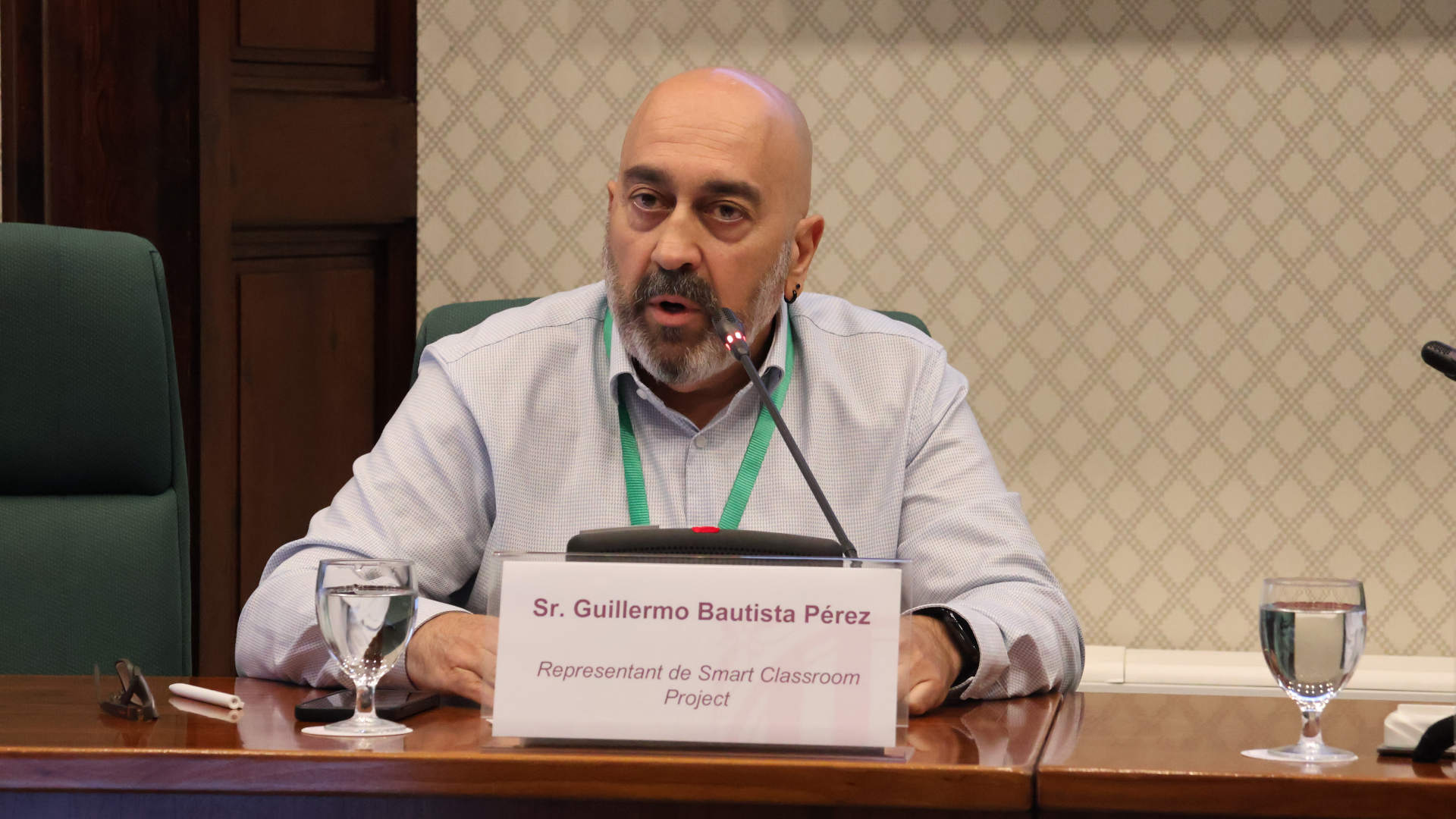
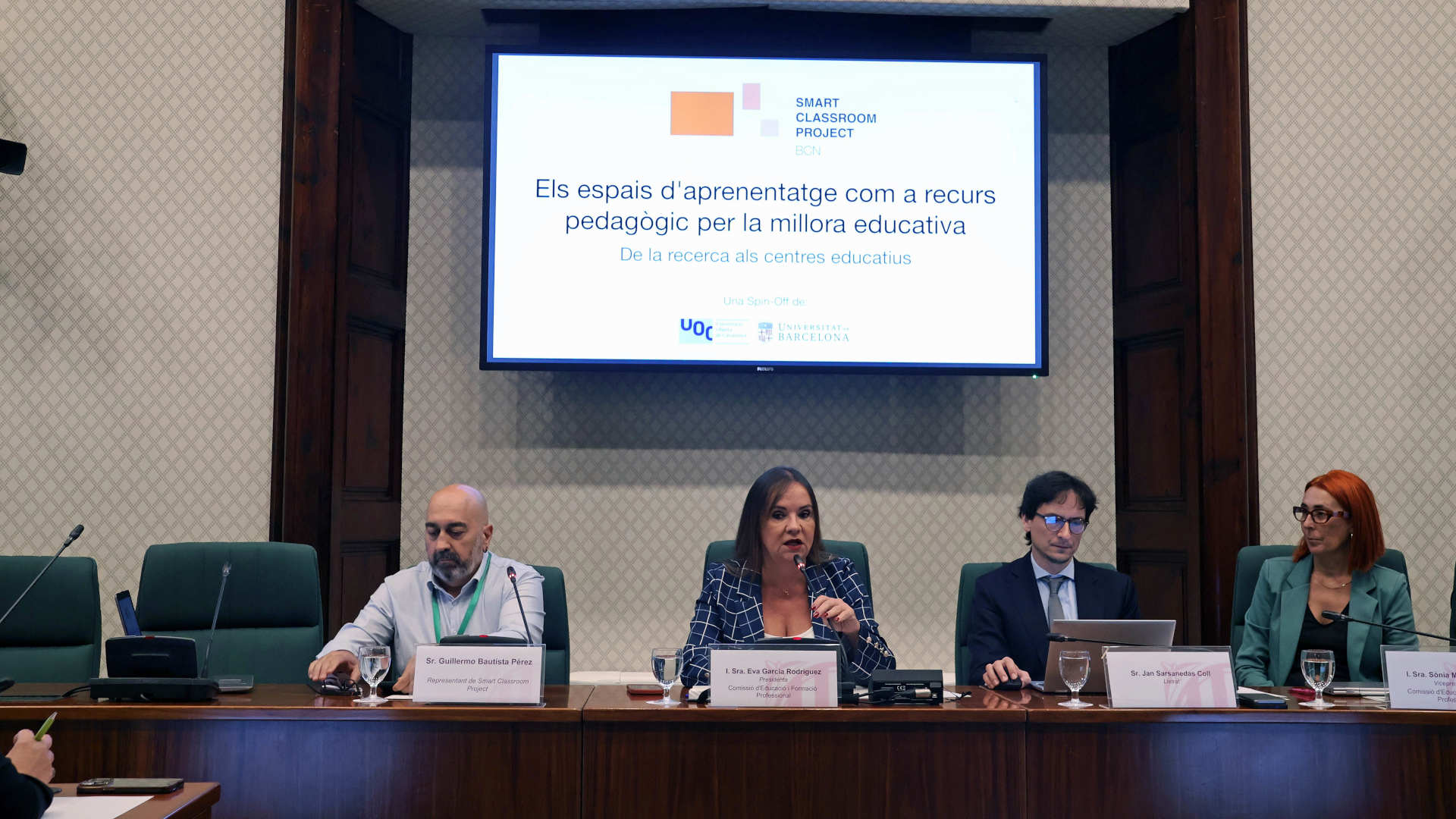
The findings of its research have been translated into specific innovations in educational institutions. Their successful implementation has attracted interest from numerous local councils across Catalonia and further afield, including from the Government of Uruguay. Guillermo Bautista, co-founder of the spin-off and a researcher with the GREDU Education Research group at the UOC-FuturEd centre, was asked to share the experience gained through the Smart Classroom Project to the Catalan Parliament's Education and Vocational Training Commission.
Addressing members of the Catalan Parliament, Bautista presented the evidence gathered from the project's research to date, highlighting the influence of educational spaces on students' well-being, participation and learning processes. The research conducted as part of the Smart Classroom Project has confirmed that "space is not simply where educational activity takes place, but an element that shapes learning opportunities and the relationships between people and teaching practices," he said. The research shows that spaces designed according to pedagogical criteria "can encourage greater student participation and engagement, facilitate more active and flexible teaching methodologies, and help create environments that better support students' well-being", said Bautista, a member of teaching staff at the UOC Faculty of Education. The research also helps identify the conditions and limitations that must be taken into account to ensure that improvements are effective.
During the presentation, Bautista stressed the need to approach educational spaces "from a pedagogical, architectural and scientific perspective", and argued that improving them must form part of educational quality and innovation policies. "The aim is not just to modernize school facilities, but to reflect on how spaces can help create an educational environment that promotes well-being and better learning outcomes, while also being more inclusive, participatory and adapted to the current needs of educational institutions."
“Space is not simply where educational activity takes place, but an element that shapes learning opportunities and the relationships between people and teaching practices”
From research to practice
In recent years, the Smart Classroom Project's research has been applied in numerous schools and by public administrations, both in Catalonia and internationally. One notable example is the project carried out in collaboration with Uruguay's National Administration of Public Education (ANEP), which focuses on improving learning spaces in primary and secondary schools. The project involved analysing, providing guidance and co-designing with school communities.
In Catalonia, projects have been launched with several school communities in collaboration with local councils, including those of Viladecans and Santa Coloma de Gramenet. In Santa Coloma, for example, the Sentir-me bé, pensar i aprendre (Feel good, think and learn) project is under way. It aims to analyse and improve spaces in schools to enhance the educational approach, promote well-being and improve learning outcomes. The spin-off established by the UOC and the UB has also worked on the design of flexible classrooms in primary and secondary schools, multipurpose spaces, school libraries, university classrooms, maker spaces, playgrounds, laboratories and other settings intended to foster active learning methods, inclusion and well-being.
In parallel with these projects, research has been conducted in schools such as Escola Marina and Escola Norai in Montgat, Escola Lola Anglada in Esplugues and Escola Miquel Martí i Pol in Viladecans. This research has made it possible to "study, in real classroom settings, the relationships between spatial characteristics, teaching practices, well-being and learning outcomes," said Bautista.
A long-standing initiative
Smart Classroom Project was created as a spin-off four years ago and has been carrying out knowledge transfer projects for 10 years. It emerged from university research into the relationship between educational spaces, well-being, and teaching and learning processes. The initiative began to take shape in 2016, with a competitive research project funded by RecerCaixa, which enabled the UOC to study and explore how the design of school spaces could contribute to improving education, explained Bautista.
"One of the most important milestones of that first stage was the design and implementation of five innovative learning spaces, developed through participatory co-design processes with school communities." As a result of those initial steps, "both the participatory processes and the results of the interventions were assessed, and the new spaces received very positive assessments compared with traditional classrooms." The team leading the initiative disseminated the research findings and began to receive numerous requests from schools and public administrations interested in "rethinking their spaces to better support their educational projects".
At that stage, more than 20 projects were carried out through knowledge transfer contracts. Thanks to the 2019 innovators grant awarded by the Government of Catalonia to support knowledge transfer and value generation projects, the Smart Classroom Project was established in 2023 as a spin-off of the UOC and the UB, with the aim of transferring scientific knowledge into educational practice. Since then, it has implemented projects in schools and public administrations, both locally and internationally. "One of our main distinguishing features", explained Bautista, "is that our interventions are grounded in scientific research, which we have continued to pursue through competitive research projects and international research papers. The aim is not simply to physically transform classrooms, but to help create environments that promote the well-being, participation, inclusion and learning of all students."
Laying the foundations for improvement or transformation of educational spaces
According to Bautista, the project currently focuses on the analysis, assessment, design and improvement of learning spaces, integrating three fundamental dimensions: pedagogical, environmental and digital. "Educational spaces must meet the needs of the people who use them, facilitate different methods of teaching and learning, and provide appropriate conditions for comfort, well-being and the use of technology," he said. The spin-off continues to implement projects with local, national and international public administrations, schools at all levels, and other organizations, such as libraries, play centres and facilities dedicated to children and adolescents.
The advisory services offered range from analysing and assessing existing spaces to co-designing and implementing new educational environments, or providing guidance and training for teaching staff. Bautista told the members of the Catalan Parliament that improving educational spaces "does not always require major building works or new equipment. It often begins with reflecting on how existing spaces are used and how they can be better utilized to strengthen each institution's educational project."
This initiative is aligned with the UOC's Education of the future research mission and contributes to Sustainable Development Goal (SDG) 4, Quality Education.
Transformative, impactful research
At the UOC, we see research as a strategic tool to advance towards a future society that is more critical, responsible and nonconformist. With this vision, we conduct applied research that's interdisciplinary and linked to the most important social, technological and educational challenges.
The UOC’s over 500 researchers and more than 50 research groups are working in five research units focusing on five missions: lifelong learning; ethical and human-centred technology; digital transition and sustainability; culture for a critical society, and digital health and planetary well-being.
The university's Hubbik platform fosters knowledge transfer and entrepreneurship in the UOC community.
More information: www.uoc.edu/en/research
FAQs
Experts UOC
Press contact
-
Anna Sánchez-Juárez