Barcelona launches new loading and unloading system for food service distribution
The HORECA HUB project begins a pilot programme with three designated spaces, booking and monitoring technology, and eight distribution companies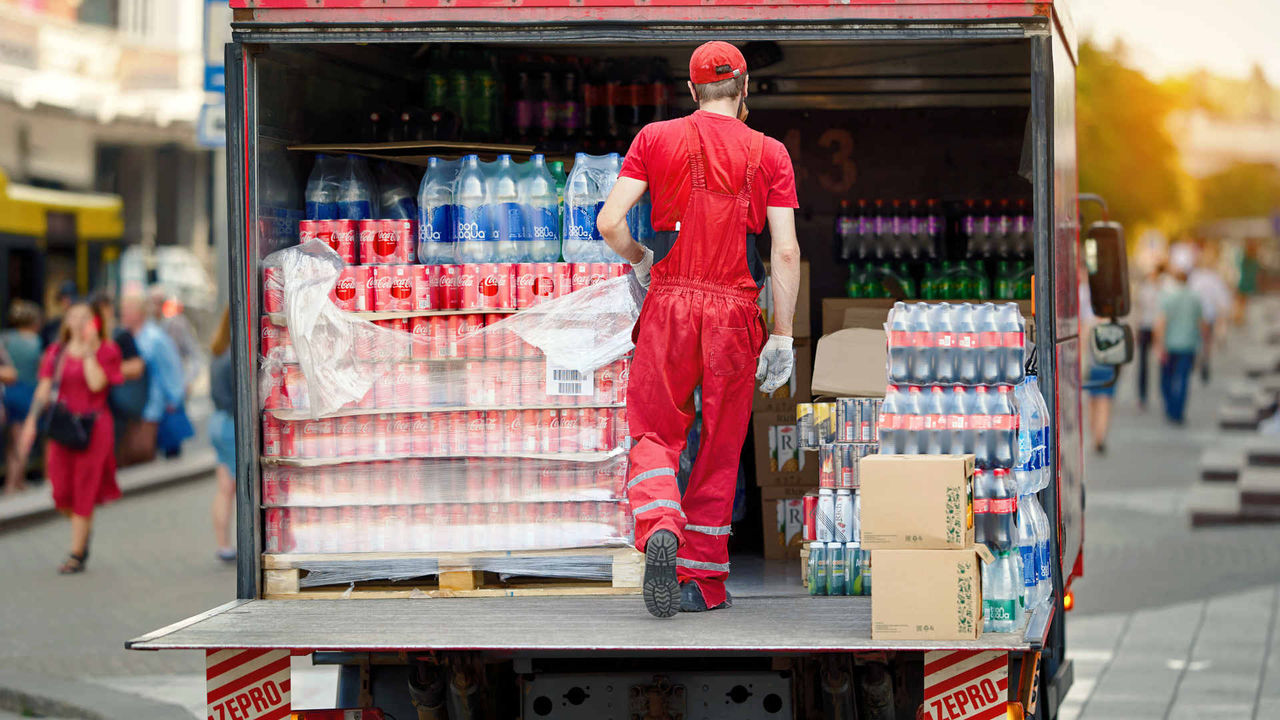
The food service distribution sector is now using three dedicated loading and unloading spaces as part of HORECA HUB Barcelona, a pilot project launched to test a new way of organizing deliveries and pickups for bars, restaurants, cafés and hotels.
This joint initiative of Barcelona City Council, Barcelona Innova Lab Mobility, Fira de Barcelona and Mobile World Capital Barcelona selected a research proposal from the Universitat Oberta de Catalunya (UOC), in collaboration with the Association of Beverage and Food Distribution and Logistics Companies of Catalonia (ADISCAT), to develop an innovative solution aimed at achieving the objectives set out in the call. The project also involves eight distribution companies: DDI - Distribución Directa Integral (Damm), Disbesa, Coseral BCN, Distribuciones Serrano, Dist Crusat, Discer, Qualianza and Euroestrelle.
“The idea isn't to give each sector its own area, as that wouldn't be practical. Instead, we want to learn enough to design shared, modular spaces that can adapt to different types of distribution”
It is part of the Barcelona Innova Lab Mobility (BILM) project led by Barcelona City Council and Fira de Barcelona to promote and facilitate the implementation of pilot projects and other new initiatives in the field of smart and sustainable urban mobility. As a result, five pilot projects have been launched in the city in recent years, addressing not only goods distribution but also reducing motorbike accidents, improving bus traffic flow, managing traffic signals using AI and lessening noise pollution.
The aim of the newly launched pilot project is to contribute to transforming the city's current urban goods distribution model, particularly in the hospitality, restaurant and catering (HORECA) sector, thereby reducing traffic and improving the shared use of urban spaces. With this approach, the challenge aligns with the city council's goal of reducing emissions from commercial traffic by 50% by 2030.
The aim of the initiative is to develop a new way of organizing the flow of goods that minimizes externalities, grouping goods together and fostering collaboration between companies and distributors. The initiative is part of a broader context of growing commercial traffic in city centres. Based on the diagnosis of urban goods distribution in Barcelona, goods distribution is estimated to account for 17% of the city's traffic. This results in externalities such as pollutant emissions (31% PM10 and 34% NOx), encroachment on public space or traffic violations.
According to a joint study by Barcelona City Council, Barcelona Regional, Barcelona Municipal Services (BSM) and Barcelona Metropolitan Area (AMB), the HORECA sector is responsible for 22.2% of urban deliveries.
Three dedicated spaces for HORECA distribution
The pilot project is initially being carried out at three locations in Barcelona: one at the intersection of Pau Claris and Casp and two on Rambla del Raval. During the designated time slots, use of the spaces will be restricted to participating companies and managed through a time-slot booking and allocation system.
Seven vehicles will participate at each of the three locations, using the spaces in a coordinated manner. The aim is to reduce the time that distributors spend looking for a space and avoid unnecessary driving around on nearby streets. The pilot project will run for a period of at least six months and will enable the model to be tested in the Eixample and Ciutat Vella districts.
Addressing HORECA distribution needs
The lack of available loading and unloading spaces close to establishments is one of the biggest challenges facing HORECA distributors each day. This situation poses particular challenges for a sector that handles beverages, food, kegs, boxes and other heavy and bulky items.
When vehicles cannot park close to establishments, delivery times increase, professionals are required to walk further and additional trips may be necessary. In addition, HORECA distribution involves significant reverse logistics, including the collection of bottles, boxes, kegs and reusable containers.
According to Anna Masuet, deputy director of ADISCAT: "We've taken a major step forward by moving from diagnosis to a real-world pilot. Distribution companies are starting to use loading and unloading spaces created specifically for their operations and coordinated through technology."
Vehicles as microhubs and technology to monitor the pilot
In the HORECA HUB system, participating vehicles operate as mobile microhubs. From the designated spaces, deliveries to nearby establishments can be completed on foot or using light means of transport, while return trips can be used to collect items associated with reverse logistics.
The project incorporates a digital platform that coordinates bookings, detects vehicle arrivals, monitors usage times and records deliveries and pickups. The UOC brings scientific and technological expertise through the Urbanization, Trade and Sustainable Logistics (URBANLOG) research group, affiliated with the UOC-DIGIT Research Centre, the Internet Computing & Systems Optimization (ICSO) group and the Wireless Networks Research Lab (WiNE), both part of the UOC-TECH Research Centre, with logistics optimization tools, IoT sensors, RFID technology and tracking systems.
"Loading and unloading regulations were developed with parcel deliveries in mind, while food services operate very differently: heavy goods, kegs, boxes, frequent deliveries and, in addition, the collection of reusable packaging. That's why we want to understand how the distribution system we're proposing works on the ground and, above all, collect data. Thanks to the sensors and web app, we can see how long each space is actually occupied, whether goods are delivered on foot and where problems arise," said Cristian Castillo, co-PI of URBANLOG and associate professor in the UOC Faculty of Economics and Business.
"We hope to help the city council regulate the system while taking everyone's needs into account. The idea isn't to give each sector its own area, as that wouldn't be practical. Instead, we want to learn enough to design shared, modular spaces that can adapt to different types of distribution," Castillo said.
During the six-month pilot, data will be collected to analyse aspects such as delivery times, routes, the number of vehicles required, space usage and the experience of distributors and establishments.
HORECA HUB has been launched in Barcelona to develop a flexible, measurable approach that, depending on the results of the pilot, could be rolled out in other parts of the city and adapted for use in other towns and cities.
This project aligns with the UOC's Digital transition and sustainability research mission and contributes to the following UN Sustainable Development Goals (SDGs): 9: Build resilient infrastructure, promote sustainable industrialization and foster innovation, and 11: Sustainable cities and communities.

Transformative, impactful research
At the UOC, we see research as a strategic tool to advance towards a future society that is more critical, responsible and nonconformist. With this vision, we conduct applied research that's interdisciplinary and linked to the most important social, technological and educational challenges.
The UOC’s over 500 researchers and more than 50 research groups are working in five research units focusing on five missions: lifelong learning; ethical and human-centred technology; digital transition and sustainability; culture for a critical society, and digital health and planetary well-being.
The university's Hubbik platform fosters knowledge transfer and entrepreneurship in the UOC community.
More information: www.uoc.edu/en/research
FAQs
Experts UOC
Press contact
-
Núria Bigas Formatjé