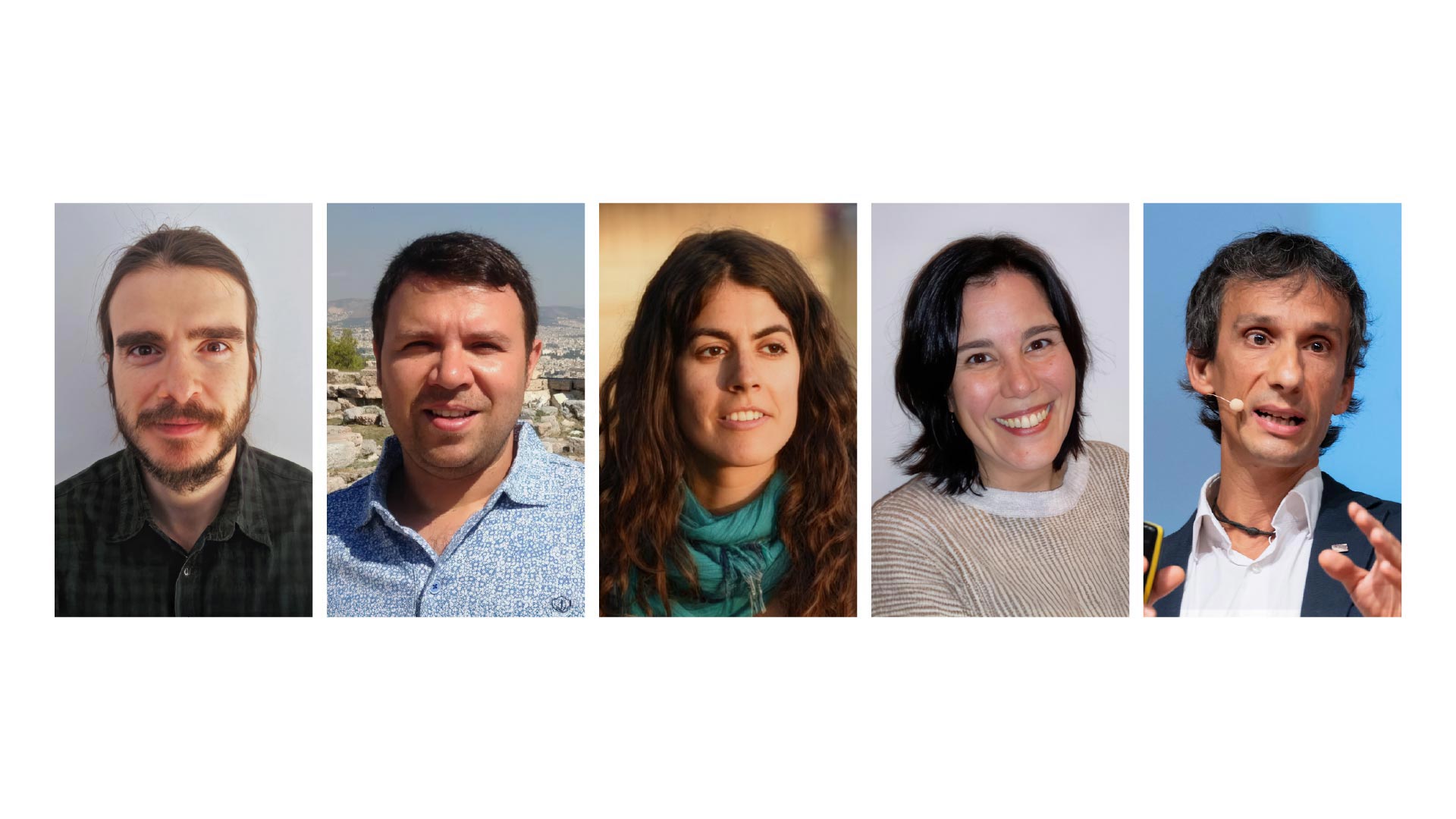
Stanford includes six UOC researchers among the world's most cited scientists
Santi Caballé, Gary Morgan and Anna Bach-Faig feature in the ranking for the first timeHug March, Gemma Chiva-Blanch and Margarita Triguero-Mas have retained their place on the list
Research staff from the Universitat Oberta de Catalunya (UOC) have once again been named in the ranking compiled by the publisher Elsevier and Stanford University, which lists the scientists with the most citations in research papers worldwide. The 2025 edition of this prestigious ranking, which lists the world's top 2% most cited researchers, includes six academics from the UOC. Two of the researchers appearing for the first time, Santi Caballé and Gary Morgan, have been named in the category recognizing the career-long impact of their publications. A second category, which acknowledges the impact of researchers' publications over the past year, also includes Morgan, as well as Hug March, Gemma Chiva-Blanch and Margarita Triguero-Mas, who have retained their place, and Anna Bach-Faig, another newcomer to the list.
Full professor Gary Morgan is a researcher appearing in the ranking for the first time, both in the category recognizing the impact of his publications throughout his research career and in the category highlighting the impact of his work over the past year. Morgan features in the subfields of speech-language pathology and audiology, languages and linguistics, and public health and health services. Morgan is a member of the Cognition and Language Research Group (GRECIL), affiliated with the eHealth Centre, and conducts research on human and planetary health. Morgan welcomed his inclusion in the ranking: "I've always been interested in finding out why things are the way they are. I'm fortunate to have the opportunity to devote my professional life to exploring these questions in the field of child development," he explained.
Santi Caballé, who has also been included in the ranking for the first time, appears in the career-long impact category, in the subfields of artificial intelligence and image processing, education, and information and communication technologies. An expert in learning engineering, e-learning, artificial intelligence in education and learning analytics, Caballé is a full professor and researcher with the Research Group in Education and ICT (Edul@b), affiliated with the UOC-FuturEd centre. He also teaches in the UOC Faculty of Computer Science, Multimedia and Telecommunications. For Caballé, this recognition "acknowledges more than twenty years of research dedicated to exploring how digital technologies and artificial intelligence can help improve online learning." He also pointed out that "it is a testament to the collective effort and collaboration of the many researchers with whom I've worked throughout my career."
Full professor Hug March has retained his place in the ranking as one of the most cited researchers in the field of social sciences, specifically in the subfields of geography and urban and regional planning. An ICREA Acadèmia awardee, March is co-director of the Urban Transformation and Global Change Laboratory (TURBA Lab) – affiliated with the UOC-TRÀNSIC centre – and teaches in the Faculty of Economics and Business, where he coordinates the Bachelor's Degree in Sustainability Management, Digital Transformation and the Environment [in Catalan]. An expert in the political ecology of water, March's broader research interests include urban sustainability, adaptation to the climate emergency and the intersection of the green and digital transitions. March welcomed his inclusion in the ranking, noting that "although the recognition is individual, it also acknowledges the research carried out collectively in TURBA, as well as the high-quality work being done across the Faculty of Economics and Business and TRÀNSIC."
Researcher Gemma Chiva-Blanch – one of the principal investigators in the Nutrition, Food, Health and Sustainability Research Group (NUTRALiSS), affiliated with the eHealth Centre – once again features in the ranking of the world's most cited researchers, more specifically in the subfields of the cardiovascular system and haematology, nutrition and dietetics, and clinical medicine. Chiva-Blanch is a lecturer in the Faculty of Health Sciences and an expert in the effects of dietary bioactive compounds and/or dietary patterns (eating habits), and in the modulation of biomarkers of atherosclerosis, thrombosis and cardiovascular events (such as heart attacks or strokes). According to Chiva-Blanch, "it is an honour to be included in this list for the second year in a row." However, she also acknowledged that "science is a team effort, so the merit is not entirely mine."
Researcher Anna Bach-Faig, who also coordinates the NUTRALiSS group and lectures in the Faculty of Health Sciences, has been named in the ranking for the first time, more specifically in the subfields of nutrition and dietetics, toxicology and biomedical research, in the category recognizing the impact of her publications over the past year. According to Bach-Faig, an expert in health promotion, diet and physical activity, "it's an honour, and I'm delighted to see that our research is reaching the scientific community, food policy and, above all, society. That's the best measure of whether the research we do matters." "We work to address the major challenges facing food, health and sustainability, and this recognition would not have been possible without the collaboration of more than 150 researchers from different countries," she added.
In this edition, Margarita Triguero-Mas, a researcher in the Barcelona Interdisciplinary Research Group on Planetary Health (BITAL) – affiliated with the eHealth Centre – has also retained her place in the ranking, earning recognition in the subfields of toxicology, public health and biomedical research. The researcher works to find solutions to the global challenges of the Anthropocene, such as climate change and biodiversity loss, and underscores the importance of interdisciplinary collaboration in creating healthier environments for all species and the planet.
“Research is a testament to the collective effort and collaboration of the many researchers”
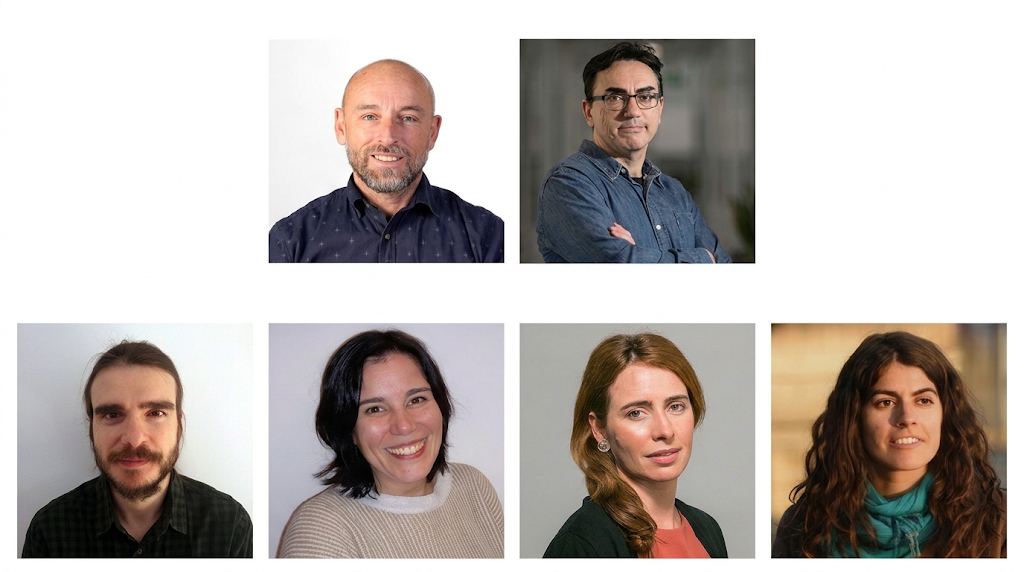
Gary Morgan and Santi Caballé; bottom row: Hug March, Gemma Chiva, Anna Bach, and Marga Triguero
What is the Stanford ranking?
The Stanford ranking is one of the internationally recognized lists within the scientific community. Each year, this ranking compiles the names of the world's most cited scientists based on the number of citations their academic publications receive, highlighting the top 2% of authors cited by their peers worldwide.
A strong presence in the IUNE Observatory
This recognition of research quality at the UOC is consistent with the findings of the IUNE Observatory [in Catalan] (2026 edition), an initiative of the Interuniversity Institute for Advanced Research on the Evaluation of Science and the University (INAECU). This report assesses research activity at Spanish universities during the 2015–2024 period and confirms the leading contribution of Catalan universities, which account for 23.8% of Spain's overall scientific output. It also places the UOC among the universities with an average of more than one scientific publication per researcher in Web of Science.
The UOC's research aligns with five missions and the UN Sustainable Development Goals (SDGs).
Transformative, impactful research
At the UOC, we see research as a strategic tool to advance towards a future society that is more critical, responsible and nonconformist. With this vision, we conduct applied research that's interdisciplinary and linked to the most important social, technological and educational challenges.
The UOC’s over 500 researchers and more than 50 research groups are working in five research units focusing on five missions: lifelong learning; ethical and human-centred technology; digital transition and sustainability; culture for a critical society, and digital health and planetary well-being.
The university's Hubbik platform fosters knowledge transfer and entrepreneurship in the UOC community.
More information: www.uoc.edu/en/research
FAQs
Experts UOC
Press contact
-
Anna Torres Garrote