UOC connects research, businesses and institutions at first UOC Transfer Day
The event highlighted 25 knowledge transfer cases linked to the university's five research missions, with the aim of creating new opportunities for collaboration and social impact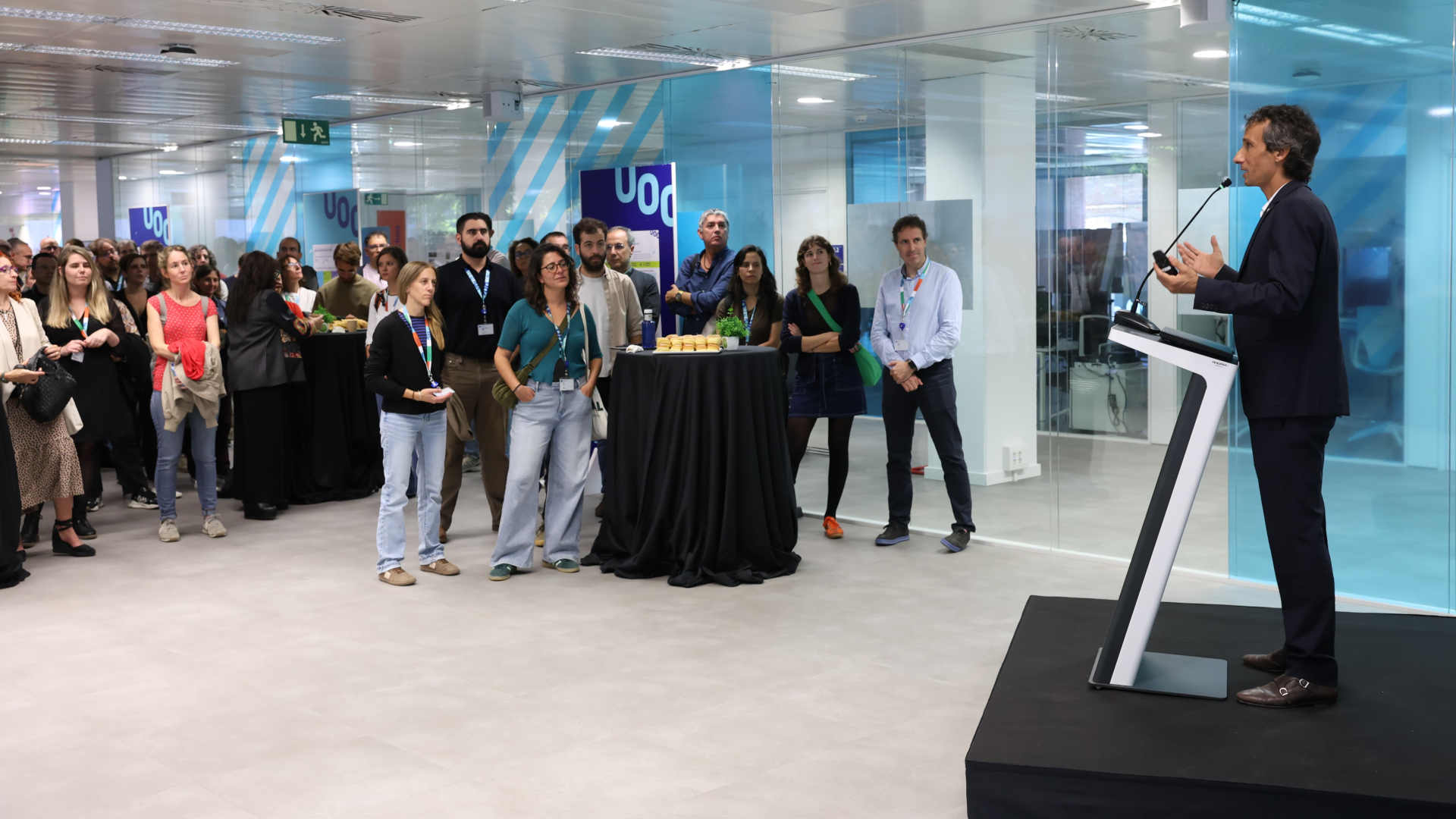
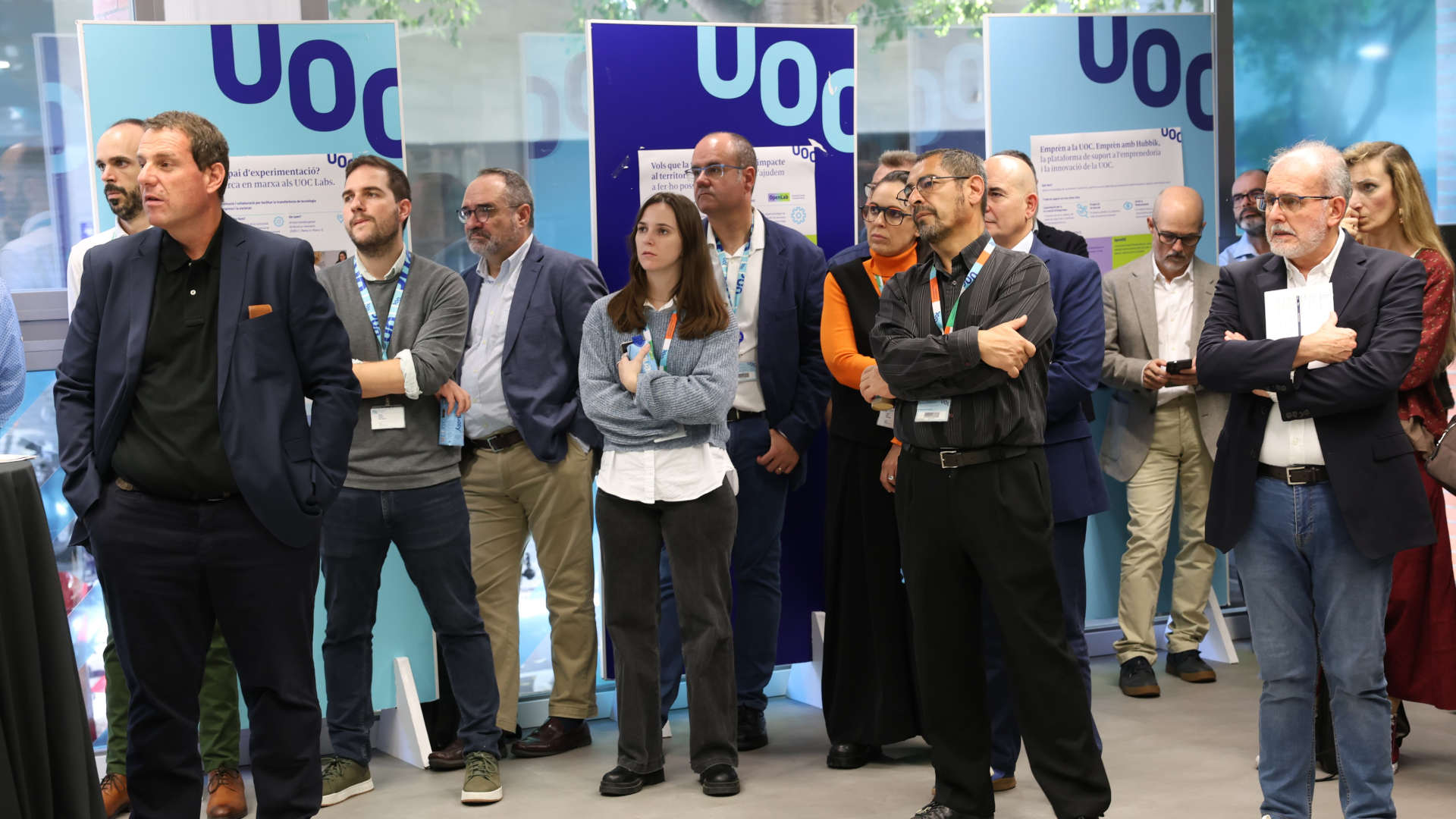
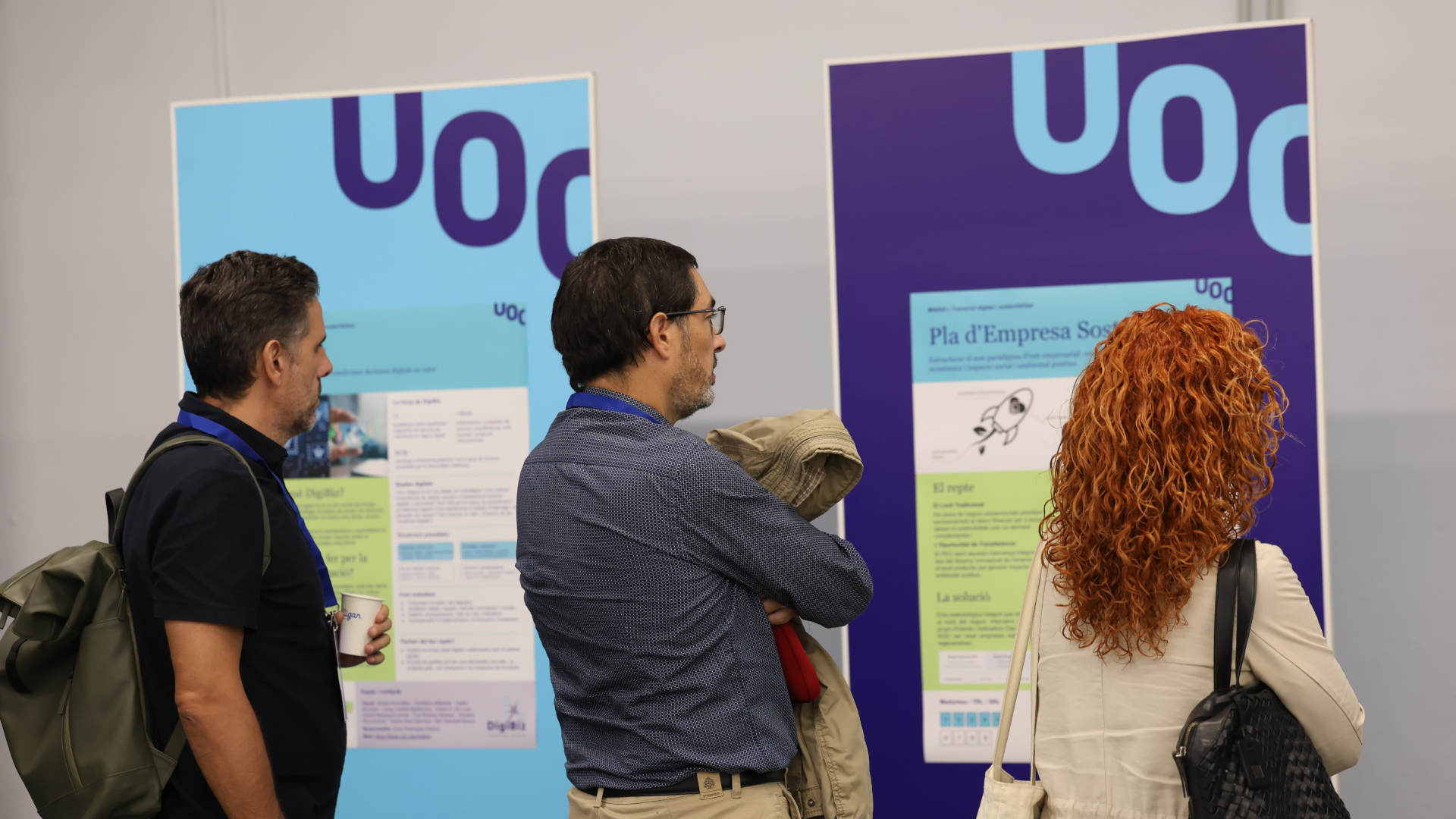
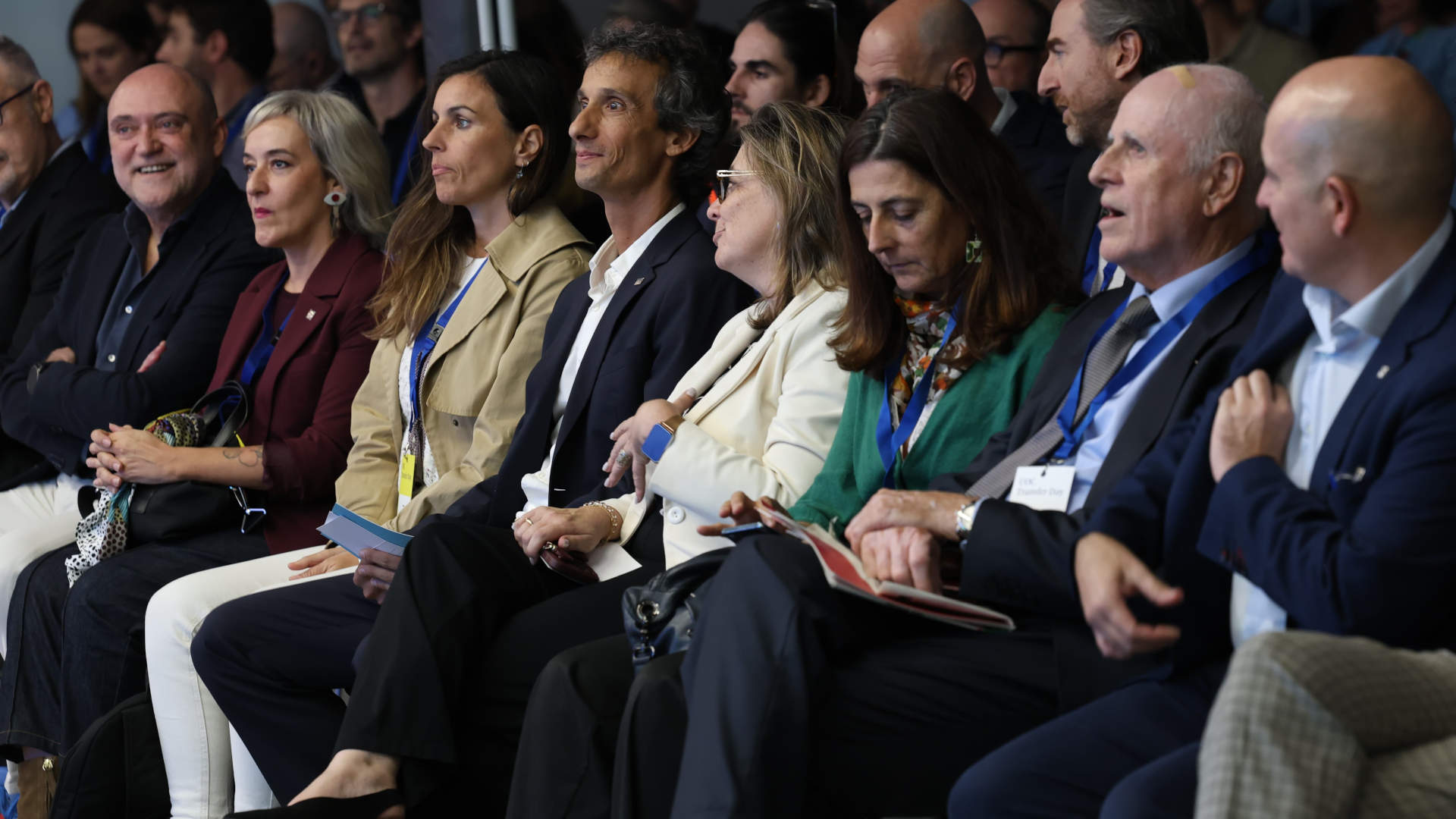
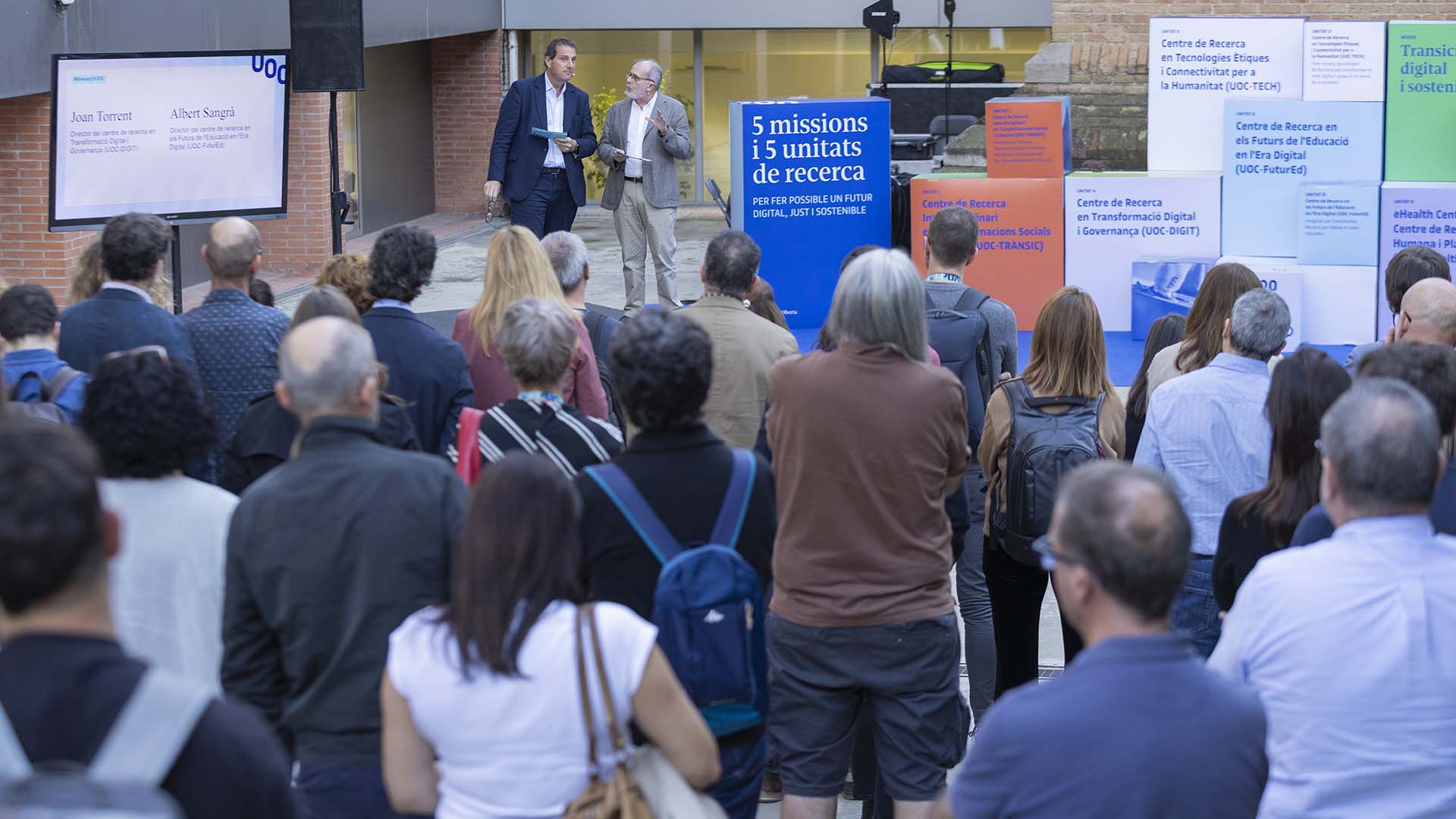
Today, the Universitat Oberta de Catalunya (UOC) held its first UOC Transfer Day, under the slogan "Let's see what we can do together". The event brought together researchers, businesses, institutions and other stakeholders to showcase the capabilities and results of the university's research, share knowledge transfer experiences and explore new opportunities for collaboration. Through this initiative, the UOC aims to strengthen its commitment to knowledge transfer that generates social and economic impact by connecting the expertise of its research teams with the needs and challenges of organizations and society. The event highlighted 25 knowledge transfer cases linked to the university's five strategic missions: education of the future; digital transition and sustainability; culture for a critical society; planetary health and well-being; and ethical and human-centred technology.
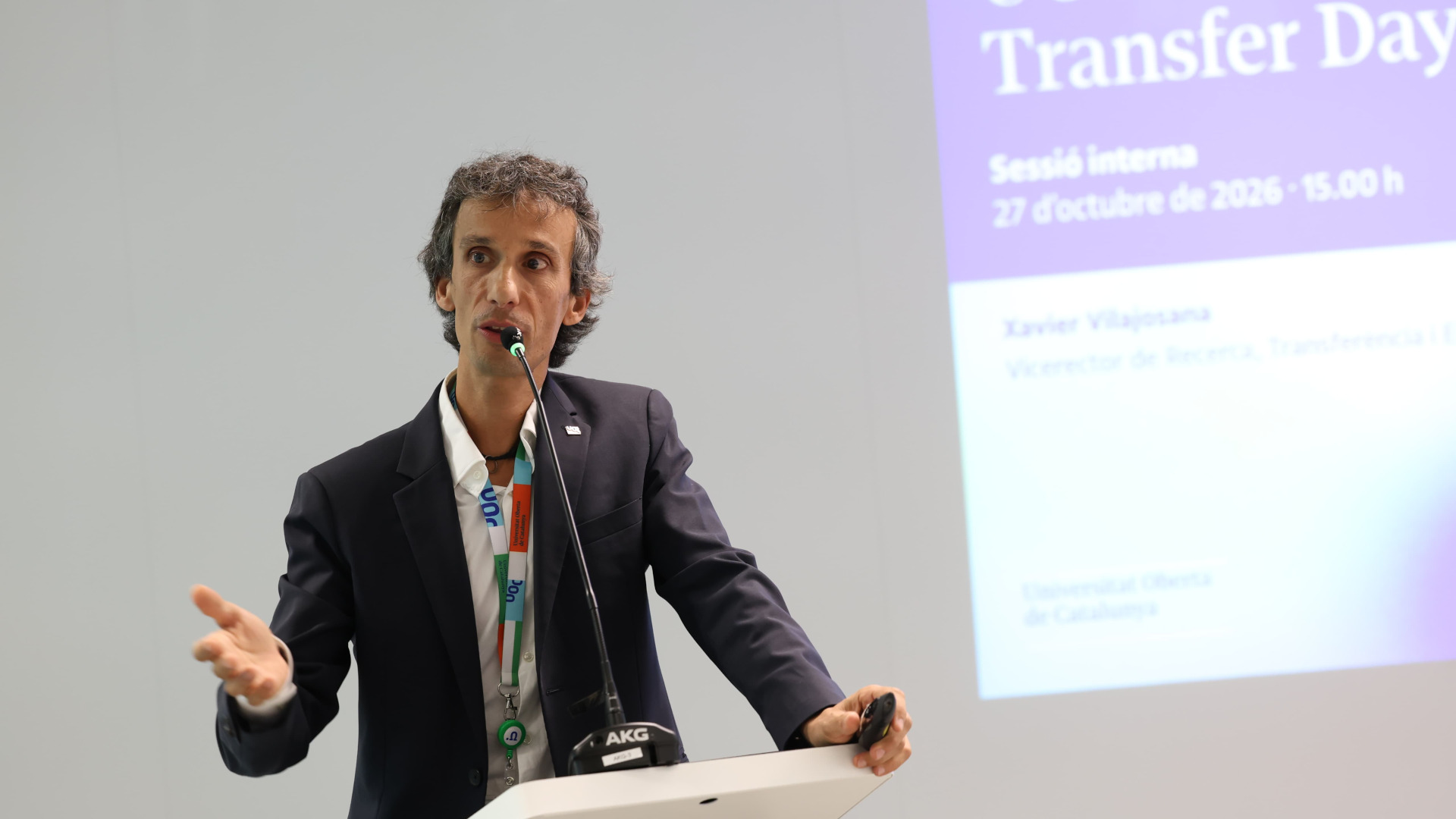
The Vice-Rector for Research, Entrepreneurship and Transfer at the UOC, Professor Xavier Vilajosana, welcomed participants to the conference, describing the UOC Transfer Day as "a turning point" and "a statement of intent to champion a university like ours, which seeks to transform the ecosystem of which we are part". In his address, Vilajosana stated that "today is an important day" because "universities, as well as research centres affiliated with us, want to sound a wake-up call". "We want to champion the standing of a university like ours: universities have several missions, including acting as transforming agents for the local territory, and that involves, whenever possible, taking knowledge beyond our borders", he stressed. The Vice-Rector also emphasised that this role of the university has become "a necessity", given the local and global context: "We must join forces so that research goes beyond academic boundaries". Vilajosana therefore advocated for universities to work closely with businesses, associations and all local stakeholders with the aim of "identifying how we can contribute" for the benefit of "the collective".
Mireia Riera, director of Knowledge Transfer, Entrepreneurship and Open Science, highlighted that this first edition marked a further step towards consolidating the UOC's knowledge transfer model. "We want to move towards a more proactive approach to knowledge transfer, one that goes beyond supporting existing projects and has the capacity to create new opportunities by connecting the university's research capabilities with the challenges faced by businesses, institutions and society. UOC Transfer Day provides an opportunity to showcase these capabilities, recognize the work of our researchers and open the door to new collaborations", she explained.
The event forms part of the UOC's commitment to fostering a cross-cutting culture of knowledge transfer, in which knowledge generation and its application to real-world challenges are interconnected aspects of university activity.
“We want to move towards a more proactive approach to knowledge transfer and has the capacity to create new opportunities”
The 25 successful knowledge transfer cases, by mission
The projects presented reflect the diverse forms knowledge transfer can take, from collaboration with businesses and institutions to the creation of spin-offs, chairs, industrial doctorates, specialist advisory services and innovative solutions. The cases are presented below, organized according to the UOC's five research missions.
Education of the future, featuring projects led by researchers from the UOC-FuturEd centre and teaching staff from the Faculty of Education:
- UOC - VASS Foundation Chair in Digital Transformation without Barriers. It promotes a barrier-free digital transformation to improve the employability and inclusion of people with disabilities. The project's principal investigator is Marta López Costa, one of the coordinators of the Education Research Group (GREDU).
- Smart Classroom Project. This is a spin-off of the UOC and the University of Barcelona that supports schools and institutions in rethinking their learning spaces and designing them to meet the needs of different educational approaches. The project's principal investigator is Guillermo Bautista from the GREDU group.
- ACTIC Catalan certification of digital skills: reimagined with AI. It redefines digital skills to reinvent the certificate for the age of artificial intelligence. The principal investigator is Teresa Romeu from the Education and ICT (Edul@b) research group.
- Territori Digital Sostenible: towards a sustainable digital environment for adolescents. It promotes healthy screen use by transforming the digital space into a safe environment built on mutual respect and free from cyberviolence. The principal investigator is Professor Montse Guitert, coordinator of Edul@b.
- CreativitArt – immersive learning environments. It facilitates the adoption of virtual reality in classrooms to develop digital skills and critical thinking. The project's principal investigator is Josep M. Mominó from Edul@b.
Digital transition and sustainability, featuring projects led by researchers from the UOC-DIGIT centre and teaching staff from the Faculty of Law and Political Science and the Faculty of Economics and Business:
- Digital transformation and management guidance. It analyses the challenges posed by the digital transformation and AI in local government to help authorities adapt to these new challenges. The principal investigator is Pilar Ficapal, one of the coordinators of the Interdisciplinary Research Group on ICT - Artificial Intelligence Laboratory (i2TIC-IA Lab).
- Sustainable Urban Logistics Plans. It develops new urban planning tools to make urban goods deliveries safer, more efficient and more sustainable. The principal investigators are Eduard J. Álvarez Palau and Cristian Castillo, coordinators of the Urbanization, Trade and Sustainable Logistics (URBANLOG) research group.
- Financial Health and Education. It promotes financial health and education as tools for equity, enabling everyone, especially the most vulnerable individuals, to make financial decisions that meet their needs. The principal investigators are Elisabet Ruiz Dotras and Josep Lladós from the Digital Business (DigiBiz) research group.
- Vueling–UOC Air Transport Observatory. A platform that connects key players in the aviation industry to promote sustainable solutions in Catalonia. The principal investigator is Professor Pere Suau-Sanchez, coordinator of the Sustainability, Management and Transport (SUMAT) research group.
- Intellectual and industrial property law, data protection and new technologies. It offers support in managing and updating knowledge of digital law to improve the quality and efficiency of legal services. The principal investigator is Professor Miquel Peguera Poch, coordinator of the Law, Internet and Digital Transformation (DITD) research group.
Culture for a critical society, featuring projects led by researchers from the UOC-TRÀNSIC centre and teaching staff from the Faculty of Arts and Humanities, the Faculty of Information and Communication Sciences and the Faculty of Psychology:
- Terminology extraction. It analyses the accuracy of AI in managing scientific terminology in Catalan and other languages. The principal investigator is Mercè Vàzquez Garcia from the Interuniversity Research Group in Linguistic Applications (GRIAL).
- UOC-3Cat Chair in Narratives, Consumption Habits and Emerging Audiovisual Formats. It analyses and anticipates changes in audiovisual narratives, formats and consumption habits online. The project's principal investigator is Professor Jordi Sánchez Navarro, one of the coordinators of the Learning, Media and Entertainment (GAME) research group.
- Decidim. An open, free platform for participatory democracy. The principal investigator is Antonio Calleja from the Communication Networks and Social Change (CNSC) research group.
- Coolschools. It assesses the benefits of nature-based solutions in school environments to promote climate adaptation in cities. The principal investigator is Isabel Ruiz Mallén, one of the coordinators of the Urban Transformation and Global Change Laboratory (TURBA Lab) research group.
- Managing multilingualism. Practical solutions to promote linguistic diversity and ensure smooth communication in multilingual organizations. The principal investigator is Maite Puigdevall, one of the coordinators of the Language, Culture and Identity in a Global World (IDENTICAT) research group.
Planetary health and well-being, featuring projects led by researchers from the UOC-eHealth centre and teaching staff from the Faculty of Health Sciences, the Faculty of Computer Science, Multimedia and Telecommunications and the Faculty of Psychology:
- UNNE Institute of Neurostimulation. This is a UOC spin-off created to address mental health problems and neurological disorders using non-invasive neurostimulation. The project's principal investigator is Elena Muñoz, one of the coordinators of the NeuroADaS Lab research centre.
- AI based on clinical guidelines. It evaluates medical AI systems to ensure their usefulness, safety and applicability in clinical practice. The project's principal investigator is Professor Francesc Saigí, coordinator of the Evidence-Based Digital Health Lab (EviDHLab).
- Mobile Corneal Topographer (MoCoTo). A mobile app and add-on for analysing corneal shape and customizing contact lenses. The principal investigators are David Merino and Marta Massip from the Artificial Intelligence for Human Well-Being (AIWELL) research group.
- PICOFON. An interactive educational programme to improve phonological awareness and support children's reading development. The principal investigator is Professor Llorenç Andreu, coordinator of the Cognition and Language (GRECIL) research group.
- The sleep pyramid. A gradual approach to developing healthy habits and improving sleep quality. The project's principal investigator is Professor Manuel Armayones, coordinator of the Behavioural Design Lab (BD Lab) research group.
Ethical and human-centred technology, featuring projects led by researchers from the UOC-TECH centre and teaching staff from the Faculty of Computer Science, Multimedia and Telecommunications:
- Wireless, battery-free sensors for sustainable greenhouses. Low-cost, wireless, battery-free sensors that monitor soil moisture and optimize water use in sustainable greenhouses. The project's principal investigator is Joan Melià from the Wireless Networks Research Lab (WINE) research group.
- Automatic monitoring of Hermetia illucens larval growth. An AI-powered computer vision monitoring system. The project's principal investigator is Javier Borge, coordinator of the Complex Systems (CoSIN3) research group.
- High-Precision GNSS. Radio sensors and satellite technology (GNSS) for real-time monitoring of civil infrastructure. The project's principal investigator is Borja Martínez, coordinator of the WINE group.
- StegoCrypt. Data protection using highly robust security systems that combine cryptography and steganography. The project's principal investigator is Professor David Megías, coordinator of the K-ryptography and Information Security for Open Networks (KISON) research group and director of the UOC-TECH centre.
- Mirror Box. A mirror box that captures audiovisual data from children in natural settings in a non-intrusive, child-centred way. The project's principal investigator is Lucrezia Crescenzi-Lanna, coordinator of the ChildTech Lab research group.
UOC research aligns with the UN Sustainable Development Goals (SDGs).
Transformative, impactful research
At the UOC, we see research as a strategic tool to advance towards a future society that is more critical, responsible and nonconformist. With this vision, we conduct applied research that's interdisciplinary and linked to the most important social, technological and educational challenges.
The UOC’s over 500 researchers and more than 50 research groups are working in five research units focusing on five missions: lifelong learning; ethical and human-centred technology; digital transition and sustainability; culture for a critical society, and digital health and planetary well-being.
The university's Hubbik platform fosters knowledge transfer and entrepreneurship in the UOC community.
More information: www.uoc.edu/en/research
FAQs
Experts UOC
Press contact
-
Anna Torres Garrote